- Calligraphers
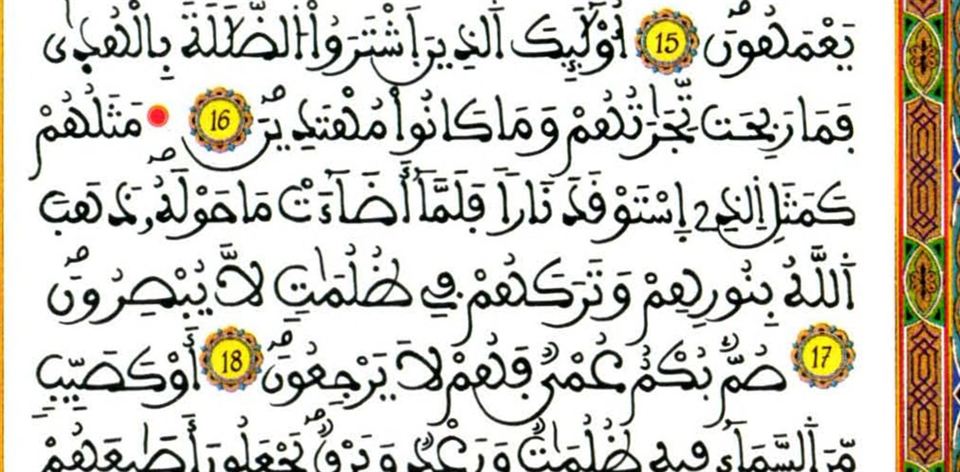
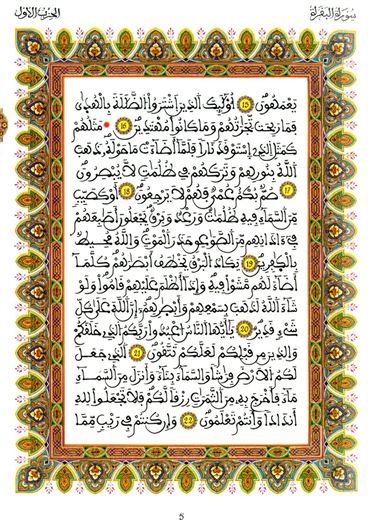
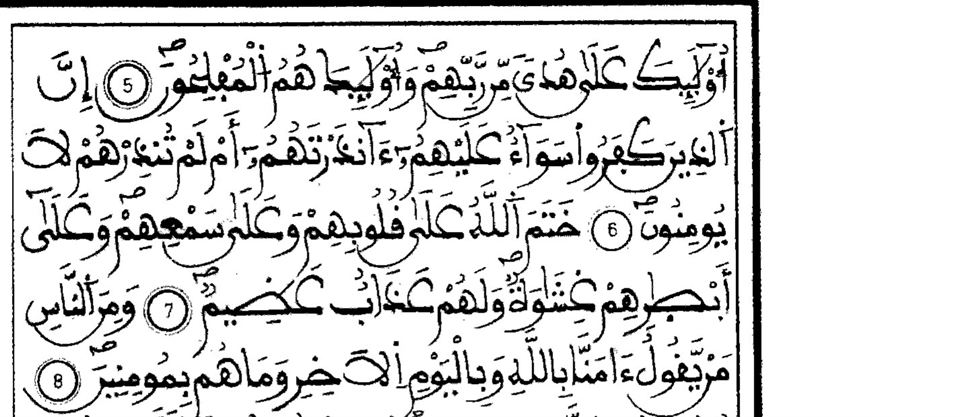
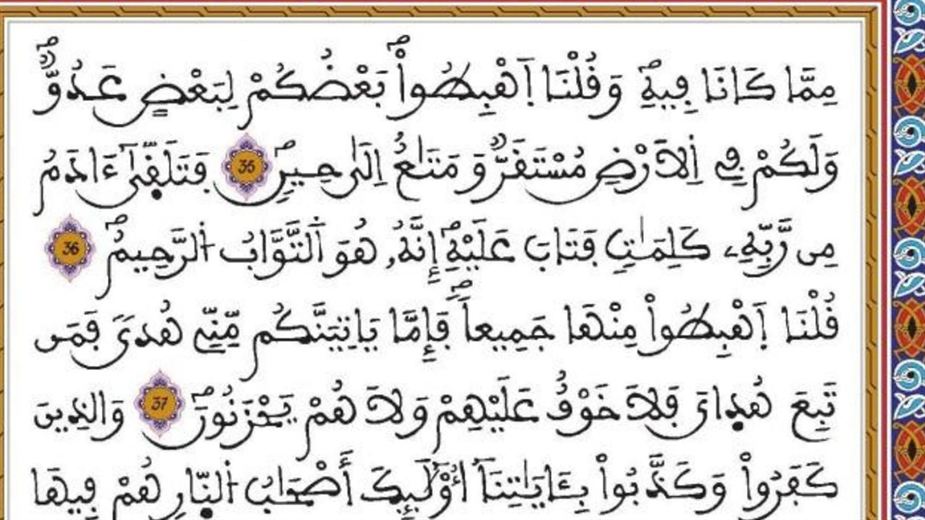
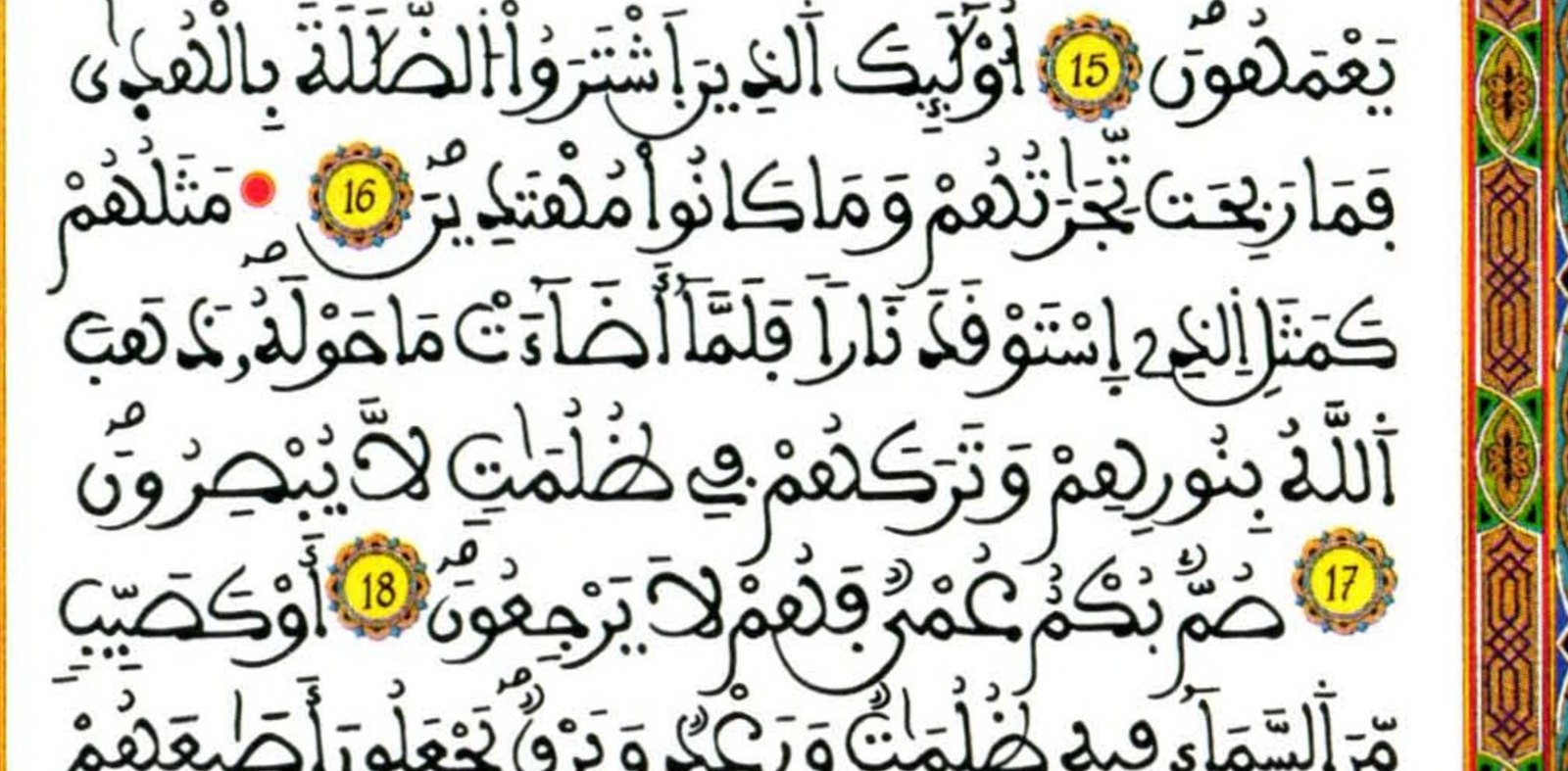
- Seven Moroccan calligraphers, one for each seventh, in the order of their hands in the Qur’an: Mohamed Maalmine, Mahmoud Amzal, Abdelilah Amzal, Mohamed Masslouhi, Imam Ouardighi, Jamal Bensaid and Mohamed Laith
- Decoration
- Abdellah Ouazzani
- Ordered by
- King Hassan II, through an order to the Minister of Habous and Islamic Affairs, Abdelkebir Alaoui M’daghri
- Reading
- Warsh from Nafiʿ
It opens with a royal order that reads: «أصدرنا أمرنا المنيف إلى وزيرنا في الأوقاف والشؤون الإسلامية الفقيه عبد الكبير العلوي المدغري بإعادة طبع المصحف الحسني الشريف طبعة جديدة فاخرة أنيقة تتوفر لها شروط الصحة والضبط والإتقان، وتمتاز على الطبعات السابقة بتسبيعها على المأثور في قراءة السلك وختمها، وتميز الأسباع بخطها وزخرفتها», “We have issued Our order to Our Minister of Habous and Islamic Affairs, the jurist Abdelkebir Alaoui M’daghri, to reprint the noble Hasani Qur’an in a new, fine and elegant edition meeting the conditions of correctness, vocalisation and precision, excelling the earlier editions by its division into sevenths, following tradition in the reading and completion of the silk, with the sevenths distinguished by their script and decoration.” So each seventh has its own calligrapher and decoration, after the Moroccan custom of reading the Qur’an in seven sevenths.
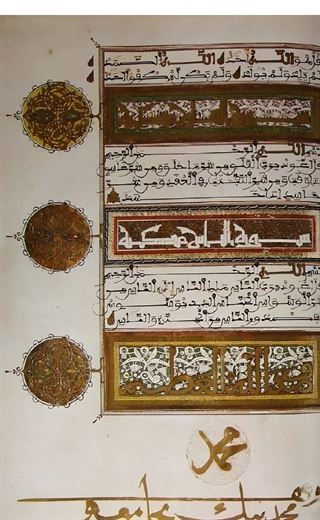
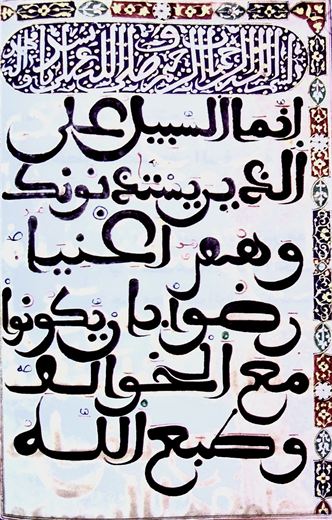
Printed, not manuscript. We included it because its calligraphers are known and the date of its printing is certain.