The Qur’an made for the library of Sultan Abu Yaʿqub Yusuf
- Owner
- Written «برسم خزانة», “for the library” of Sultan Abu Yaʿqub Yusuf b. Yaʿqub (r. 685–706 AH / 1286–1307 CE), as the colophon states
- Copyist
- Not named in the colophon
- Place
- Marinid Morocco (the colophon does not name the city)
- Today
- Munich, Bavarian State Library: Cod.arab. 2 (first volume) and Cod.arab. 3 (last volume)
- Format
- Parchment; 26 × 21.5 cm; seven lines to the page
- What survives
- Two of twelve volumes: the first (al-Fatiha – Al ʿImran 14), 122 folios, and the last (al-Jumuʿa – al-Nas), 115 folios
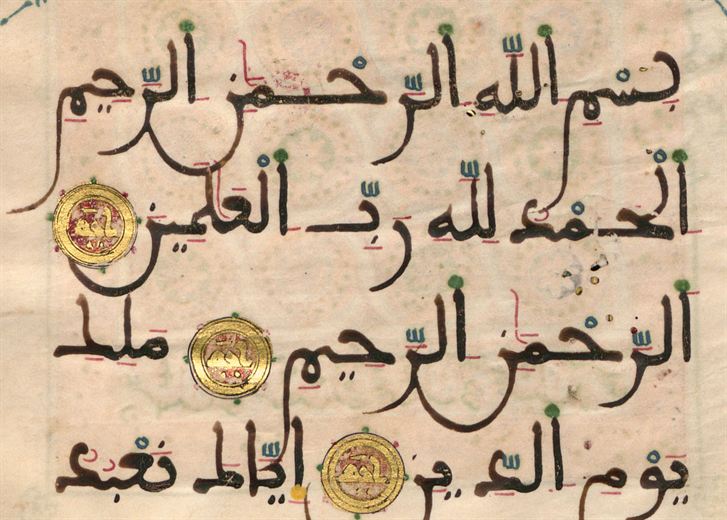
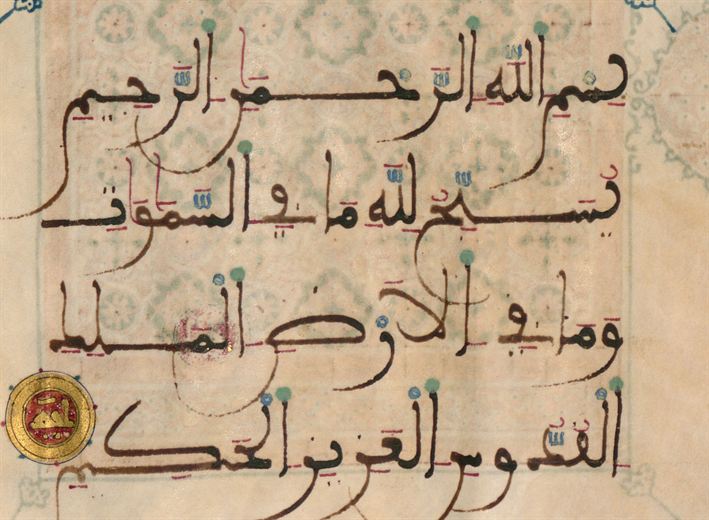
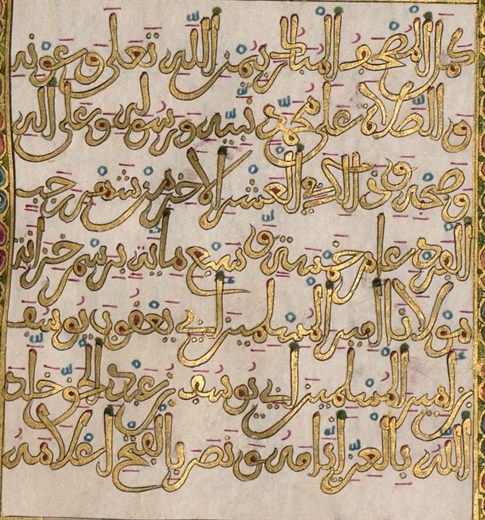
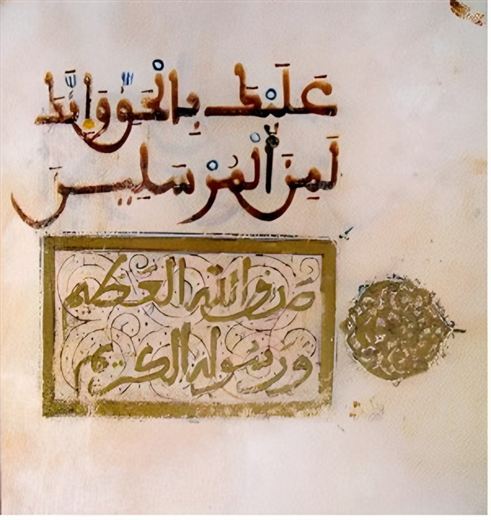
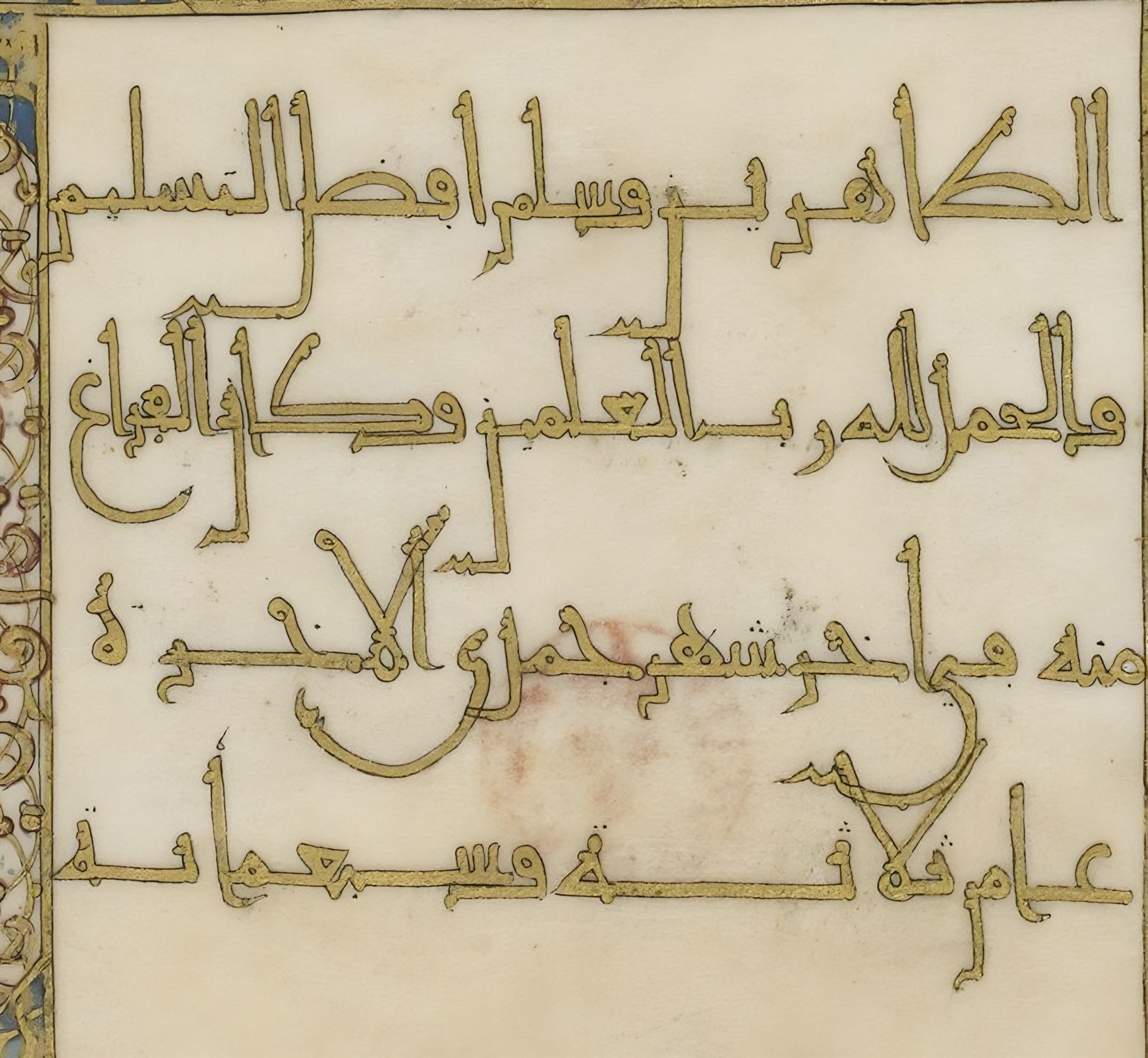
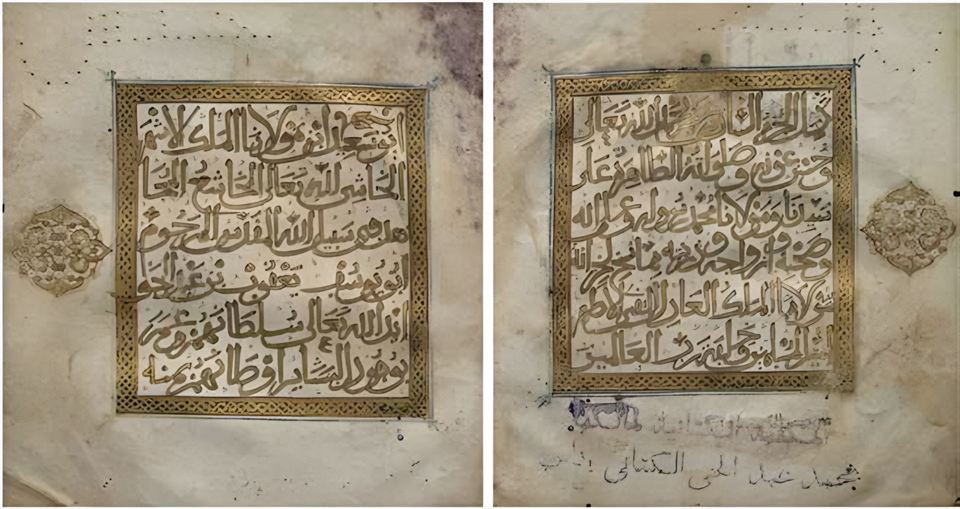
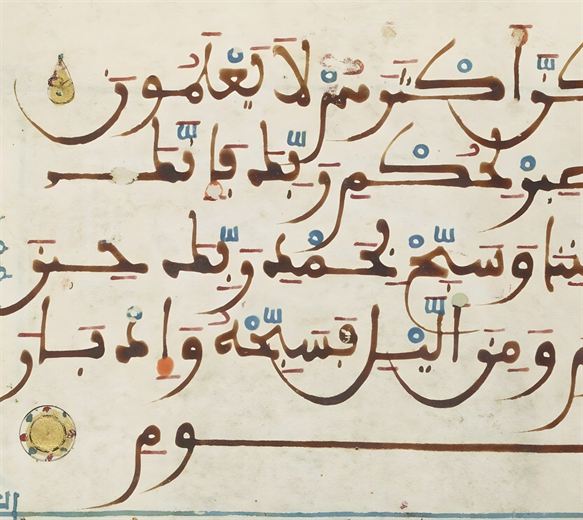
One of the most splendid surviving Maghribi Qur’ans. It was in twelve volumes of five ḥizbs each, of which only the first and the last survive. At the end of the last volume is a colophon in gold in a decorated frame, giving the date of completion and stating that it was written for the sultan’s library.
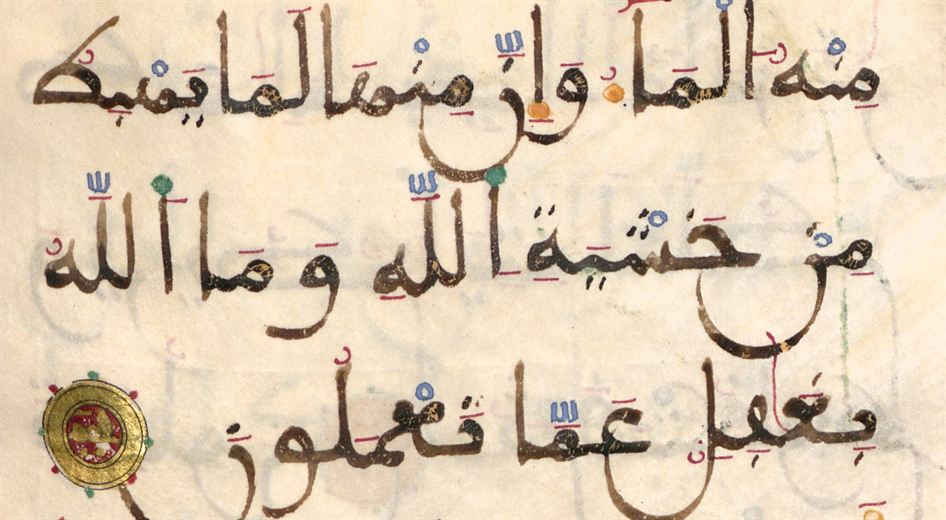
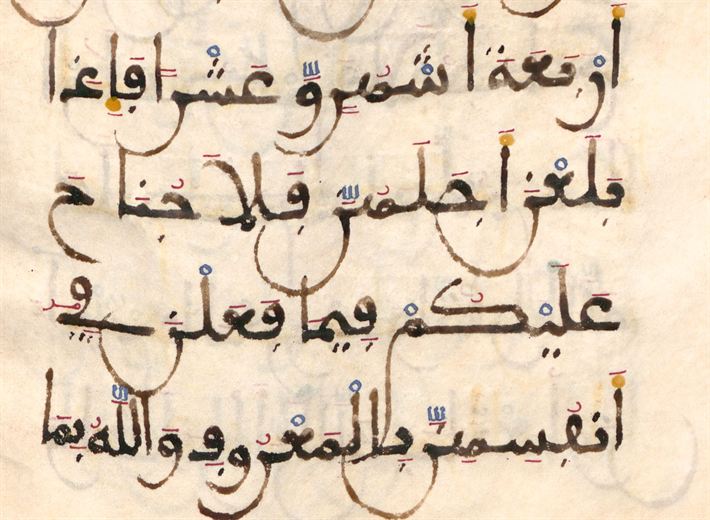
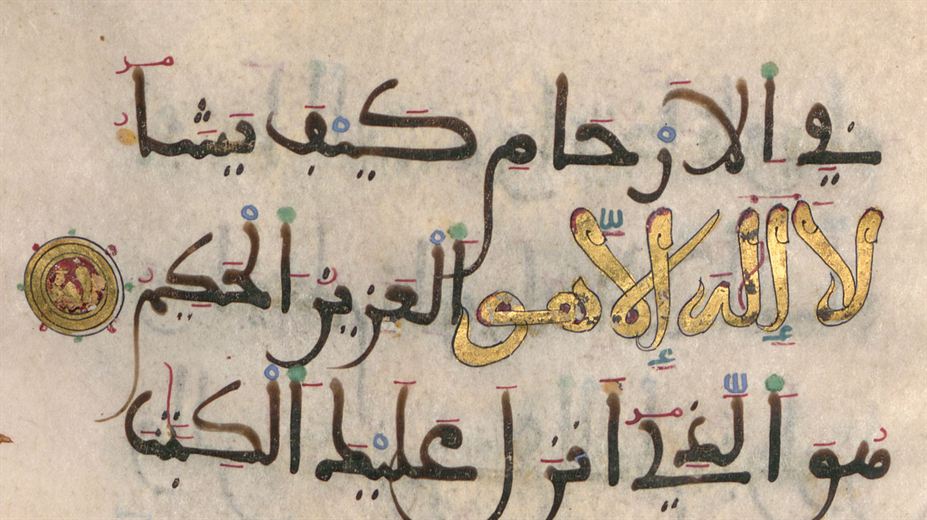
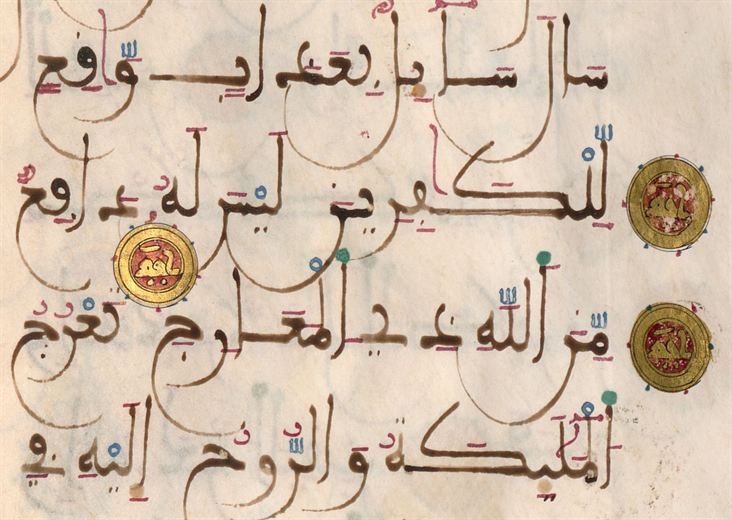
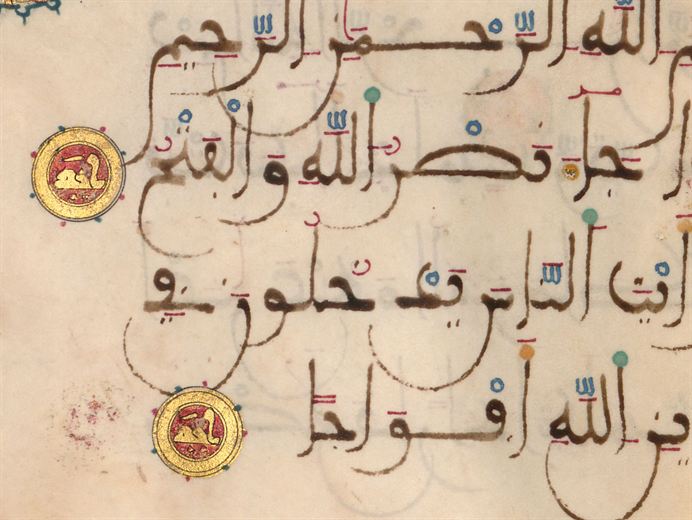
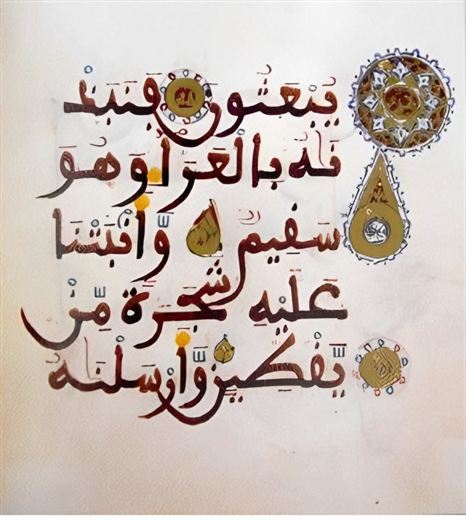
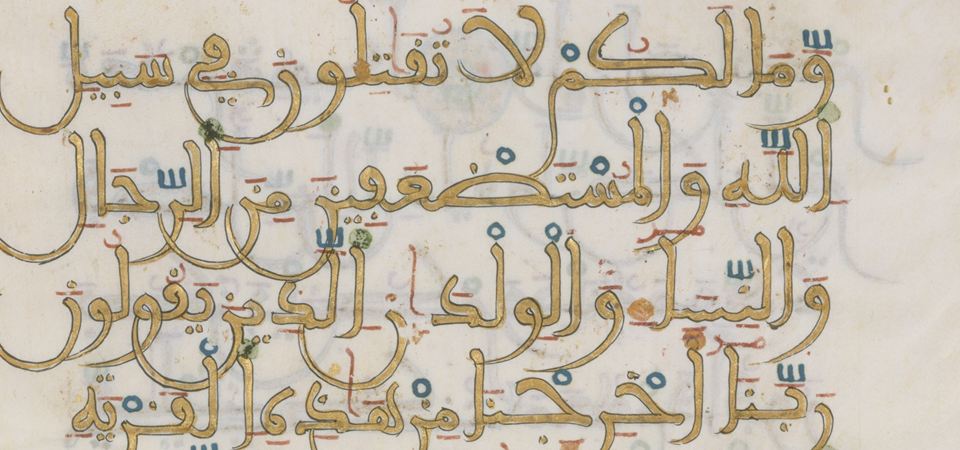
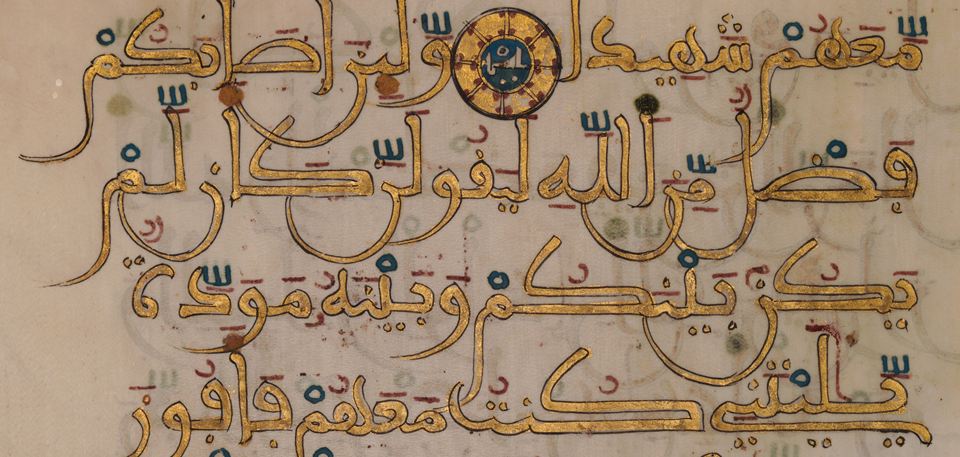
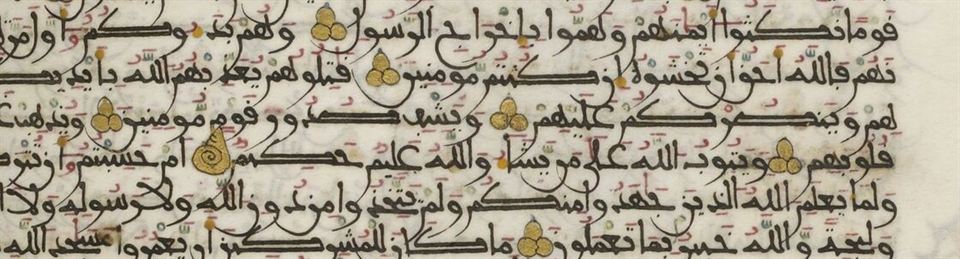
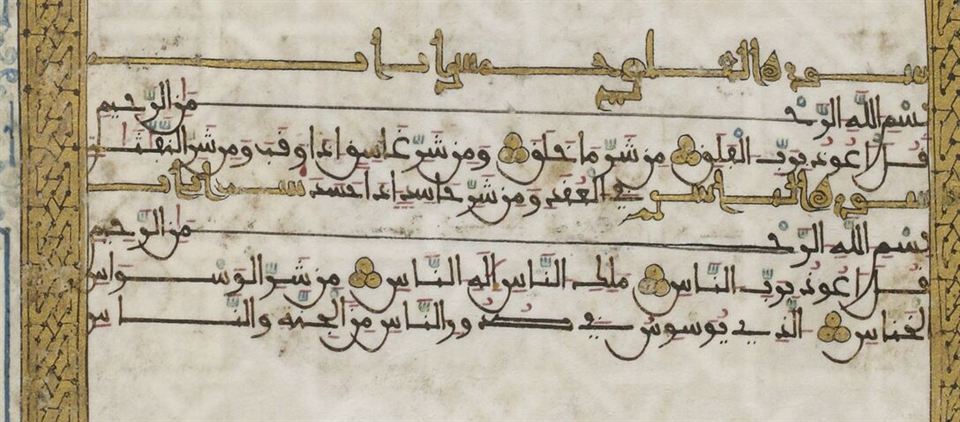
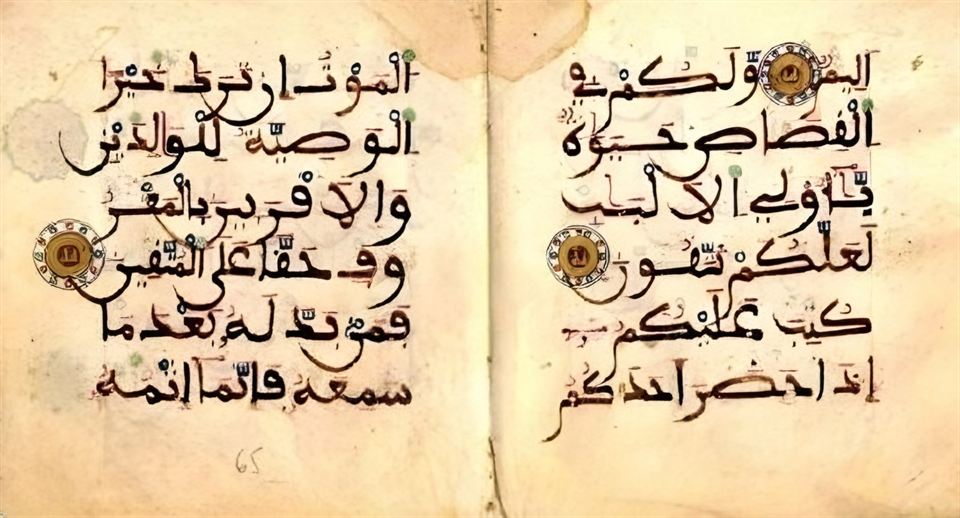
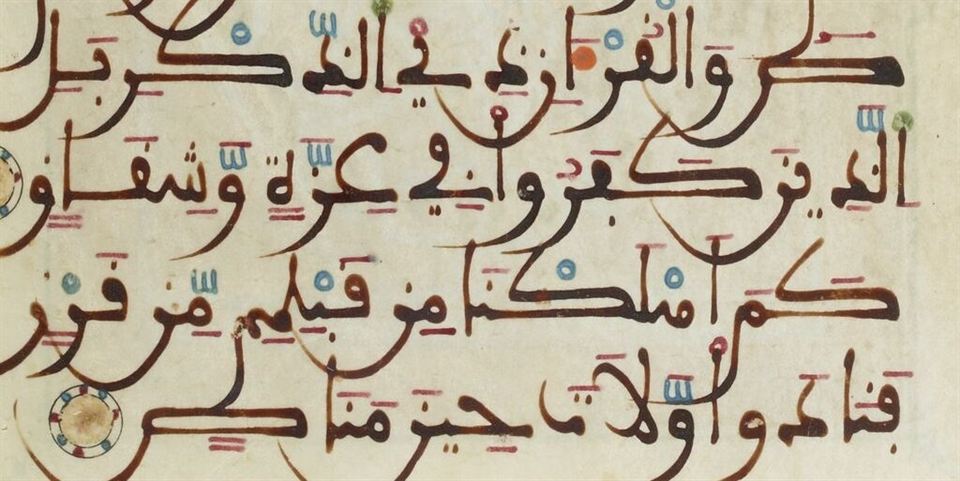
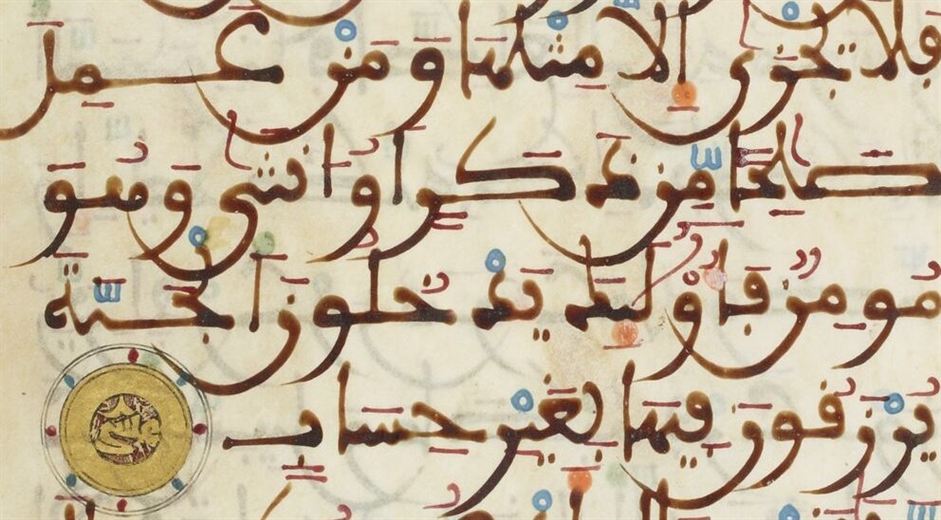
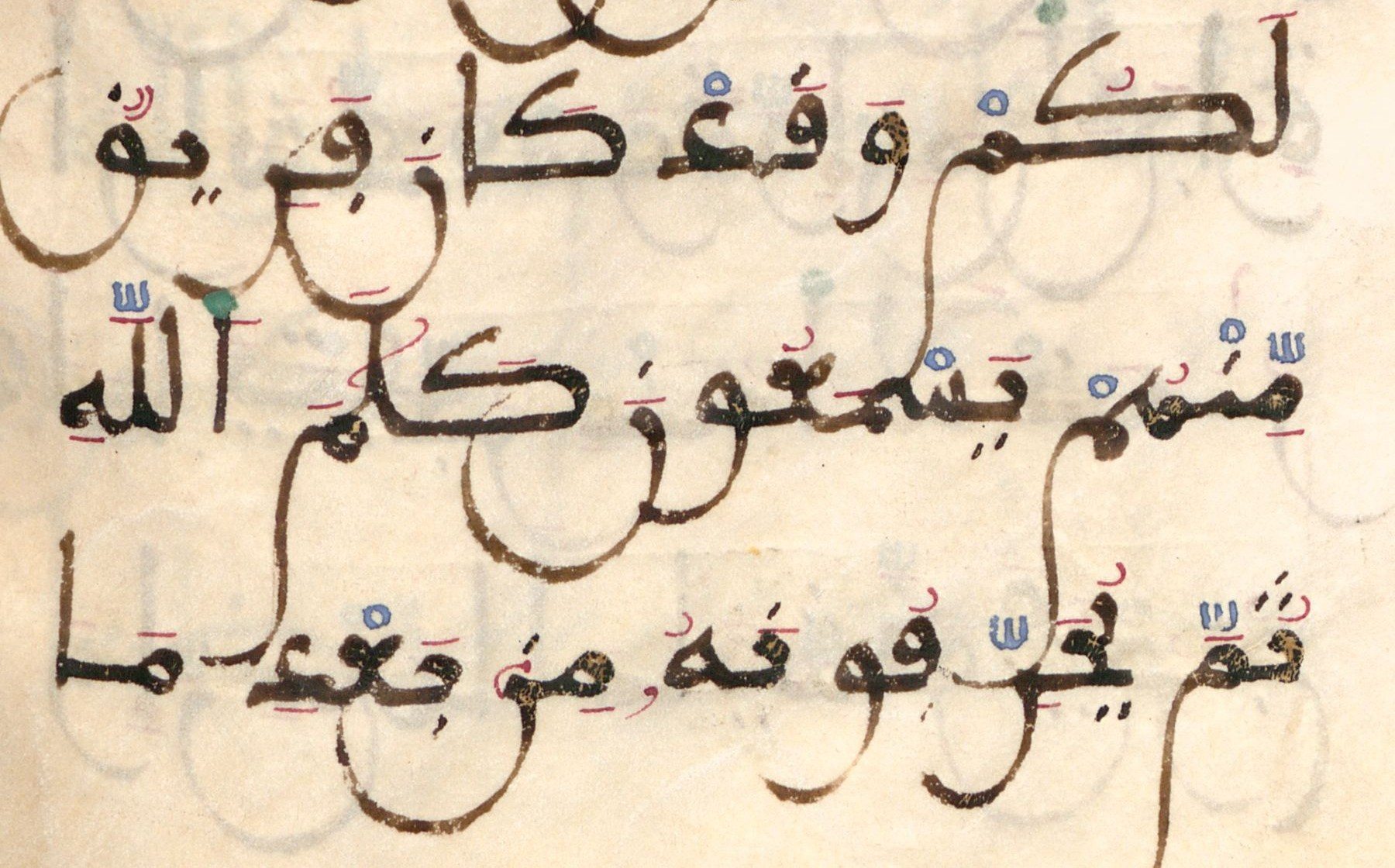
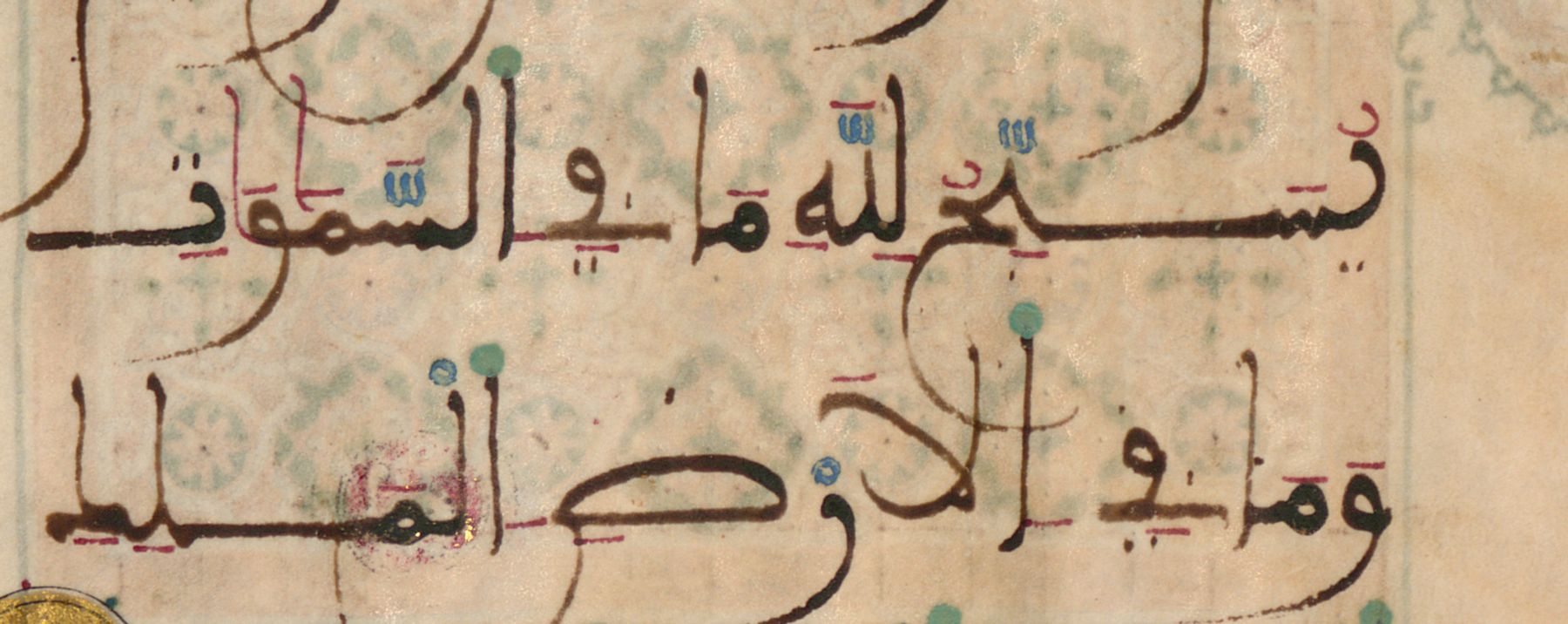
The text is in Maghribi mabsūṭ in black ink, seven lines to the page, with the vocalisation in colour. The sura headings are in gilded Kufic, each with a round ornament in the margin beside it. The phrase «لا إله إلا هو», “there is no god but He”, is written in gold wherever it occurs in the text, and the Qur’an has gilded opening and closing pages.
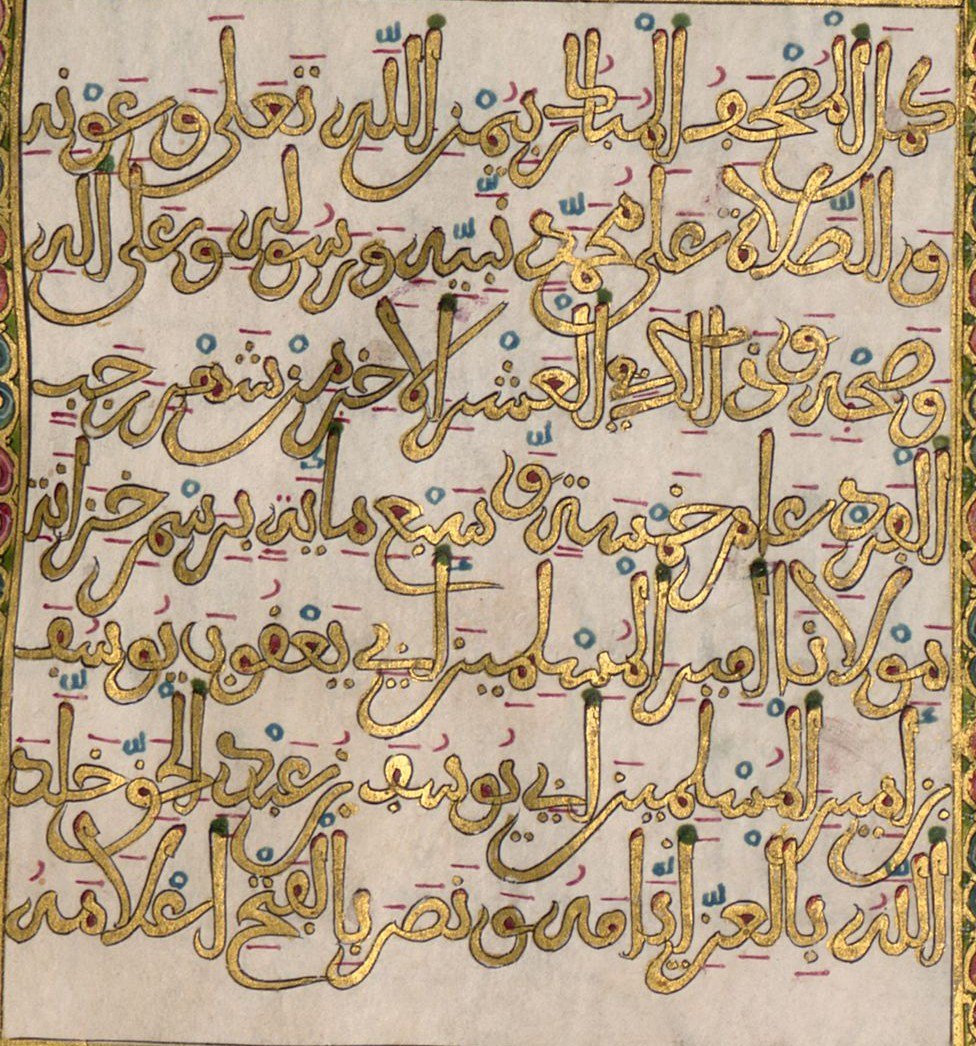
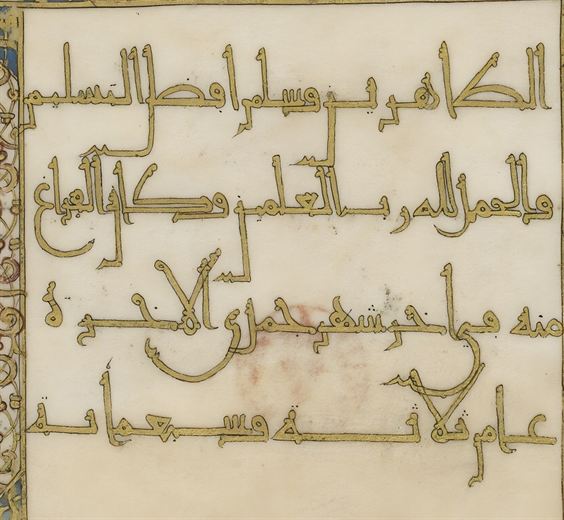
The colophon (end of the last volume, fol. 121v)
كمل المصحف المبارك بيمن الله تعالى وعونه، والصلاة على محمد نبيّه ورسوله وعلى آله وصحبه، وذلك في العشر الأُخَر من شهر رجب الفرد عام خمسة وسبع مائة، برسم خزانة مولانا أمير المسلمين أبي يعقوب يوسف ابن أمير المسلمين أبي يوسف بن عبد الحق، خلّد الله بالعز أيامه، ونصر بالفتح أعلامه.
The blessed Qur’an was completed by the grace and help of God Almighty, with blessings on Muhammad, His Prophet and Messenger, and on his family and companions, in the last ten days of the unique month of Rajab of the year seven hundred and five, for the library of our lord the Commander of the Muslims Abu Yaʿqub Yusuf, son of the Commander of the Muslims Abu Yusuf b. ʿAbd al-Haqq, may God make his days endure in glory and give victory to his banners.
Our reading from the image of the folio. “The last ten days” are the final ten days of Rajab 705 AH, about 6–15 February 1306 CE. «برسم خزانة», “for the library”, means that it was written to be kept in the sultan’s library.
The journey of the manuscript