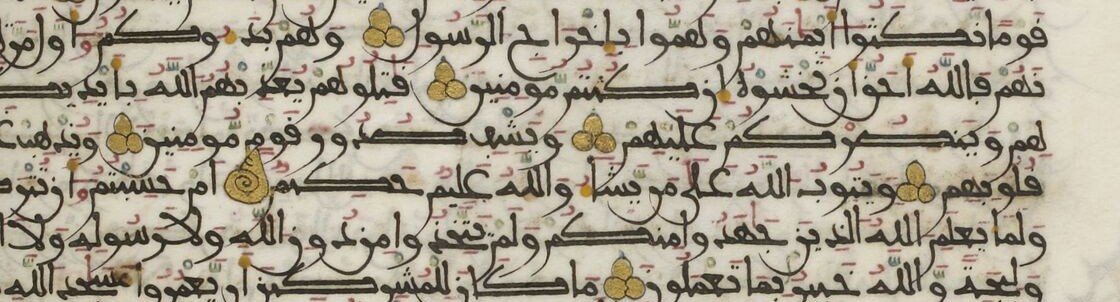
- Owner
- Not named. The name “Fadl b. ʿAbd Allah b. Muhammad” in the catalogue is that of a later owner
- Place
- “Espagne ?” according to the library’s catalogue; in Maghribi-Andalusi script
- Today
- Paris, Bibliothèque nationale de France, Arabe 385
- Format
- Parchment; 176 × 167 mm; 25 lines; 132 folios; Maghribi binding with a fore-edge flap
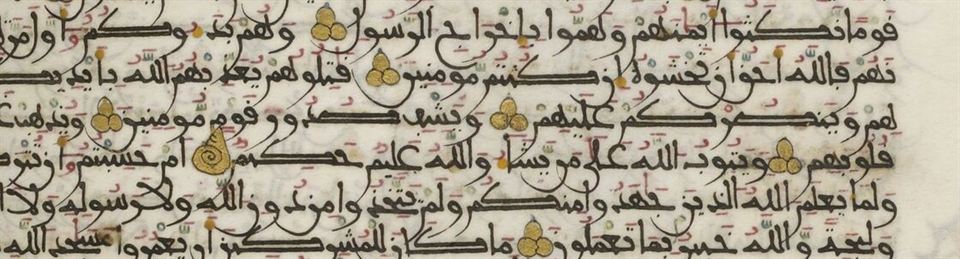
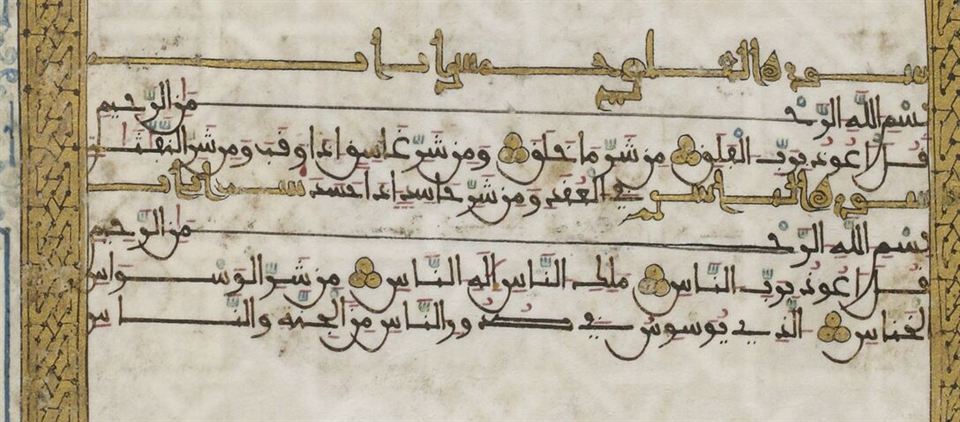
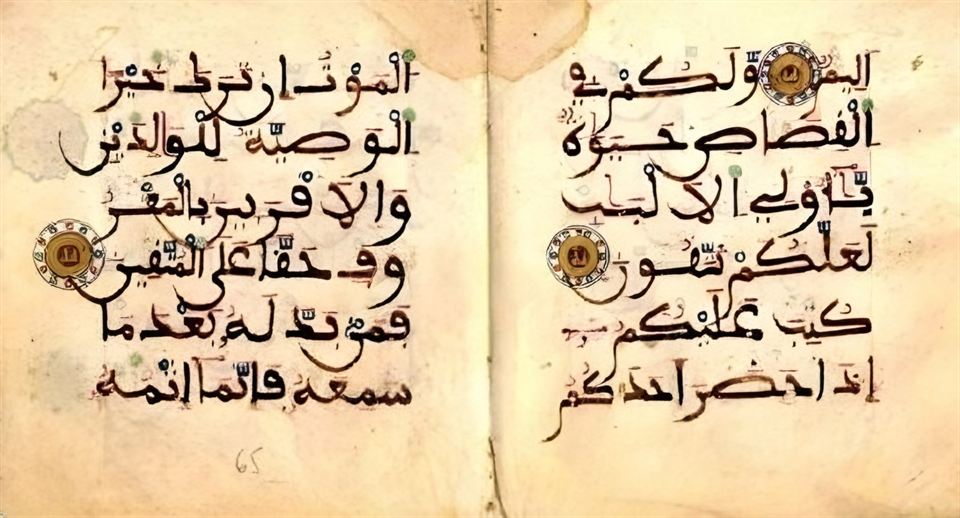
A complete Qur’an in one volume, written in the year Abu Yaʿqub Yusuf sent his rabʿa to Mecca. Its opening and closing pages are a geometric lattice around an eight-pointed star, drawn in white lines on a ground of gilded arabesque. The verse separators are three gilded dots.
The date is explicit and the Qur’an complete, but its colophon names neither copyist nor owner. Its place of copying is uncertain: it may come from Nasrid Granada rather than Marinid Morocco. We include it for comparison.
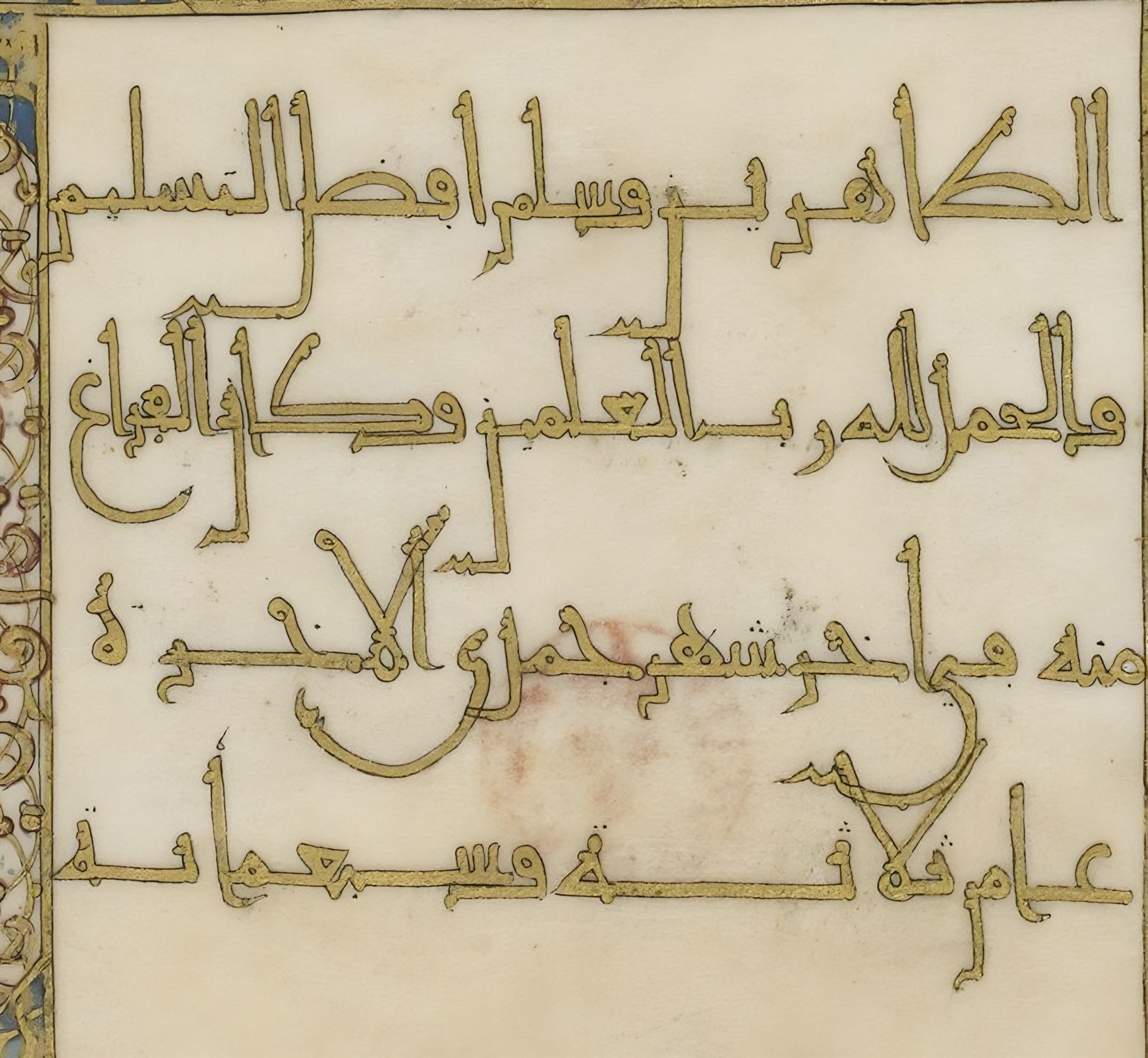
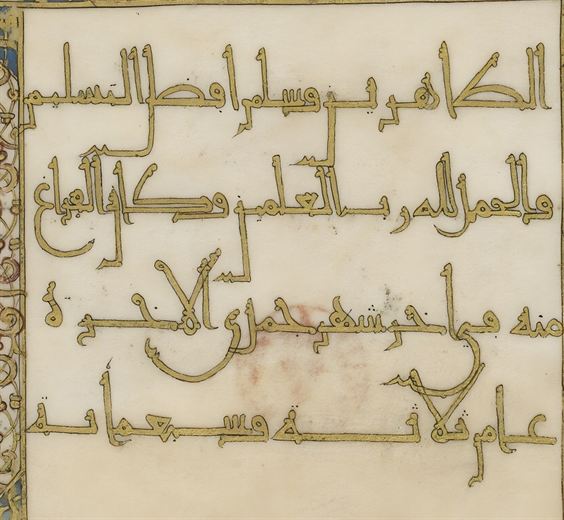
The colophon in gilded Kufic (folios 130v–131r)
كمل المصحف بحمد الله وحسن عونه، وصلى الله على سيدنا ونبينا ومولانا محمد وعلى آله الطيبين الطاهرين، وسلّم أفضل التسليم، والحمد لله رب العالمين. وكان الفراغ منه في آخر شهر جمادى الأخرة عام ثلاثة وسبعمائة.
The Qur’an was completed with the praise of God and His good aid; may God bless our lord, our Prophet and our master Muhammad and his good and pure family, and grant them the most excellent peace; praise be to God, Lord of the worlds. It was finished at the end of the month of Jumada II of the year seven hundred and three.
Our reading from the images of the two folios; the image here is of the second, which has the date. The colophon gives no copyist, no owner and no place of copying.