- Owner and copyist
- Sultan Abu al-Hasan ʿAli b. ʿUthman (r. 731–752 AH / 1331–1351 CE), who copied it himself
- Endowment
- To al-Aqsa Mosque, to be read in the Dome of the Rock
- Today
- Jerusalem, Islamic Museum of al-Aqsa Mosque (box no. 0152)
- Format
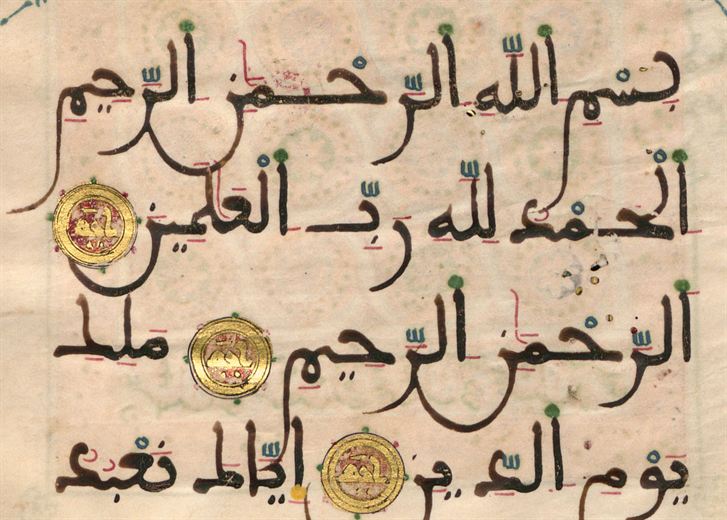
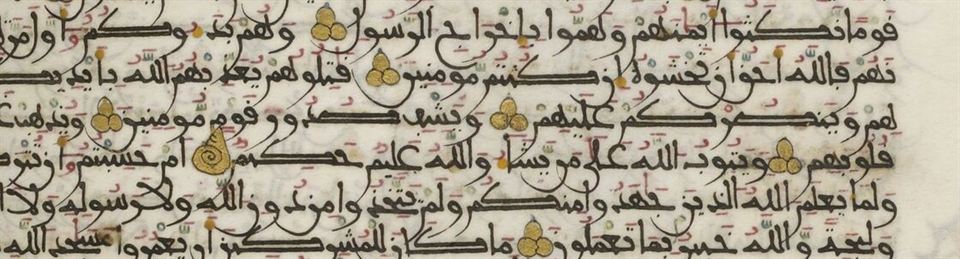
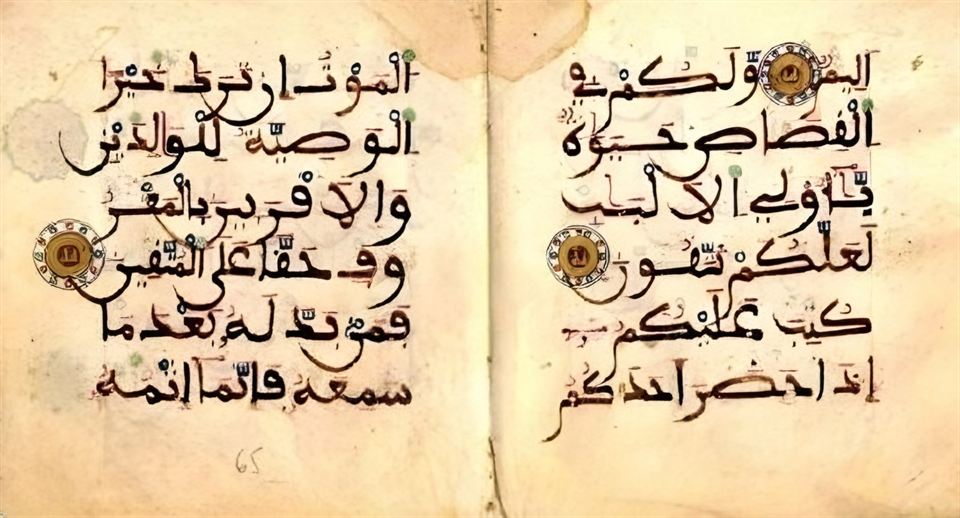
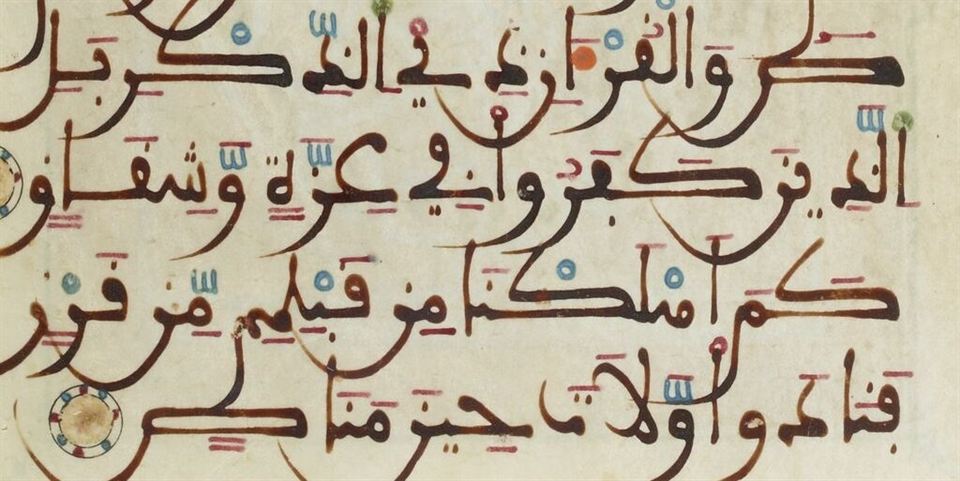
- Parchment; square pages of five lines; a broad, bold Maghribi mabsūṭ in dark brown ink
- Vocalisation
- Vowels, madda and elision marks in red; sukūn, shadda and waṣla in blue; hamza in yellow
- What survives
- 25 of 30 volumes in the sultan’s hand, 24 of them in the museum since volume 30 was stolen
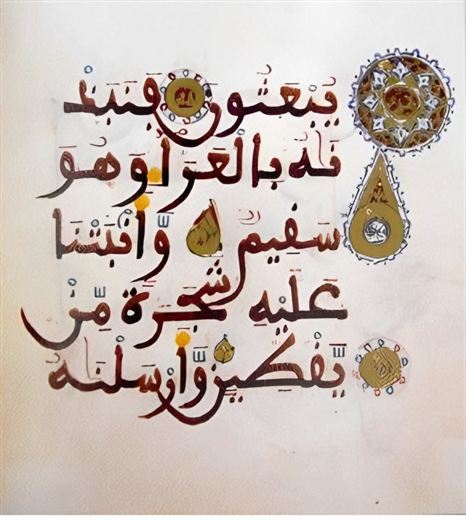
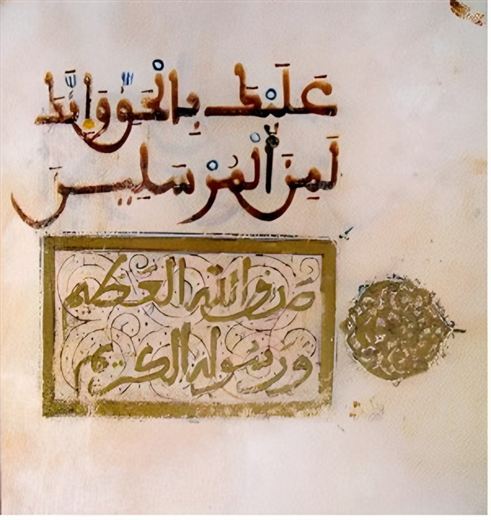
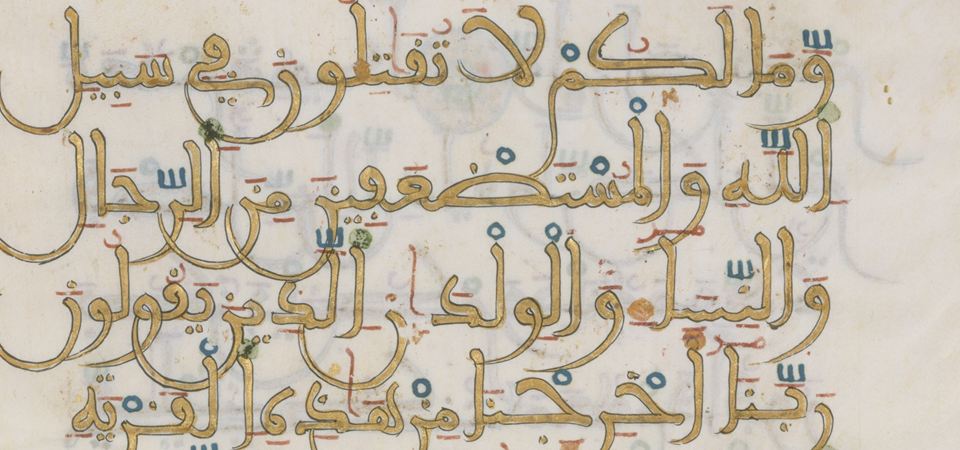
It is called “the Maghribi rabʿa” because its thirty volumes are kept in a square box of ebony inlaid with silver, divided inside into compartments. The text is in Maghribi mabsūṭ, in a carbon ink mixed with saffron and musk. The sura headings and endings are in plain, foliated and interlaced Kufic, and at the end of each volume is the endowment text in seven lines of gilded Kufic within a gilded frame.
Volumes 5, 10, 16, 18 and 26 were lost long ago and were replaced in 1221 AH (1806 CE) in the hand of a Maghribi, al-Hajj Mubarak b. ʿAbd al-Rahman, called “al-Maliki” in some sources and “al-Mashunshi” by Khabta. Volume 30 (from Surat al-Nabaʾ to Surat al-Nas) was stolen from the museum in 1931–1932, most likely taken to Egypt. The founder stipulated that it be read every day after sunrise, by a reader who knew the Qur’an by heart and was of good character.
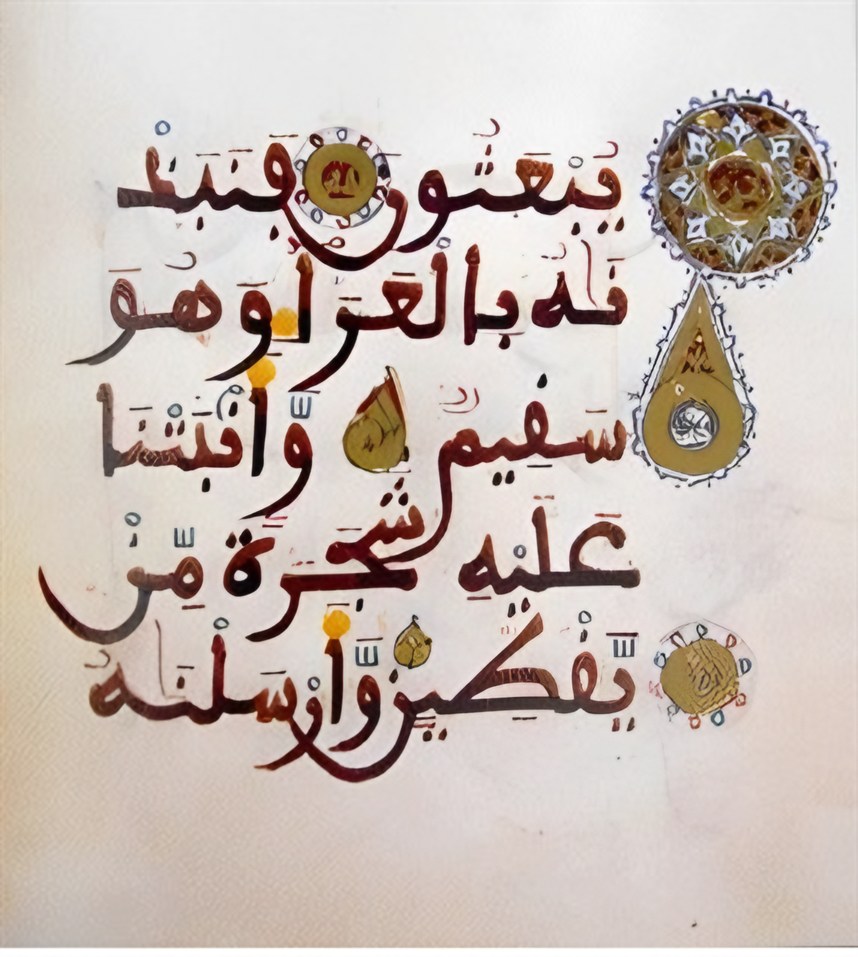
The verse separators are gilded roundels with the word «آية», “verse”, in their centre, ringed by three circles with small red and green circles alternating between them, on the model of the separators in the rabʿa of his father Abu Saʿid. Fifth and tenth verses, ḥizbs and the divisions for Ramadan have gilded markers in the margin, each of its own shape. The sura headings are in Kufic on a blue foliate ground, or in Maghribi thuluth on a ground of gilded spiral scrolls, and the volumes end with «صدق الله العظيم ورسوله الكريم», “God Almighty and His noble Messenger have spoken the truth”, in Maghribi thuluth in a gilded frame.
Ibn Marzuq records in his Musnad that Abu al-Hasan copied other Qur’ans in his own hand: for the ribāṭ of Chella, for the Prophet’s Mosque and for the Sacred Mosque. The al-Aqsa rabʿa is the only one of them that survives.
Not digitised for the public. Its images are published in Khader Salameh’s catalogue of the Qur’ans in the Islamic Museum (2001) and in an illustrated report by Al Jazeera Net (2020). The two images here are reproduced from Dr Mohamed Abdelhafid Khabta’s course, at low resolution.