- Today
- New York, the Metropolitan Museum of Art, 37.21 (acquired in 1937)
- Format
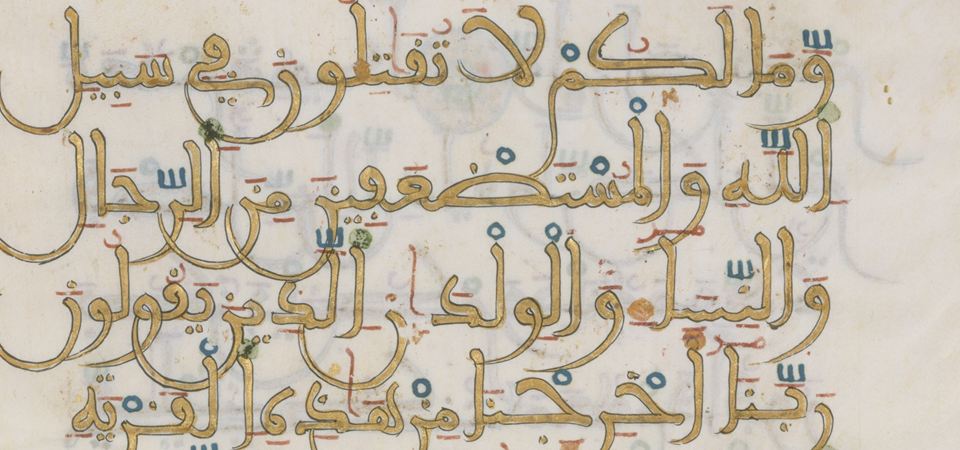
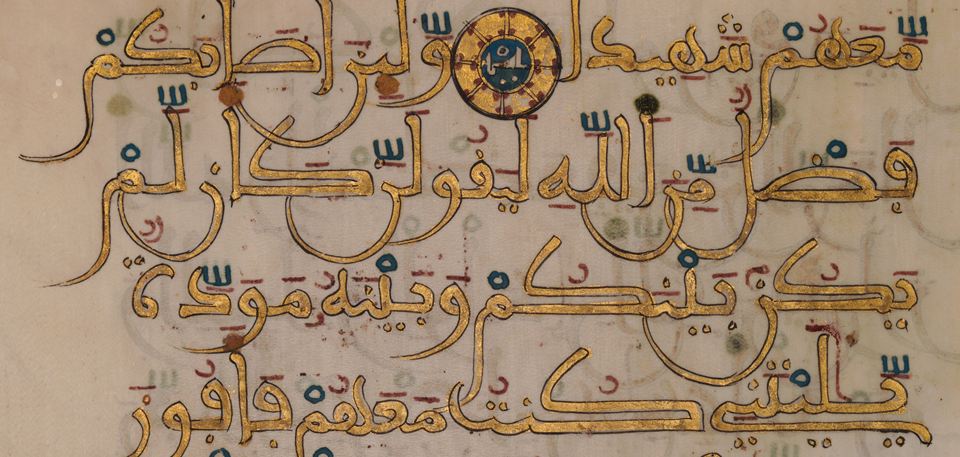
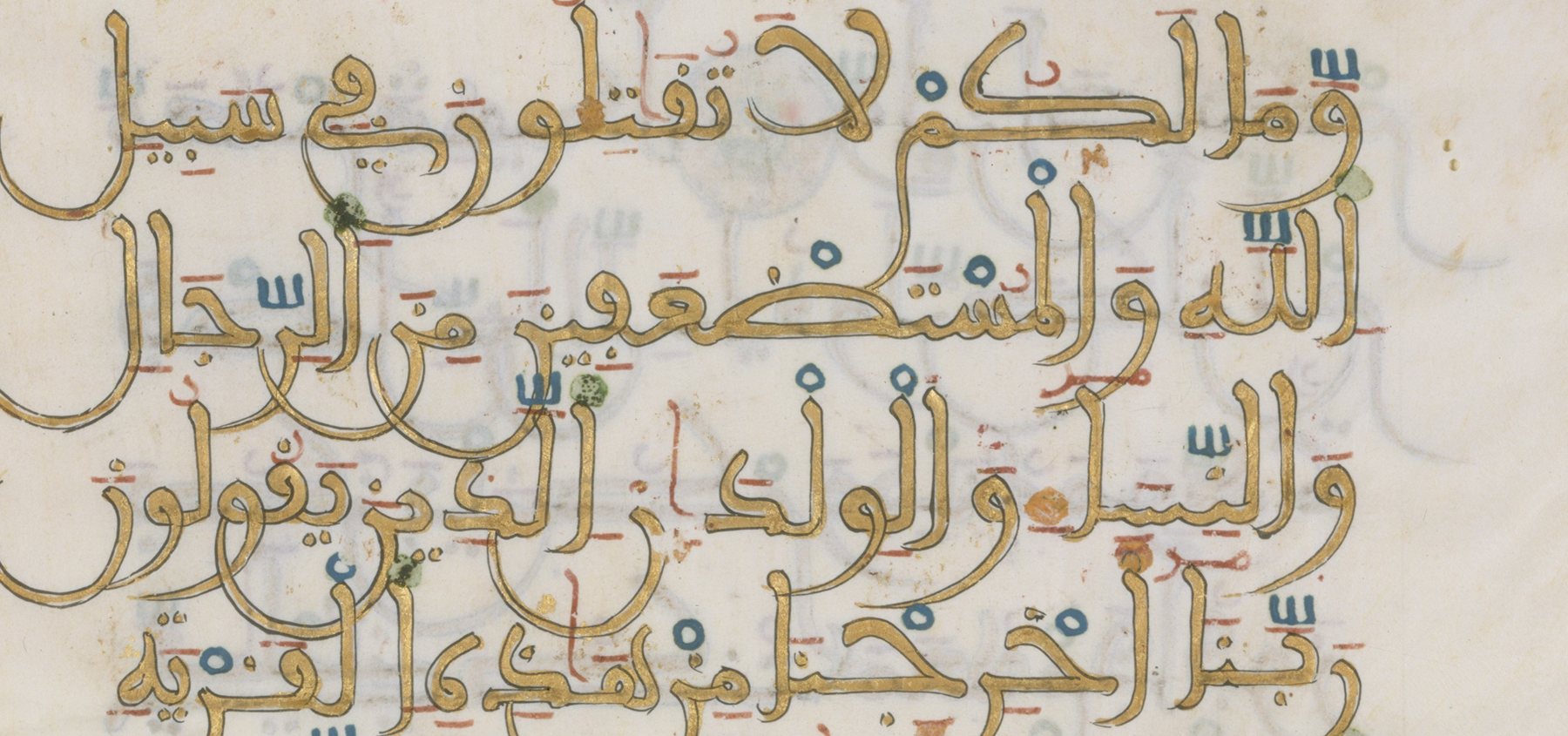
- A single parchment leaf; 26 × 21.7 cm; 9 lines of Maghribi mabsūṭ, its letters in gold outlined in ink
- Text
- Surat al-Nisaʾ 72–76
- Origin
- “North Africa” according to the museum record
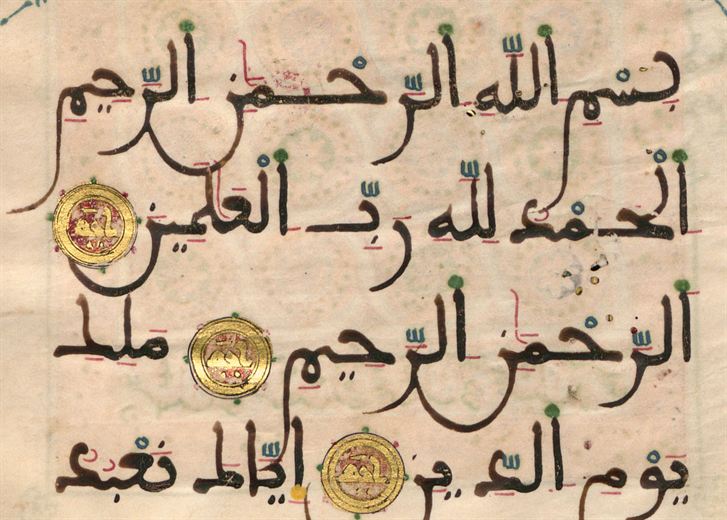
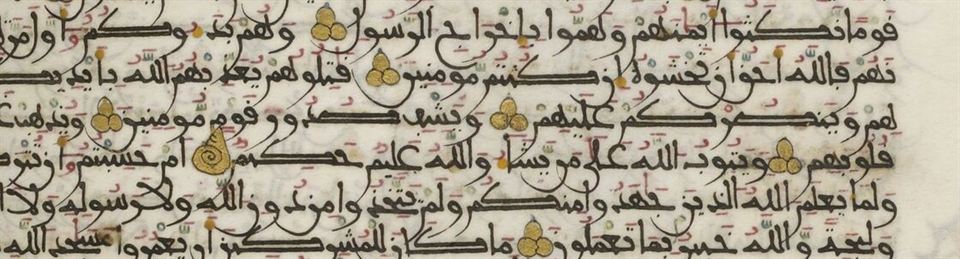
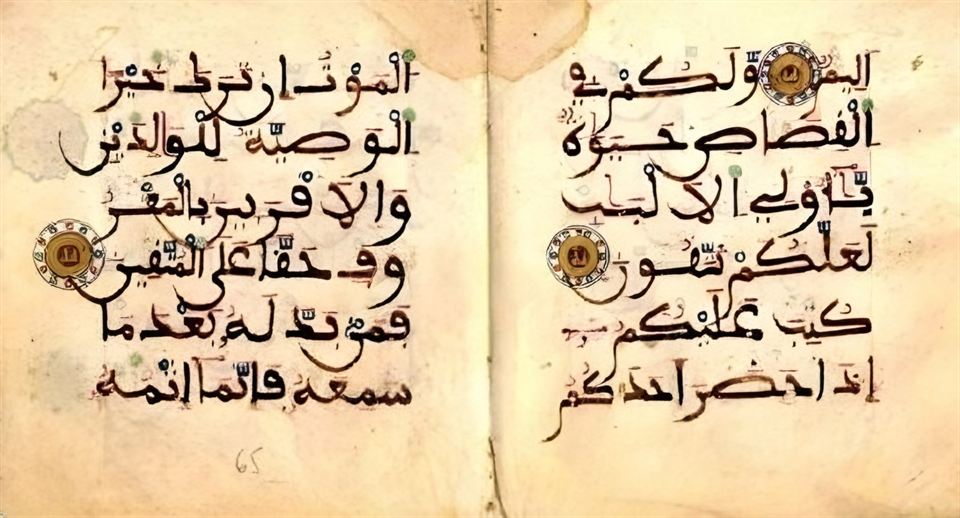
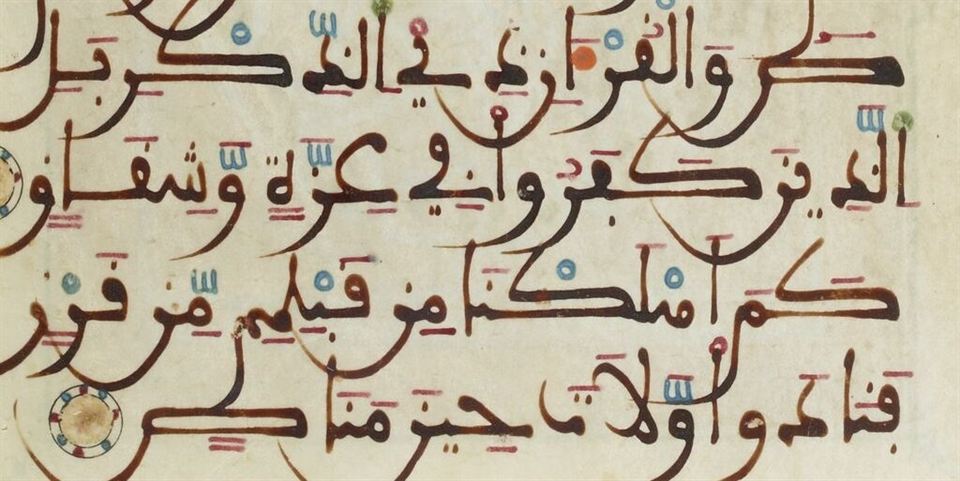
A rare leaf whose letters are written in gold and vocalised in colour: vowels in red, sukūn as blue circles, shadda in blue, waṣla as a green dot and hamza as a yellow dot. The verse separators are gilded rosettes with lapis blue at their centre.
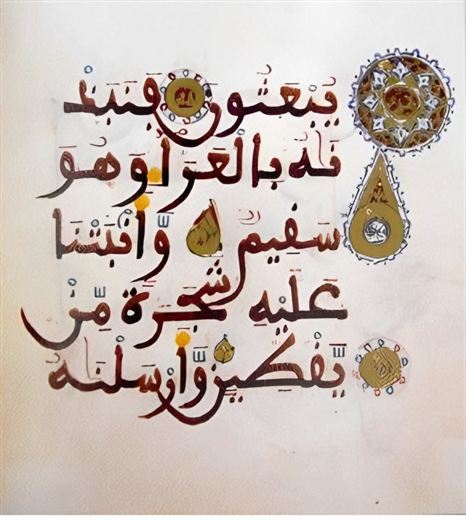
Mohamed Abdelhafid Khabta’s thesis (2011, p. 188, fig. 43) reproduces a page from Surat Yunus (61–64) in the same style, captioned “two pages of a Qur’an written in liquid gold in 700 AH in the reign of Abu Yaʿqub Yusuf the Marinid”, with a reference to the Metropolitan as 37.21; many Arabic websites repeat it. But the museum’s leaf 37.21 is from Surat al-Nisaʾ, not Surat Yunus, so the Yunus page is another leaf whose whereabouts we have not found. The museum dates leaf 37.21 to about 1250–1300 CE, mentions neither the year 700 AH nor Abu Yaʿqub, and the leaf has no colophon.
Undated, and neither its copyist nor its owner is known. The date of 700 AH and the attribution to Abu Yaʿqub Yusuf have no support in the museum record, whose estimate could fit the end of the Almohad period as well as the beginning of the Marinid.