An illustrated guide · 524–668 AH / 1130–1269 CE

Almohad Qur’ans

Dated Qur’ans with a known copyist or patron from the Almohad period in the Maghrib and al-Andalus: the ones that have come down to us, and the ones that can be browsed online today.

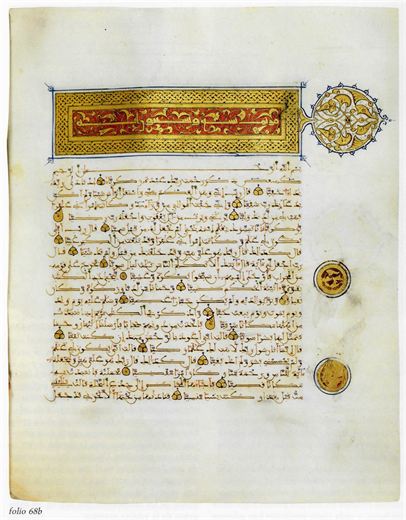
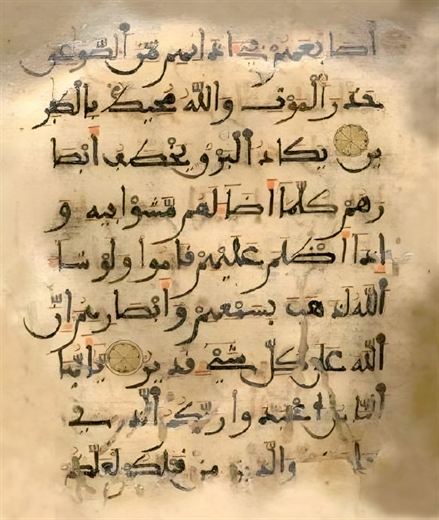
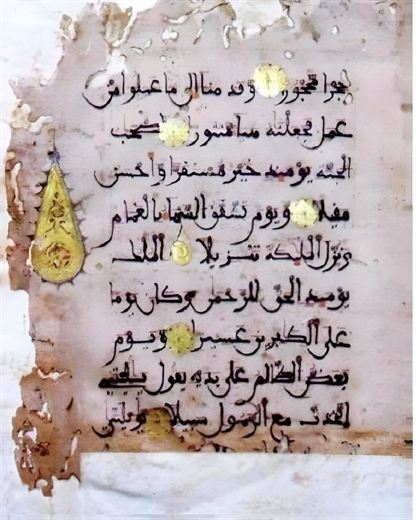
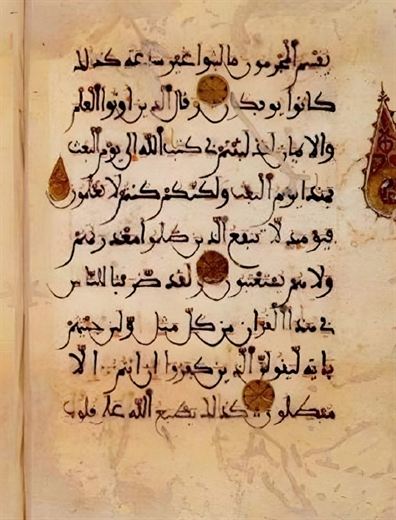
The Almohad state spanned both shores of the Strait, so its Qur’ans were copied in Marrakesh and Ceuta as well as in Seville, Valencia and Malaga. Few of them meet the criteria here; the best known is the multi-volume Qur’an that the Caliph al-Murtada wrote in his own hand. On the edge of the criteria stand many Qur’ans that are dated or endowed but do not name their copyist, or that were copied in cities temporarily outside Almohad rule.

Browse the Qur’ans Overview table
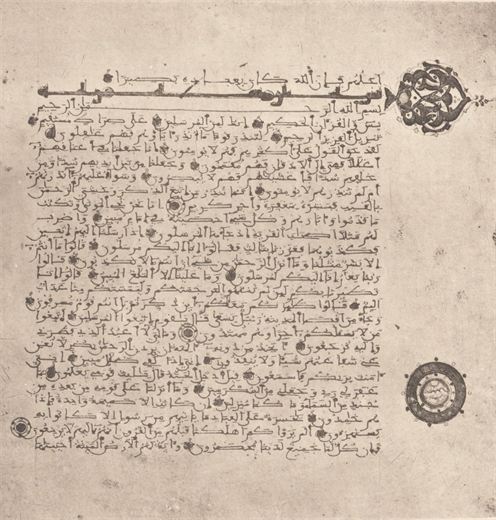
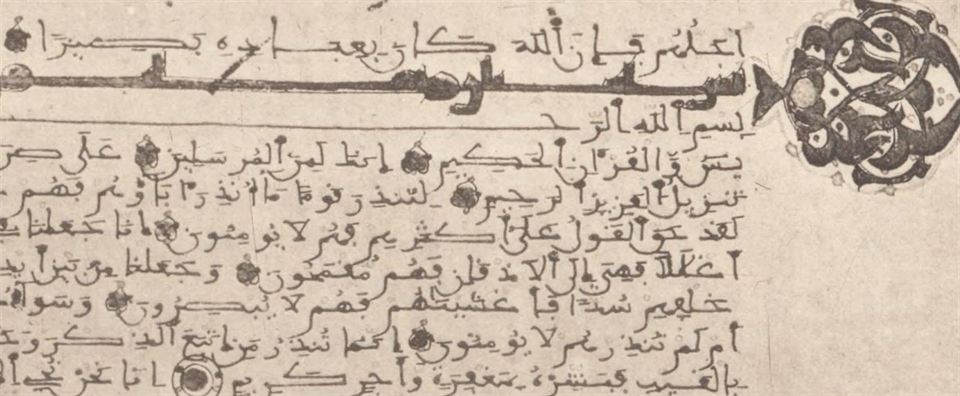
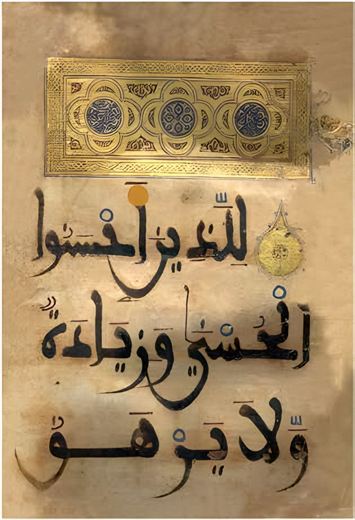
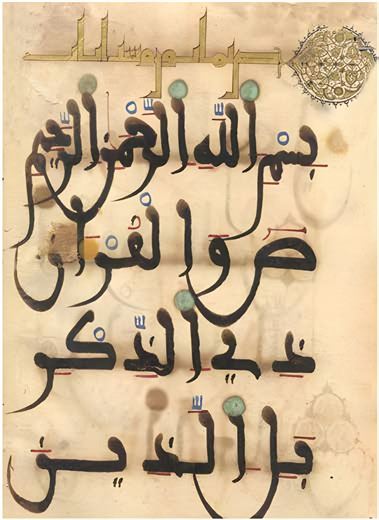
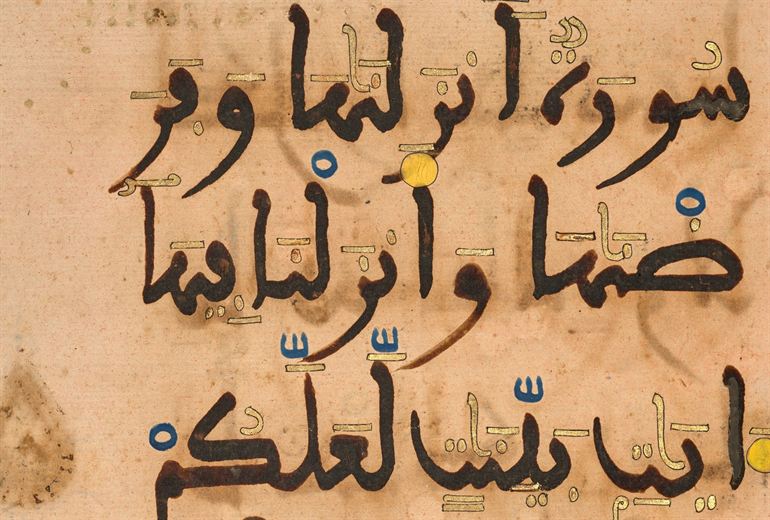
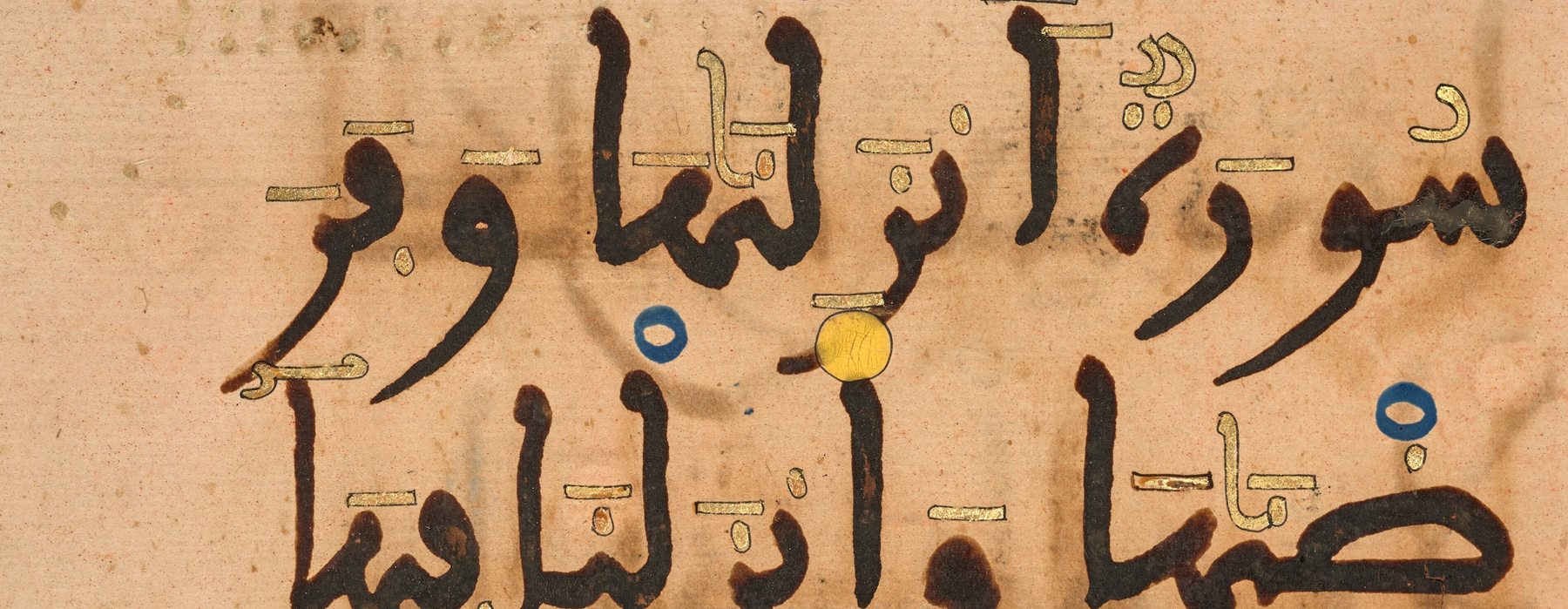
“Sūra anzalnāhā wa-faraḍnāhā” from the Pink Qur’an
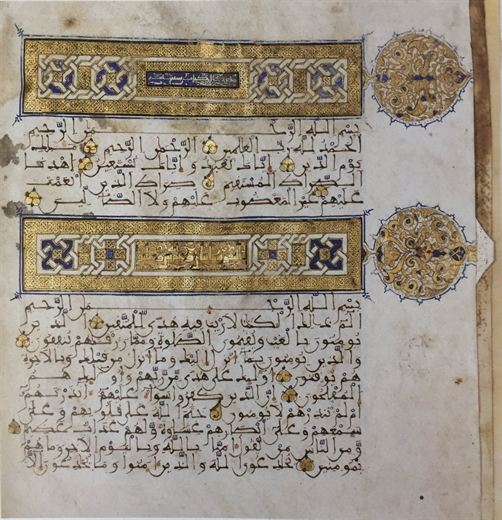
«سورة أنزلناها وفرضناها / وأنزلنا فيها آيات بينات», “A sura We have sent down and made obligatory, and in it We have sent down clear verses”: the opening of Surat al-Nur in the Pink Qur’an, Marrakesh, before 650 AH / 1252 CE. Getty Museum, Ms. 122.
Overview

What do we know?

This guide lists 14 Qur’ans in three groups: those that survive and meet the criteria, those recorded in the sources and since lost, and those on the edge of the criteria.

5
surviving Qur’ans meeting the criteria
0
Qur’ans recorded in the sources, with no known trace today
9
Qur’ans on the edge of the criteria, included for comparison
2
Qur’ans whose surviving parts can be browsed in full at the source

Criteria

A Qur’an enters the first list when three things hold:

  • The date of copying is stated explicitly in its colophon or endowment deed, not inferred from its style.
  • Its owner is known: the copyist, if named, or the person for whom or for whose library it was made.
  • It was demonstrably copied in the Almohad lands of the Maghrib and al-Andalus, while they were under Almohad rule.

Some Andalusian cities broke away from Almohad rule during this period: Valencia under Ibn Mardanish until 567 AH / 1172 CE, and Seville under Ibn Hud around 626–635 AH / 1229–1238 CE. Qur’ans copied there at those times are placed on the edge of the criteria.

What the badges mean

Each card carries three badges: does the Qur’an survive? Is it complete? Can it be browsed online?

SurvivesLostCompleteIncompleteFully digitisedPartial imagesNot digitisedUnknown
SampleQur’anDateStateCompletenessDigitisationWhere todayBrowse
Surviving, meeting the criteria
Ibn Ghattus’s Qur’an of 578 AHMore about it → 578 AH
1182–1183 CE
Survives Completeness unknown Not digitised Istanbul —
The Ceuta Qur’anMore about it → Muharram 587 AH
c. 28 January – 25 February 1191 CE
Survives Completeness unknown Not digitised Istanbul —
The Qur’an of Ibn Khaldun of ValenciaMore about it → 596 AH
1199–1200 CE
Survives Complete Partial images London Open ↗
Abu Yaʿqub’s Qur’an (Topkapı)More about it → Jumada II 599 AH
c. 14 February – 14 March 1203 CE
Survives Completeness unknown Not digitised Istanbul —
The rabʿa of al-MurtadaMore about it → 20 Jumada II – 6 Rajab 654 AH
July 1256 CE
Survives Incomplete Not digitised Marrakesh, Rabat and London —
On the edge of the criteria
—Ibn Marzuq’s Qur’anMore about it → 559 AH
1163–1164 CE
Survives Completeness unknown Not digitised Tetouan —
The Qur’ans of the Banu GhattusMore about it → 556–564 AH
1160–1169 CE
Survives Completeness unknown Not digitised Cairo and elsewhere —
Al-Murri’s Qur’an (Dresden)More about it → Middle ten days of Shaʿban 580 AH
c. 16–25 November 1184 CE
Survives Incomplete Fully digitised Dresden Open ↗
Dated Qur’ans without a copyistMore about it → 565–598 AH
1170–1202 CE
Survives Completeness unknown Not digitised Various places —
The Malaga rabʿaMore about it → c. 620 AH
1223 CE
Survives Incomplete Not digitised Marrakesh —
The Seville Qur’an (Munich)More about it → First ten days of Muharram 624 AH
c. 22–31 December 1226 CE
Survives Complete Fully digitised Munich Open ↗
Abu Ishaq’s rabʿa (Topkapı)More about it → Before 22 Shaʿban 635 AH (date of its endowment)
before 9 March 1238 CE
Survives Complete Not digitised Istanbul —
The Tinmal rabʿaMore about it → 632 AH (copied) · 649 AH (endowed)
1235 CE · 1251 CE
Survives Incomplete Not digitised Marrakesh —
The Pink Qur’anMore about it → Before Safar 650 AH (date of its endowment)
before April–May 1252 CE
Survives Incomplete Partial images Marrakesh, New York and Los Angeles Open ↗
Timeline

Qur’ans in the reigns of the caliphs

The bars are the reigns of the main rulers and the markers are the Qur’ans. A filled marker is a surviving Qur’an, a hollow one a lost Qur’an, and a horizontal line the span within which an undated Qur’an falls.

1140116011801200122012401260ʿAbd al-MuʾminYusuf b. ʿAbd al-MuʾminYaʿqub al-Mansural-Nasiral-MustansirSuccessive caliphsal-Saʿidal-MurtadaThe Qur’an of Ibn Marzuq the Grandfather — 559 AHIbn Marzuq’s Qur’anThe Qur’ans of the Banu Ghattus in Valencia — 556–564 AHBanu GhattusThe Qur’an of Muhammad b. ʿAbd Allah b. Ghattus — 578 AHIbn Ghattus 578The Qur’an of Muhammad b. ʿAbd Allah al-Murri — Middle ten days of Shaʿban 580 AHal-Murri 580Dated Almohad Qur’ans that do not name their copyist — 565–598 AHDated, no copyistThe Ceuta Qur’an — Muharram 587 AHCeuta 587The Qur’an of Yusuf b. ʿAbd Allah b. Khaldun — 596 AHValencia 596The Qur’an of Prince Abu Yaʿqub, son of al-Nasir — Jumada II 599 AHMarrakesh 599Volume 8 of the Malaga rabʿa — c. 620 AHMalaga 1223The Seville Qur’an — First ten days of Muharram 624 AHSeville 624The rabʿa of Prince Abu Ishaq Ibrahim — Before 22 Shaʿban 635 AH (date of its endowment)Abu Ishaq’s rabʿaThe Tinmal rabʿa — 632 AH (copied) · 649 AH (endowed)Tinmal rabʿaThe Pink Qur’an — Before Safar 650 AH (date of its endowment)Pink Qur’anThe rabʿa of the Caliph al-Murtada, in his own hand — 20 Jumada II – 6 Rajab 654 AHal-Murtada 654survivingedge
Click a marker to jump to its card. On a phone, swipe the timeline sideways.
The Qur’ans

Cards and samples

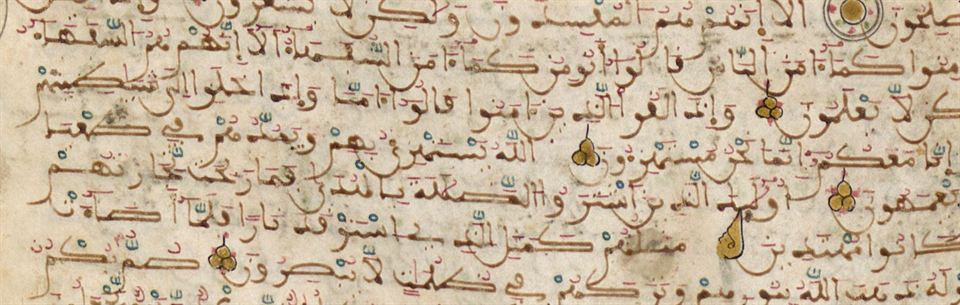
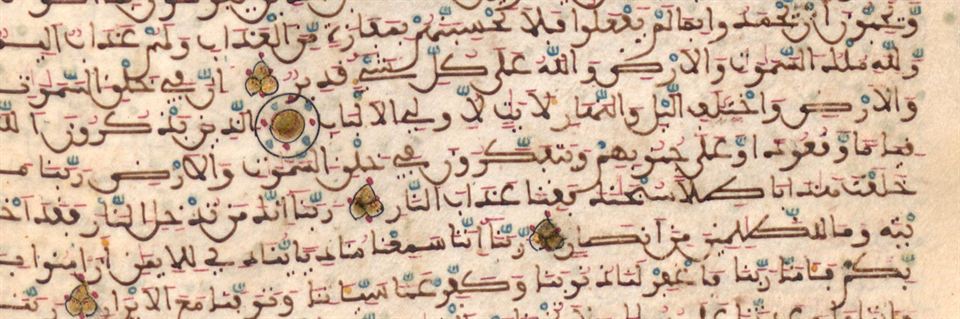
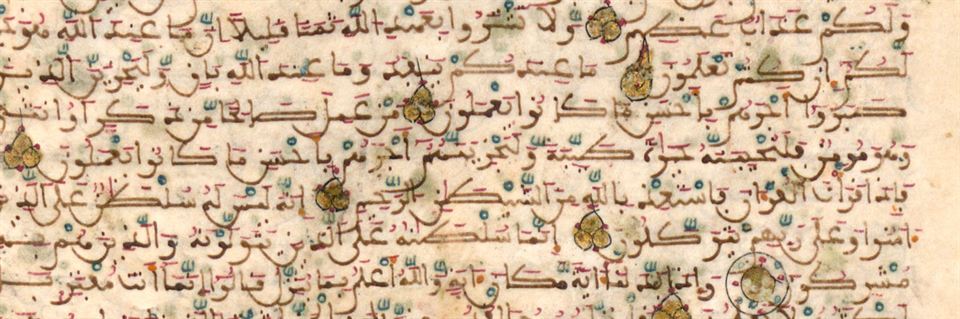
The samples are close-ups of the writing itself, not of the illumination or the opening pages. Click a sample to enlarge it; you can zoom and pan, and follow a link to the full page at the library that holds the manuscript.

Surviving, meeting the criteria 5

1

The Qur’an of Muhammad b. ʿAbd Allah b. Ghattus

578 AH · 1182–1183 CE
In the reign of Yusuf b. ʿAbd al-Muʾmin
Page of this Qur’an →
SurvivesCompleteness unknownNot digitised
Copyist
Muhammad b. ʿAbd Allah b. Muhammad b. ʿAli b. Ghattus, son of ʿAbd Allah b. Ghattus, who copied the Qur’ans of 556–558 AH
Place
Valencia, which had come under Almohad rule in 567 AH / 1172 CE
Today
Istanbul, Istanbul University Library, A 6754
Format
A single small square volume; 18.2 × 17 cm

The first known dated Qur’an of the Banu Ghattus after Valencia came under Almohad rule, and so the only one of theirs that meets the criteria here. Martin Lings published two of its pages (1976).

Not digitised for the public.

2

The Ceuta Qur’an

Muharram 587 AH · c. 28 January – 25 February 1191 CE
In the reign of Yaʿqub al-Mansur
Page of this Qur’an →
SurvivesCompleteness unknownNot digitised
Copyist
Muhammad b. Muhammad b. ʿAli b. Shuʿayb al-Ansari
Place
Ceuta
Today
Istanbul, Topkapı Palace Library, R. 27
Format
Parchment; a single large oblong volume; 31.5 × 26.2 cm

Copied in Ceuta in the reign of the Caliph Yaʿqub al-Mansur (580–595 AH), it is one of the oldest dated Almohad Qur’ans whose copyist is known. The Topkapı Palace Library holds a group of large Maghribi Qur’ans, among them this one and the rabʿa of Prince Abu Ishaq described below.

Not digitised. It is described in the CALLFRONT database of the Institut national d’histoire de l’art in Paris, after Umberto Bongianino’s book (2022).

3

The Qur’an of Yusuf b. ʿAbd Allah b. Khaldun

596 AH · 1199–1200 CE
In the reign of al-Nasir
Page of this Qur’an →
SurvivesCompletePartial images
Copyist
Yusuf b. ʿAbd Allah b. ʿAbd al-Wahid b. Yusuf b. Khaldun (not the famous historian)
Made for
Ahmad b. Muhammad b. ʿAbd al-Rahman b. Baytash al-Makhzumi
Place
Valencia, then under Almohad rule
Today
London, Khalili Collections, QUR 318
Format
Parchment; 122 folios; 17 × 16 cm; 25 lines

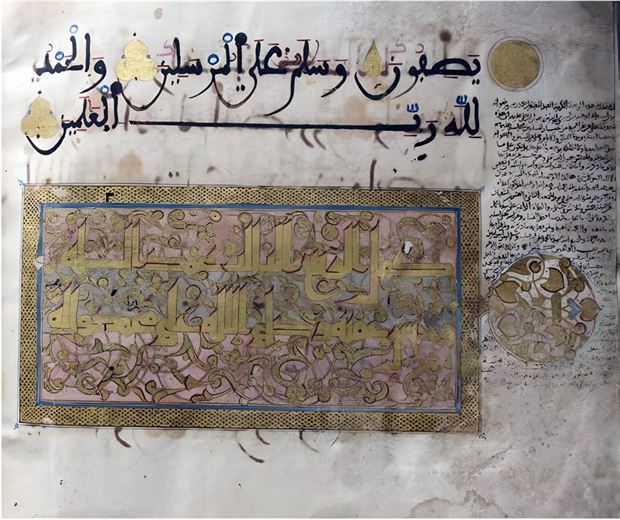
A complete Qur’an in a single volume, in a fine Andalusi script, with one-line sura headings in gilded Kufic. Its colophon fills two pages in gilded Maghribi thuluth and names the copyist and the man for whom the Qur’an was made.

Images on the collection’s website; not fully digitised.

4

The Qur’an of Prince Abu Yaʿqub, son of al-Nasir

Jumada II 599 AH · c. 14 February – 14 March 1203 CE
In the reign of al-Nasir
Page of this Qur’an →
SurvivesCompleteness unknownNot digitised
Copyist
Muhammad b. Muhammad al-Sharishi
Illuminator
His son-in-law Yusuf the illuminator; his father’s name has not been read in the colophon
Made for
Prince Abu Yaʿqub Yusuf, son and heir of the Caliph al-Nasir (r. 595–610 AH)
Place
Marrakesh
Today
Istanbul, Topkapı Palace Library, R. 33
Format
A single small oblong volume; 22.3 × 18 cm

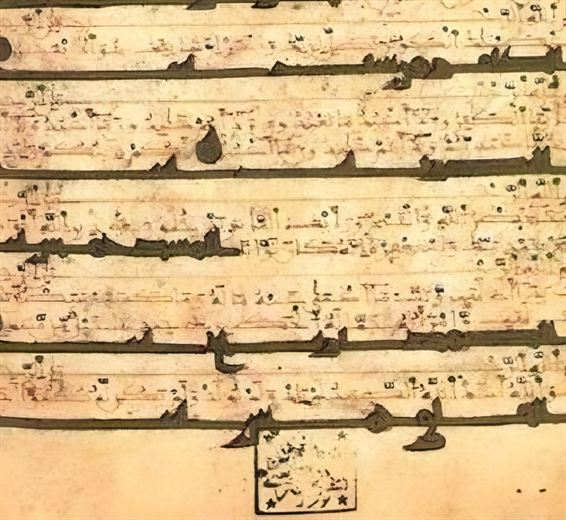
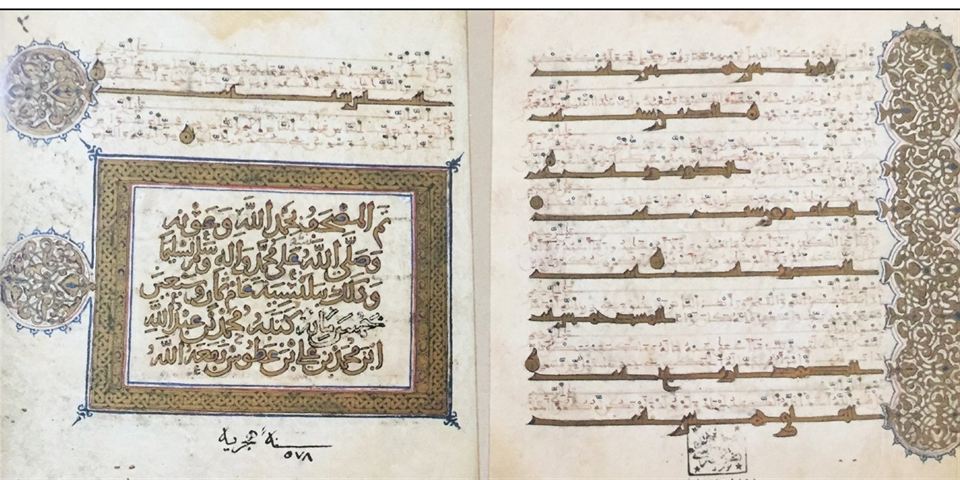
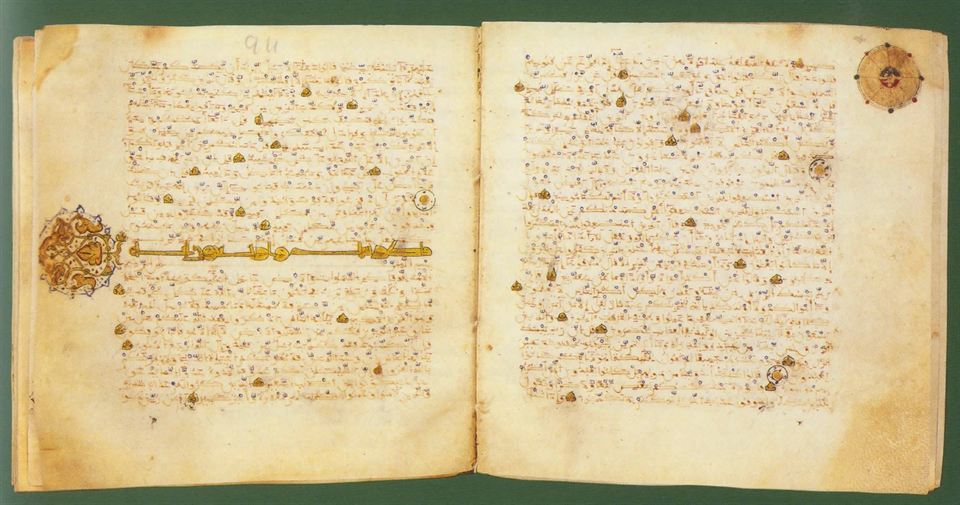
A princely Qur’an whose colophon says it was made to celebrate the birth of Prince Abu Yaʿqub, son and heir of the Caliph al-Nasir, who succeeded his father and took the title al-Mustansir. The dedication is in Maghribi thuluth reserved on a ground of gold leaf, and its wording, “among what [the copyist] made... for [the prince]”, puts the copyist’s name before the prince’s. A copyist and an illuminator worked on it together, as in the Almoravid Qur’an in Munich.

Not digitised. Martin Lings published two of its pages in his book on Qur’anic calligraphy and illumination (1976); the images here are from Bongianino’s thesis (2017).

5

The rabʿa of the Caliph al-Murtada, in his own hand

20 Jumada II – 6 Rajab 654 AH · July 1256 CE
In the reign of al-Murtada
Page of this Qur’an →
SurvivesIncompleteNot digitised
Owner and copyist
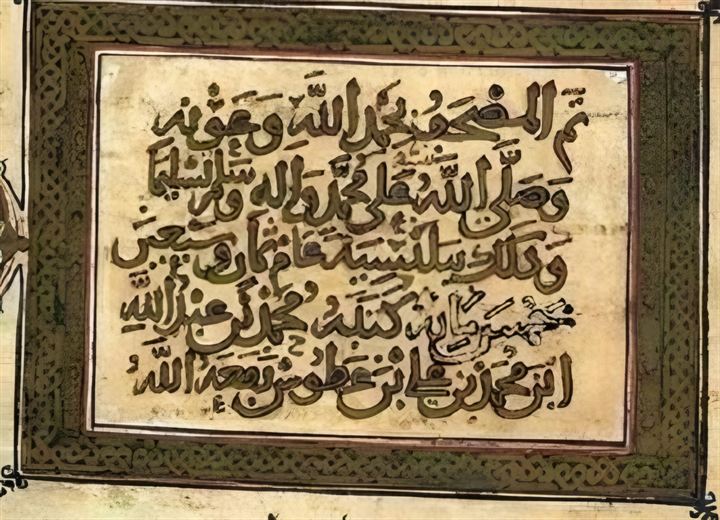
The Almohad Caliph Abu Hafs ʿUmar al-Murtada (r. 646–665 AH / 1248–1266 CE). The colophon of volume 2 reads «وكتبه بخط يده الفانية», “written by his own mortal hand”.
Place
Marrakesh, according to the colophon
Endowment
To the Saqaya mosque, i.e. the mosque of ʿAli b. Yusuf in Marrakesh, in Rajab 656 AH / July 1258 CE, “for all Muslims, night and day”. The notarial endowment deed is in volumes 1 and 4, in zimām script, and below it the endowment is confirmed in al-Murtada’s own hand.
Today
Marrakesh, Ibn Yusuf Library ms. 432: four volumes according to Bongianino, five according to Khabta, among them volume 1 (432/1) and volume 4 (432/4); Rabat, National Library J 658 (volume 2) and J 1278; Oudaya Museum, Rabat (one or two volumes once exhibited there); London, British Library Or. 13192 (a fragment of volume 7 in its original binding, bought at Sotheby’s in 1969).
Format
Parchment; 72 folios in volume 2; nine lines to the page; 290 × 225 mm; a bold mabsūṭ in black ink, some of whose letter forms lean towards the Andalusi script.
Vocalisation
Vowels and madda in red, sukūn and waṣla in dark green, hamza in orange-yellow.
What survives
Volumes of a set of ten, each of six ḥizbs.

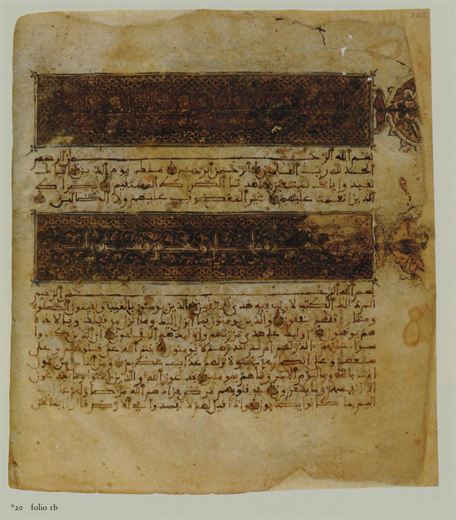
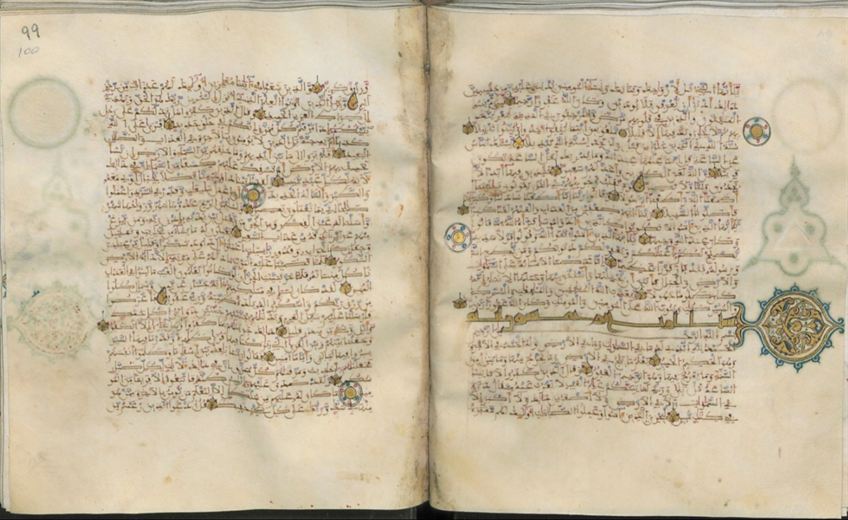
The oldest surviving Qur’an of the Islamic West written by a ruler in his own hand. Volume 1 is dated 20 Jumada II 654 AH and volume 3 6 Rajab of the same year: sixteen days separate the completion of the first from that of the third.

The verse separators are gilded roundels divided into triangles by fine black lines. The markers of every fifth and tenth verse are gilded roundels, some topped by a pyramid-like form. The sura headings are in coloured Kufic within rectangular frames decorated with gold inlaid with red and blue, joined to ornaments in the margin. In the basmala the kashīda of «الرحمن» stretches between the ḥāʾ and the mīm in the Andalusi manner. Al-Murtada sometimes splits a word between the end of one line and the start of the next, as in «أبصـ/ـارهم» (al-Baqara 20), following the habit of early Qur’ans that al-Qalqashandi criticised.

The colophon of volume 1 is in Maghribi thuluth, its letters gilded and outlined in black, with a touch of eastern thuluth. Ibn ʿIdhari reports that al-Murtada wrote three scripts, and that after his deposition in 665 AH he settled on Jabal Saksawa near Marrakesh and “lived by copying”.

The Qur’an remained complete in the Ibn Yusuf Library in Marrakesh until 1149 AH (1736–1737 CE), when the city’s muḥtasib borrowed it; its volumes were then dispersed. Volume 2 in Rabat was only identified when Mohammed al-Manuni described it and assigned it to the set, comparing its script with that of the other volumes and noting that its date agrees with theirs.

No volume has been digitised for the public. Two pages were published in the exhibition Le Maroc médiéval at the Louvre in 2014.
On the edge of the criteria 9

6

The Qur’an of Ibn Marzuq the Grandfather

559 AH · 1163–1164 CE
In Valencia under Ibn Mardanish
Page of this Qur’an →
SurvivesCompleteness unknownNot digitised
Copyist
Muhammad b. Musa b. Hizb Allah
Place
Valencia
Today
Tetouan, library of the Higher Institute, no. 1. Mohammed al-Manuni saw it in 1959 and Mohammed al-Sharifi in 1973; Bongianino could not find it, and it was most likely moved to the Faculty of Usul al-Din in Tetouan.
Format
Gazelle parchment; medium square format; Andalusi script

Al-Maqqari saw it in Tlemcen in the hands of the descendants of Ibn Marzuq the Grandfather (d. 781 AH), with his handwriting on it; it later reached Morocco.

Its copyist and date are known, but it was copied in Valencia under Ibn Mardanish, before the city came under Almohad rule.

7

The Qur’ans of the Banu Ghattus in Valencia

556–564 AH · 1160–1169 CE
In Valencia under Ibn Mardanish
Page of this Qur’an →
SurvivesCompleteness unknownNot digitised
Copyists
The family of Ibn Ghattus, the famous copyists of Valencia; the Egyptian National Library holds a Qur’an signed by Ibn Ghattus the father and dated 557 AH / 1161–1162 CE
Owner of the 557 AH Qur’an
The vizier Abu Muhammad ʿAbd Allah b. ʿAbd al-Rahman b. ʿAbd Allah al-Madhhiji al-Lushi, whose name comes before the copyist’s in the colophon
Place
Valencia
Number
Four Qur’ans on parchment between 556 and 564 AH

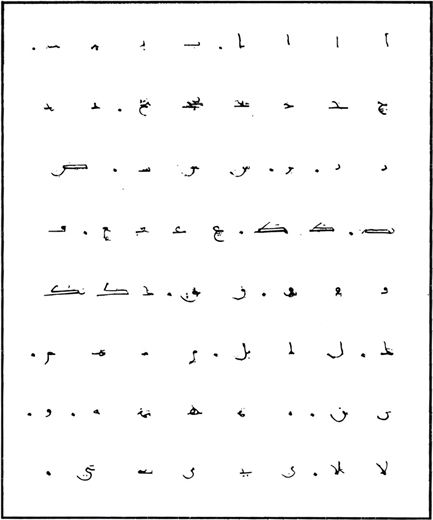
Among the oldest known dated and signed Qur’ans of al-Andalus. Their colophons were in Maghribi thuluth, and Ibn Ghattus the son was said to have copied a thousand Qur’ans. His Qur’an dated 578 AH was copied after Valencia came under Almohad rule, so it is listed in the first group.

Dated and with known copyists, but Valencia was then ruled by Ibn Mardanish, independent of the Almohads, and only came under their rule in 567 AH / 1172 CE.

8

The Qur’an of Muhammad b. ʿAbd Allah al-Murri

Middle ten days of Shaʿban 580 AH · c. 16–25 November 1184 CE
In the reign of Yaʿqub al-Mansur
Page of this Qur’an →
SurvivesIncompleteFully digitised
Copyist and illuminator
Muhammad b. ʿAbd Allah b. ʿAli al-Murri: «وكتبه وضبطه وذهّبه», “he wrote it, vocalised it and illuminated it”
Place
Not stated. His nisba points to Almería, then held by the Almohads
Today
Dresden, Saxon State and University Library (SLUB), Mscr.Dresd.Ea.293
Format
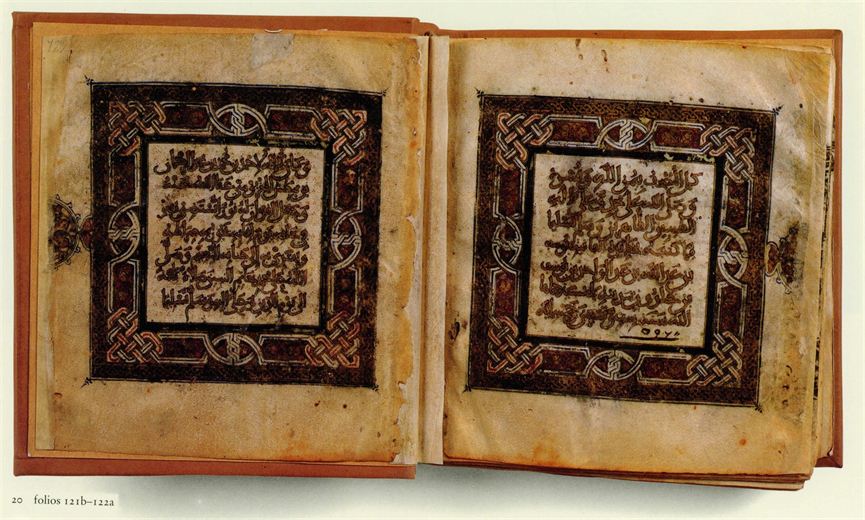
Parchment; 121 folios; 10 × 9.5 cm; the first half of a Qur’an in two volumes

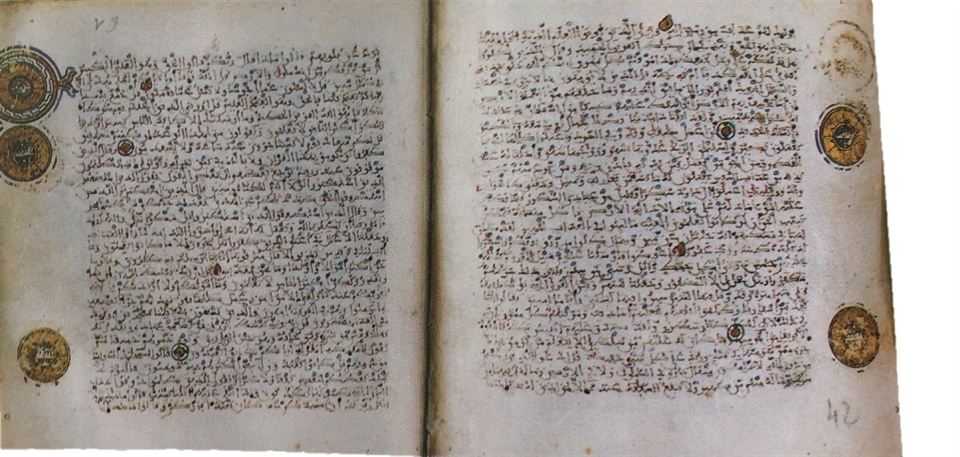
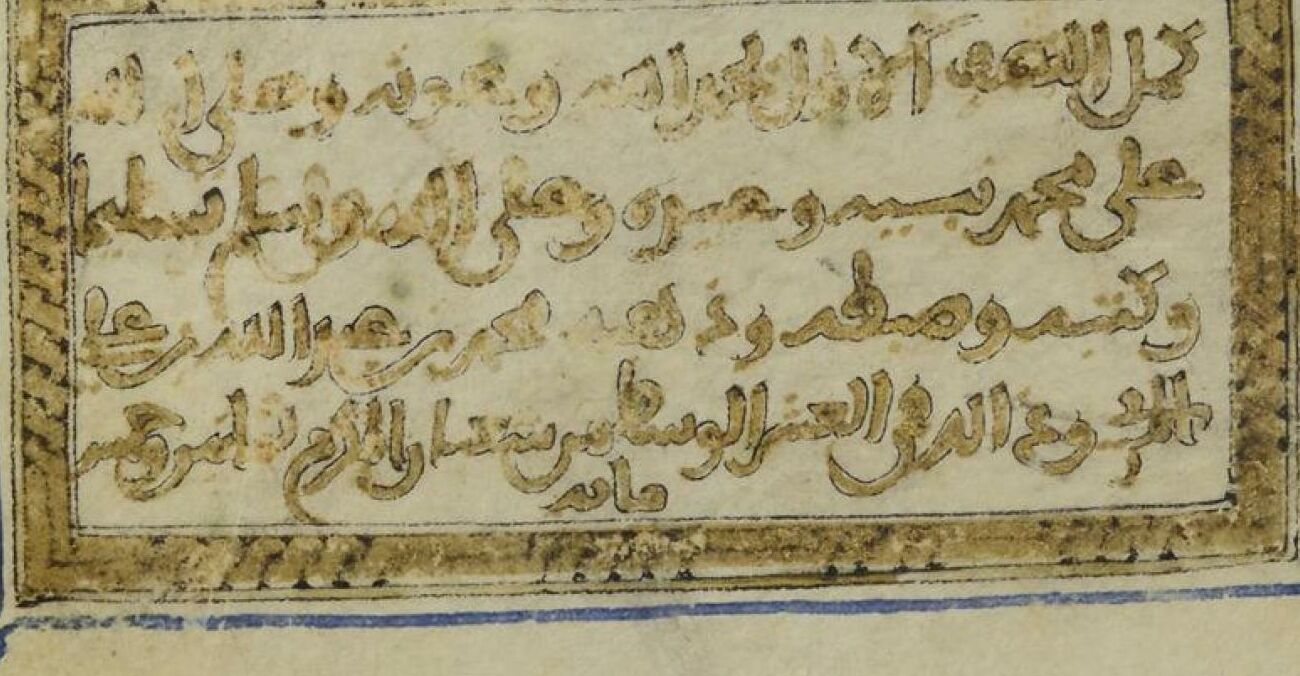
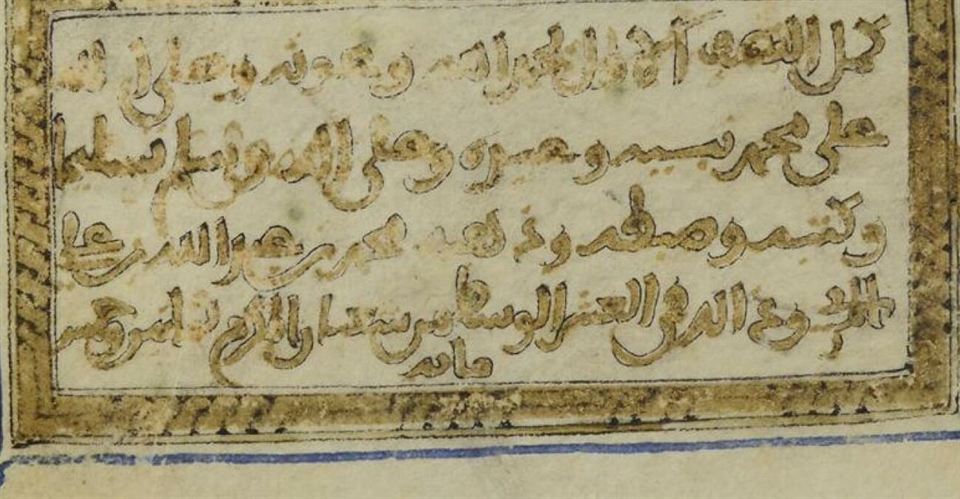
A very small Qur’an in two volumes, of which this is the first. Its colophon, in gilded Maghribi thuluth within a frame, says that the copyist also vocalised and illuminated it: all three crafts in one hand.

Its date and copyist are explicit, but the colophon does not say where it was copied.

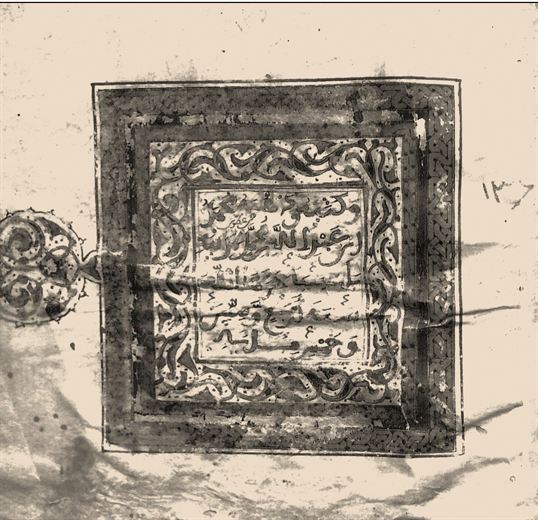
The colophon

The colophon in gold within a frame (end of volume 1)

كمل النصف الأول بحمد الله وعونه، وصلى الله على محمد نبيه وعبده وعلى آله وسلم تسليماً، وكتبه وضبطه وذهّبه محمد بن عبد الله بن علي المري، وذلك في العشر الوسط من شعبان المكرم [...] ثمانين وخمس مائة

The first half was completed with the praise and help of God; may God bless Muhammad, His Prophet and servant, and his family, and grant them peace. Written, vocalised and illuminated by Muhammad b. ʿAbd Allah b. ʿAli al-Murri, in the middle ten days of the honoured month of Shaʿban [...] eighty and five hundred

Our reading from the image; the word before “eighty” is not legible in it. The middle ten days of Shaʿban 580 AH correspond to about 16–25 November 1184 CE.

9

Dated Almohad Qur’ans that do not name their copyist

565–598 AH · 1170–1202 CE
Page of this Qur’an →
SurvivesCompleteness unknownNot digitised
Rajab 565 AH
Isle of Bute, Scotland, collection of the Marquess of Bute, ms. 359
Ramadan 573 AH
Kuwait, Tareq Rajab Museum; formerly in the Royal Library in Rabat, no. 12609
Shaʿban 586 AH
Istanbul, Istanbul University Library, A 6752
Safar 591 AH
Uppsala, University Library, O. Vet. 77
Muharram 595 AH
Médéa, Algeria, private collection; Bongianino could not trace it
Safar 595 AH
Timbuktu, library of the Kaʿti family: the second half of a Qur’an copied in Ceuta
Muharram 596 AH
Istanbul, Topkapı Palace, R. 36: copied in Valencia
Dhu l-Qaʿda 598 AH
Istanbul, Topkapı Palace, R. 31
Dhu l-Hijja 598 AH
Rabat, National Library, 934 J: at its end, counts of the verses, letters, words, dots and prostrations of the Qur’an, in Maghribi thuluth reserved on a blue ground

All nine of these Qur’ans are on Bongianino’s list of dated Maghribi Qur’ans, all are from the Almohad period, and most are small square Qur’ans. We have grouped them on one card because none of them names a copyist or an owner.

Dated, but the copyist of none of them is known, and the place of copying of most of them is unknown.

10

Volume 8 of the Malaga rabʿa

c. 620 AH · 1223 CE
In the reign of al-Mustansir
Page of this Qur’an →
SurvivesIncompleteNot digitised
Place
Malaga
Today
Marrakesh, Ibn Yusuf Library ms. 430
What survives
Volume 8 of a set of twenty
Endowment
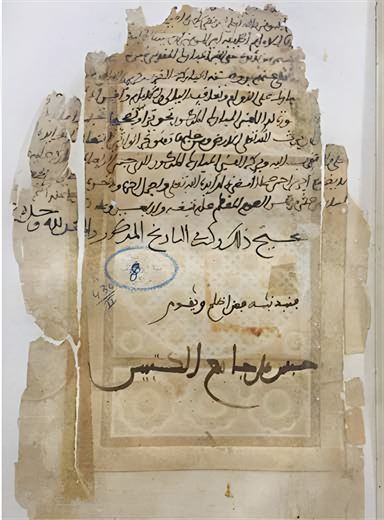
A later note above and below the opening page: «حُبّس على جامع الكتبيين», “endowed to the mosque of the booksellers” (the Kutubiyya)

Copied and illuminated in Malaga in 1223 CE and later taken to Marrakesh, most likely in the Marinid period.

We found no mention of its copyist or of the person it was made for in the sources available to us.

11

The Seville Qur’an

First ten days of Muharram 624 AH · c. 22–31 December 1226 CE
Page of this Qur’an →
SurvivesCompleteFully digitised
Copyist
Not named
Place
Seville, according to the colophon
Today
Munich, Bavarian State Library, Cod.arab. 1
Format
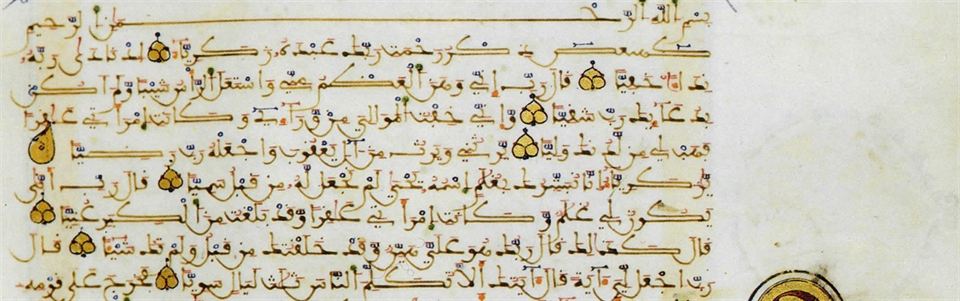
Parchment; 130 folios; 22 × 20 cm; 27 lines in a fine Andalusi hand

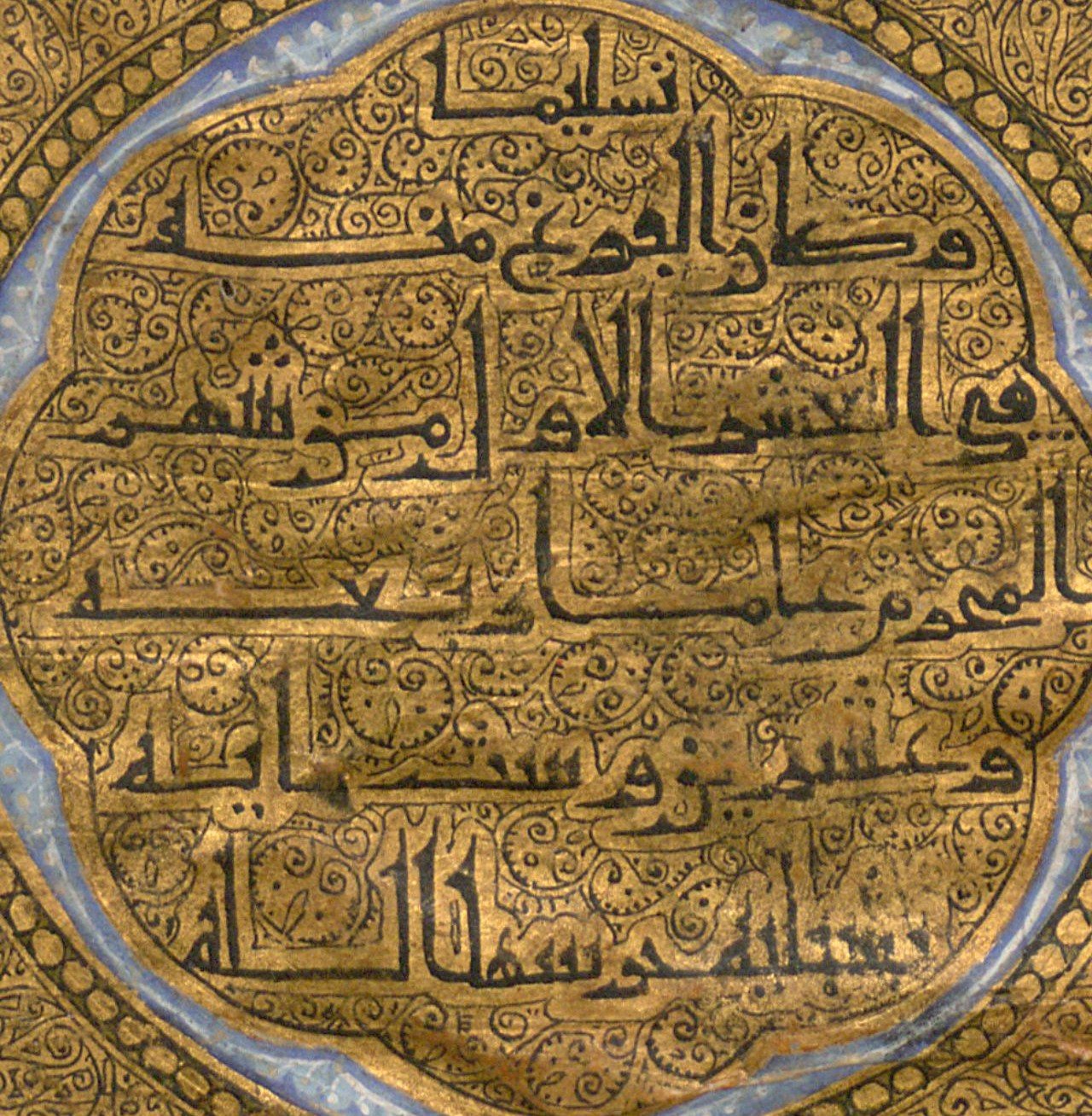
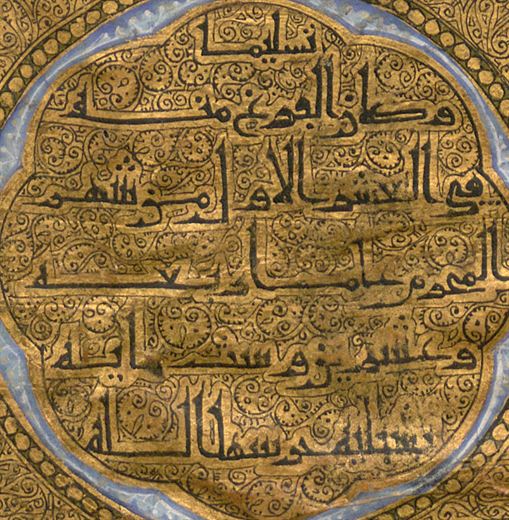
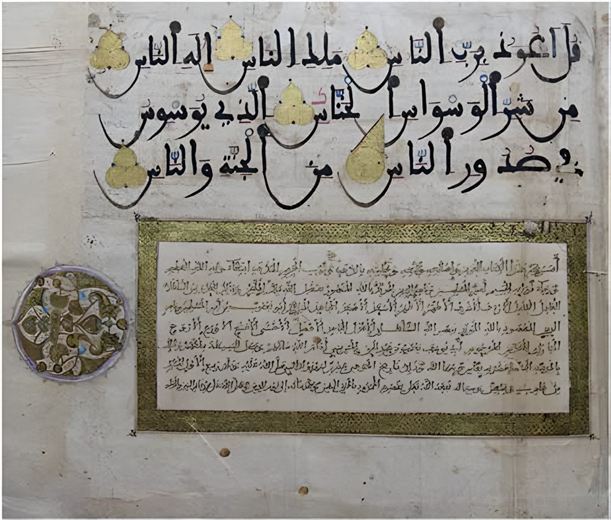
One of the few surviving dated Andalusi Qur’ans, copied in Seville, the Almohad capital in al-Andalus, shortly before the Almohads lost it. It is complete in one volume, and its colophon is written in Kufic within a gilded roundel (shamsa).

The date and the place are explicit, but the colophon names neither the copyist nor the person for whom it was made.

The colophon in Kufic

The colophon in the gilded roundel (folios 264–265 of the digitised copy)

كمل المصحف المبارك بعون الله وحسن عونه، وصلى الله على سيدنا محمد وعلى آله وسلّم تسليماً، وكان الفراغ منه في العشر الأول من شهر المحرم عام أربعة وعشرين وستمائة بمدينة إشبيلية حرسها الله.

The blessed Qur’an was completed with the help of God and His good aid; may God bless our lord Muhammad and his family and grant them peace. It was finished in the first ten days of the month of Muharram of the year six hundred and twenty-four in the city of Seville, may God protect it.

Our reading from the images of the two folios: the text begins in the gilded band after the end of Surat al-Nas and ends in the roundel. The first ten days of Muharram 624 AH correspond to about 22–31 December 1226 CE.

From Seville to Munich

624 AH / 1226 CECopied in Almohad Seville
After the fall of SevilleTaken to North Africa by Andalusi emigrants, according to the library’s description
942 AH / 1535 CESeized during Charles V’s campaign against Tunis
Before 1557 CEIn the hands of the orientalist Johann Albrecht Widmanstetter
1558 CEEntered the court library in Munich
12

The rabʿa of Prince Abu Ishaq Ibrahim

Before 22 Shaʿban 635 AH (date of its endowment) · before 9 March 1238 CE
Page of this Qur’an →
SurvivesCompleteNot digitised
Endowment
Endowed by Prince Abu Ishaq Ibrahim, al-Murtada’s brother, in Marrakesh on 22 Shaʿban 635 AH, by four identical deeds in his own hand in the margins of the four volumes
Today
Istanbul, Topkapı Palace Library, R. 21–24
Format
Paper; four volumes; leaves of 57.5 × 49.5 cm, among the largest Qur’ans copied in the Islamic West

Bongianino transcribed the endowment deed, in which Abu Ishaq entrusted its supervision to the jurist Abu Muhammad ʿAbd al-Wahid b. Makhluf. The Marinid Sultan Abu Yaʿqub Yusuf then re-endowed it in Fez on 20 Rabiʿ I 696 AH and had a colophon added in gold at the end of volume 4.

The Qur’an itself is undated and names no copyist. It was probably written by one of the two calligraphers of the Pink Qur’an.

13

The Tinmal rabʿa

632 AH (copied) · 649 AH (endowed) · 1235 CE · 1251 CE
Page of this Qur’an →
SurvivesIncompleteNot digitised
Place
Seville
Endowment
Endowed by al-Murtada to the tomb of the Mahdi Ibn Tumart at Tinmal on Friday 16 Ramadan 649 AH
Today
Marrakesh, Ibn Yusuf Library ms. 429
What survives
Volume 16 of a set of twenty

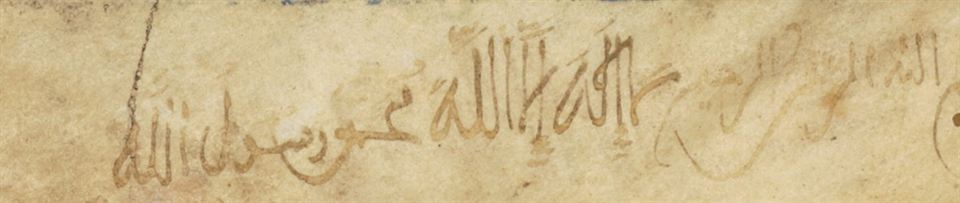
The only surviving object that can be linked with certainty to the shrine of Tinmal. The endowment deed stands at the head of the volume, marked with the Almohad motto «والحمد لله وحده», “Praise be to God alone”.

It was copied in Seville in 632 AH, when the city was ruled by Ibn Hud, who had rebelled against the Almohads. It is therefore not an Almohad work, and became one only through its endowment. The sources do not name its copyist.

14

The Pink Qur’an

Before Safar 650 AH (date of its endowment) · before April–May 1252 CE
Page of this Qur’an →
SurvivesIncompletePartial images
Endowment
Endowed by the Caliph al-Murtada in Safar 650 AH to the tomb of one of his wives, “the mother of our son Ishaq”, after his defeat by the Marinids
Place
Probably Marrakesh
Today
Marrakesh, Ibn Yusuf Library ms. 431 (most of the volumes); scattered leaves in the Metropolitan Museum of Art, New York (2017.232), the J. Paul Getty Museum, Los Angeles (Ms. 122), the Museum of Islamic Art, Doha, and elsewhere
Format
Paper dyed pink; ten volumes; five lines to the page

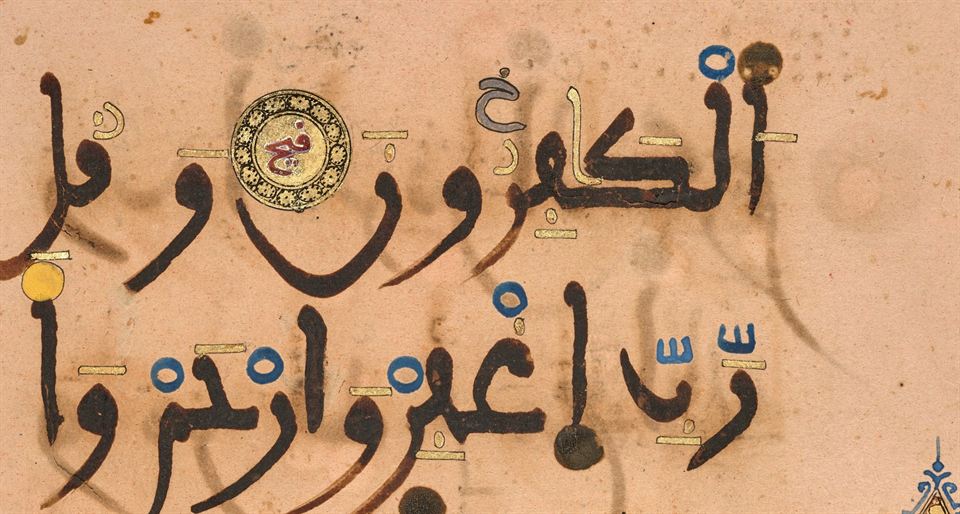
A Qur’an in a monumental script on pink paper, made by two calligraphers and two illuminators in Marrakesh in the last decades of the Almohad state. At the top of its leaves, pinpricks spell the word «حبس», “endowed”, made when the Marinids re-endowed it.

Undated, and no copyist is named. Its latest possible date comes from its endowment deed.

Sizes and ruling

The pages at one scale

The pages are drawn in their true proportions and at one scale, each with its number of lines.

Abu Ishaq’s rabʿa (Topkapı)49.5 × 57.5 cm · lines ?
The Ceuta Qur’an26.2 × 31.5 cm · lines ?
The rabʿa of al-Murtada22.5 × 29 cm · 9 lines
The Seville Qur’an (Munich)20 × 22 cm · 27 lines
Abu Yaʿqub’s Qur’an (Topkapı)18 × 22.3 cm · lines ?
Ibn Ghattus’s Qur’an of 578 AH17 × 18.2 cm · lines ?
The Qur’an of Ibn Khaldun of Valencia16 × 17 cm · 25 lines
Al-Murri’s Qur’an (Dresden)9.5 × 10 cm · lines ?
A dashed frame marks unpublished dimensions, drawn only in approximate proportion. Swipe the rows sideways to see all the Qur’ans.
Anatomy of the script

How to read the script of the Pink Qur’an

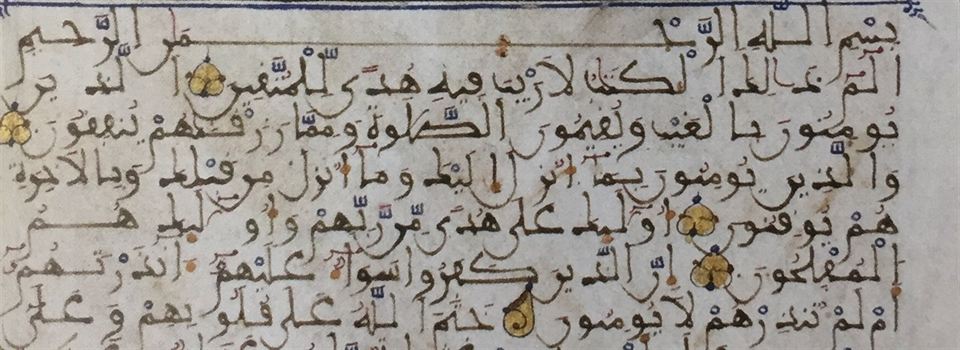
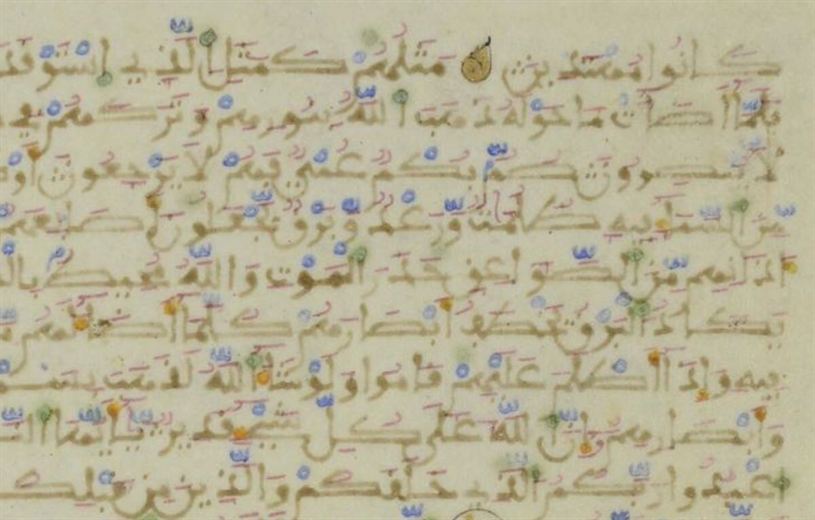
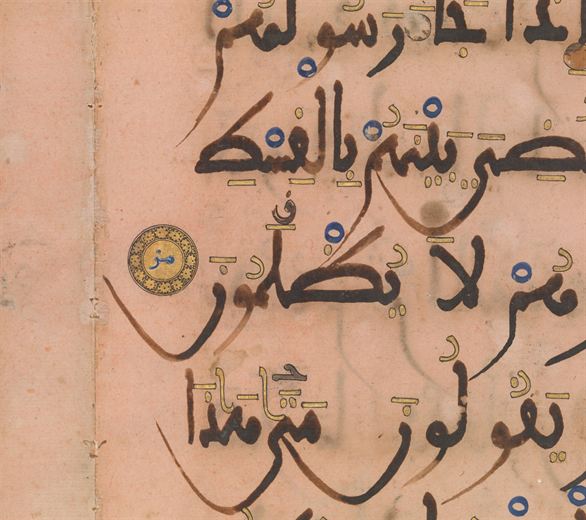
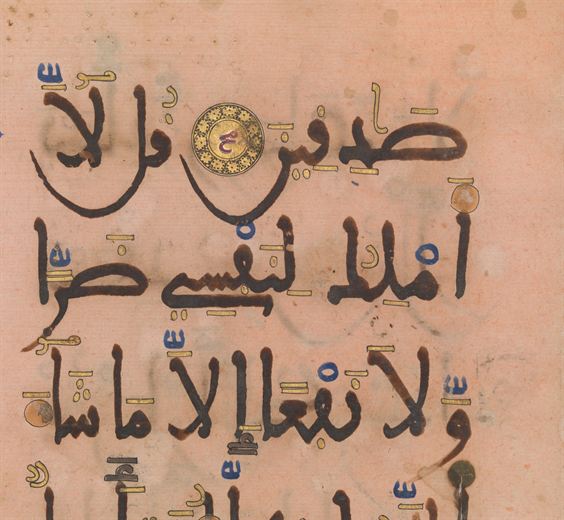
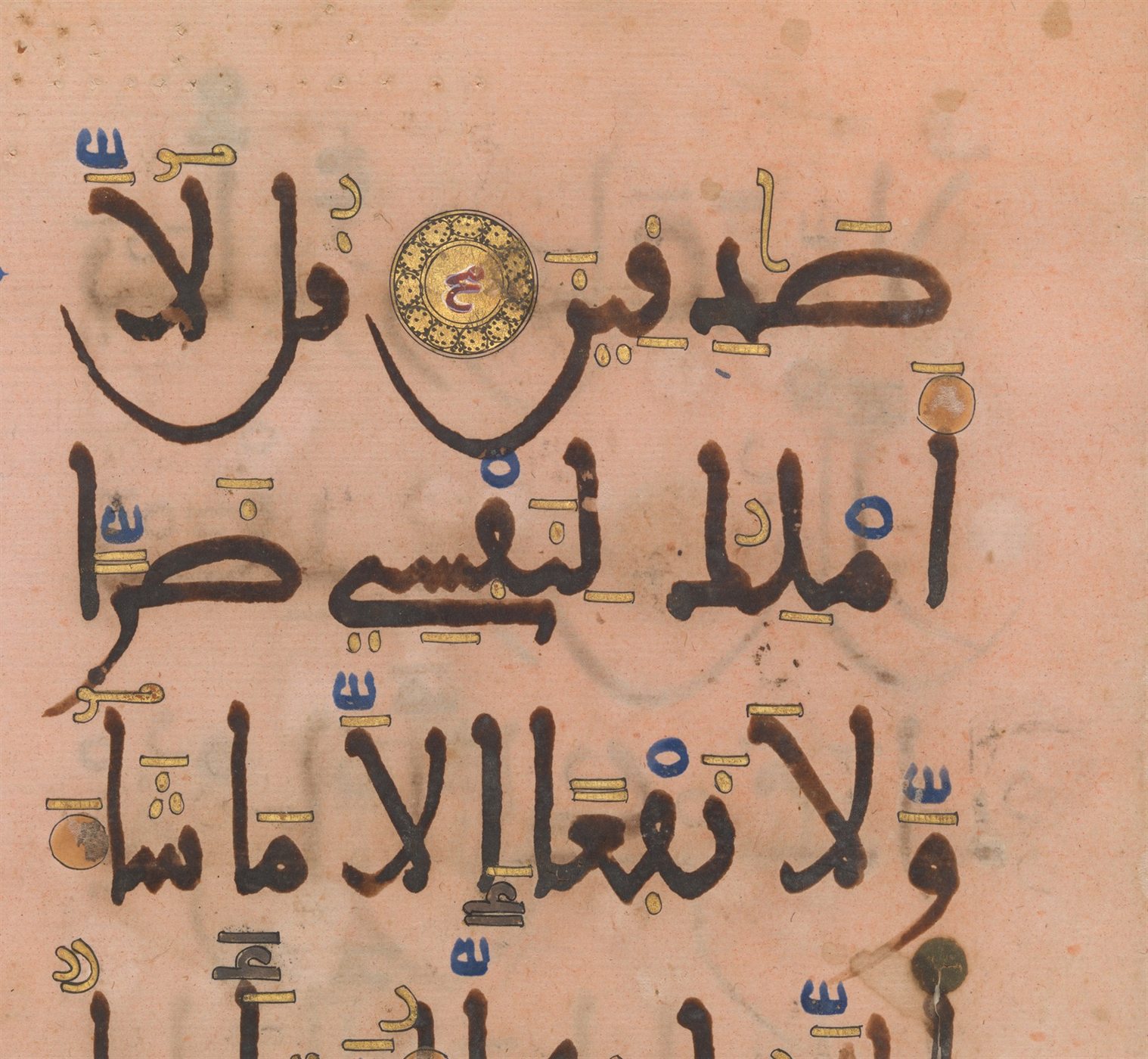
Five lines to the page in a monumental mabsūṭ script on paper dyed pink. This is a detail of a leaf at the Metropolitan Museum, from Surat Yunus (48–49): «إن كنتم صادقين. قل لا أملك لنفسي ضرا ولا نفعا إلا ما شاء...», “...if you are truthful. Say: I have no power to harm or benefit myself, except as God wills...”. Its vocalisation differs from that of the Marinid Qur’ans in ways the anatomy shows.

Three lines of the Pink Qur’an, Surat Yunus 48–49

Swipe the image sideways to see the full lines.

  1. 1
    Verse number in abjad lettersIn the gilded verse roundel are two red letters, «مح»: mīm is 40 and ḥāʾ is 8, so this is verse 48 of Surat Yunus.
  2. 2
    Vowels in goldThe fatḥa, kasra and ḍamma are gilded strokes outlined in black here, not red as in the Marinid Qur’ans we have seen.
  3. 3
    Shadda in blueThe shadda is drawn in blue above the letter, as on the lām of «إلّا».
  4. 4
    Sukūn as a blue circleA small blue circle above the vowelless fāʾ of «لنفْسي».
  5. 5
    Hamza as a yellow dotAn orange-yellow dot on the top of the alif of «أملك» marks the hamza.
  6. 6
    Sweeping curvesThe end of «قل» drops below the line in a wide curve, as throughout Maghribi mabsūṭ.
  7. 7
    The pink paperThe paper was dyed pink before writing, which is rare in Qur’ans. It was most likely made in Marrakesh itself in the last decades of the Almohad state.
Sources

References and image rights

Every statement on the cards comes from one of these sources. The readings of the colophon of the Seville Qur’an and of the verse numbers are our own, from the images.

  • Umberto Bongianino, “A Rediscovered Almoravid Qurʾān in the Bavarian State Library, Munich (Cod. arab. 4)”, Journal of Islamic Manuscripts 11/3 (2020), 263–291, open access (CC BY 4.0). Its appendix lists the dated Maghribi Qur’ans, among them the Qur’an of Prince Abu Yaʿqub, Ibn Ghattus’s Qur’an of 578 AH, al-Murri’s Qur’an and the Qur’ans of the combined card.
  • Saxon State and University Library Dresden (SLUB), Mscr.Dresd.Ea.293: digitised copy and IIIF manifest.
  • Mohamed Abdelhafid Khabta, Asalib kitabat al-mushaf al-sharif (Styles of writing the Qur’an), session 8: the rabʿa of ʿUmar al-Murtada the Almohad, part 1, description (Arabic calligraphy and ornament programme, Qarawiyyin University, 2020), pp. 36–40; and his thesis al-Khatt al-maghribi wa-asnafuhu fi l-masahif al-makhtuta (Maghribi script and its varieties in manuscript Qur’ans, 2010–2011).
  • Umberto Bongianino, “The Re-Endowment of Almohad Qurʾans under the Early Marinids (ca. 1250–1300 CE)”, in C. Gruber & B. Esener (eds), Regime Change, 2024: the Tinmal rabʿa, the Pink Qur’an, the rabʿa of Abu Ishaq and the Malaga rabʿa.
  • Umberto Bongianino & Éléonore Cellard, “The Pink Qurʾan: A Reverse Biography”, 2025.
  • Umberto Bongianino, “The Power of Curves: the Rise of Maghribi ṯuluṯ”, Journal of Material Cultures in the Muslim World 4 (2023), 9–34 (CC BY 4.0): the Qur’ans of the Banu Ghattus.
  • Umberto Bongianino, The Manuscript Tradition of the Islamic West, Edinburgh, 2022.
  • CALLFRONT database (Institut national d’histoire de l’art, Paris): records Maghrib_UB_03 (the Ceuta Qur’an) and Maghrib_UB_08 (the rabʿa of Abu Ishaq).
  • Mohammed al-Manuni, “Masahif namudhajiyya bi-khutut maghribiyya” (Model Qur’ans in Maghribi scripts) and “Tarikh al-mushaf al-sharif bi-l-Maghrib” (History of the Qur’an in Morocco, 1969): the rabʿa of al-Murtada and the Qur’an of Ibn Marzuq.
  • Khalili Collections, record QUR 318.
  • Bavarian State Library, description of Cod.arab. 1; the Metropolitan Museum of Art, 2017.232; the J. Paul Getty Museum, Ms. 122.
  • Y. Lintz, C. Déléry & B. Tuil Leonetti (eds), Le Maroc médiéval, Louvre, 2014.
Limits of this guide

We relied on what has been published and could be consulted. The Ibn Yusuf Library in Marrakesh, the National Library and the Royal Library (al-Khizana al-Hasaniyya) in Rabat, and the Qarawiyyin Library hold other Almohad Qur’ans that have neither a detailed published catalogue nor a digitised copy. We did not find the names of the copyists of the Malaga and Tinmal rabʿas; they may appear in printed works we could not reach, such as the catalogue of the exhibition Masahif al-Maghrib (2011).
The thesis of Mohamed Abdelhafid Khabta (2011) mentions a Qur’an in the Vatican Library (Vat. ar. 214) that it says “bears the date 597 AH”, in the reign of al-Nasir. We did not include it: the library’s description makes it an undated fragment of the seventh century AH (al-Ahzab 31 – Fatir 45) taken from Tunis in 1535 CE, and Bongianino does not list it among the dated Maghribi Qur’ans.

Images: Bavarian State Library, Munich, Cod.arab. 1, public domain (Public Domain Mark 1.0); the Metropolitan Museum of Art, 2017.232, public domain (Open Access, CC0); the J. Paul Getty Museum, Ms. 122, Open Content Program; Saxon State and University Library Dresden (SLUB), Mscr.Dresd.Ea.293, public domain (Public Domain Mark 1.0). The page of Ibn Ghattus’s Qur’an dated 557 AH is from Moritz, Arabic Palaeography (Cairo 1905), plate 47, in the public domain, from the Smithsonian Libraries copy on the Internet Archive. From each image we cropped the written area and reduced it, with no other change. Some images are reproduced from published studies, mostly at low resolution, to introduce Qur’ans that have not been digitised; the source of each image is given under it, and the rights belong to their owners and to the libraries that hold the manuscripts. Weak images were enhanced with AI (Real-ESRGAN, blended with a plain enlargement so that the letter forms do not change), and each enhanced image is marked under it.