- Copyist
- Not named
- Place
- Seville, according to the colophon
- Today
- Munich, Bavarian State Library, Cod.arab. 1
- Format
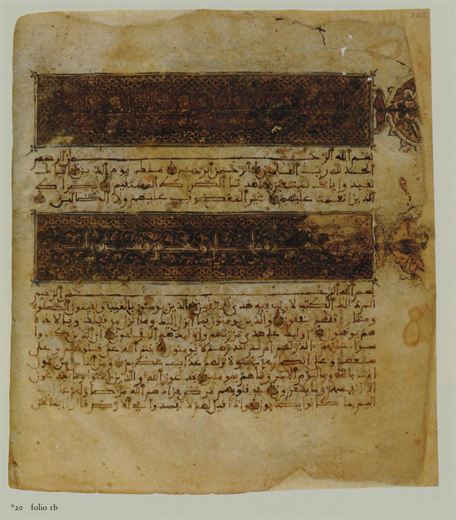
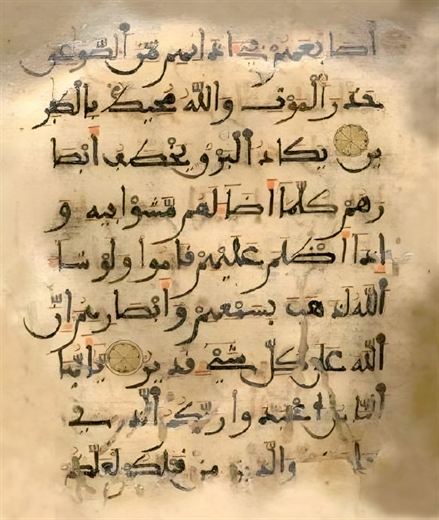
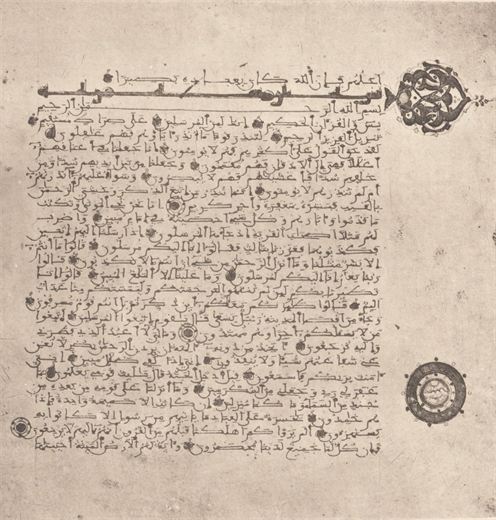
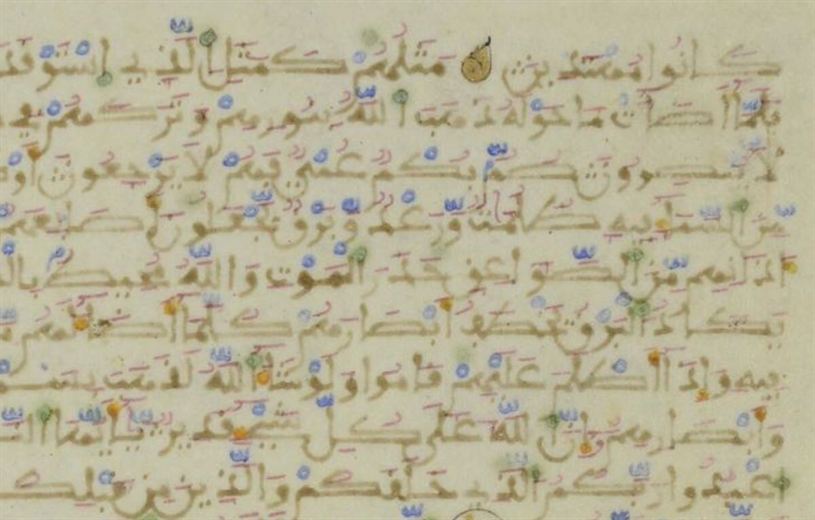
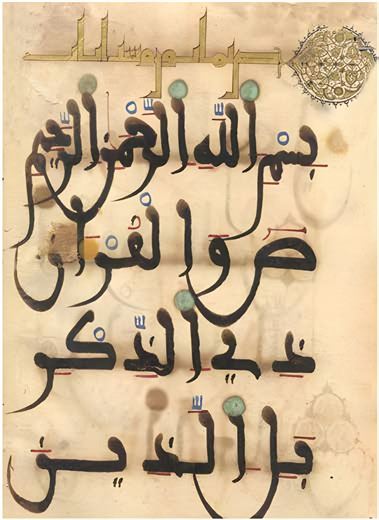
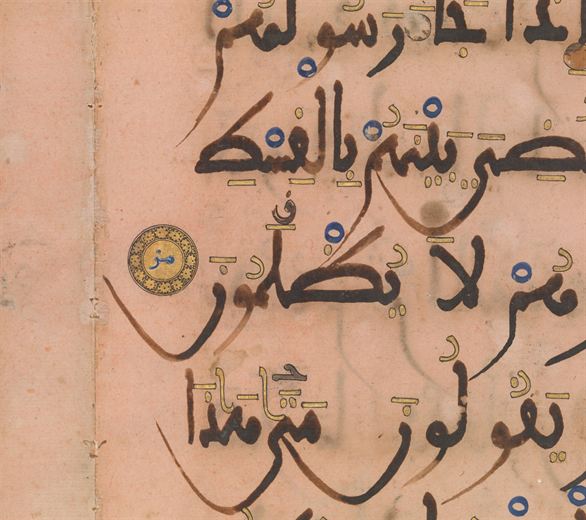
- Parchment; 130 folios; 22 × 20 cm; 27 lines in a fine Andalusi hand
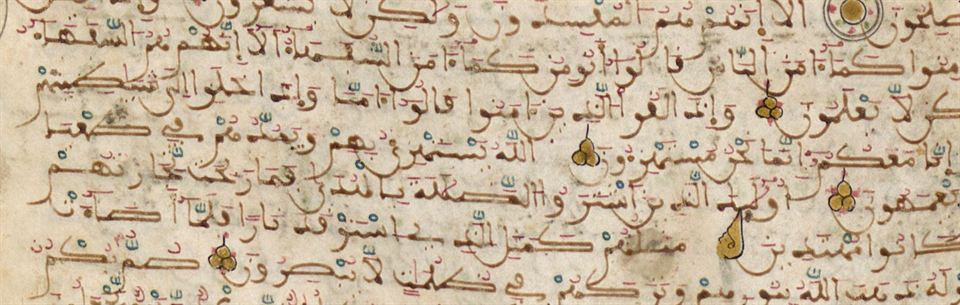
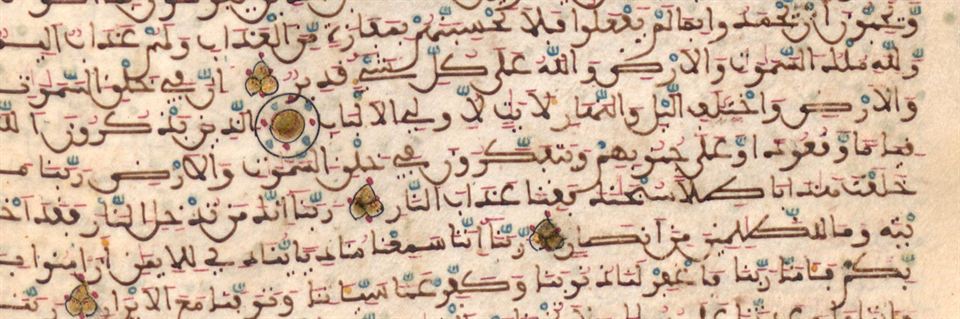
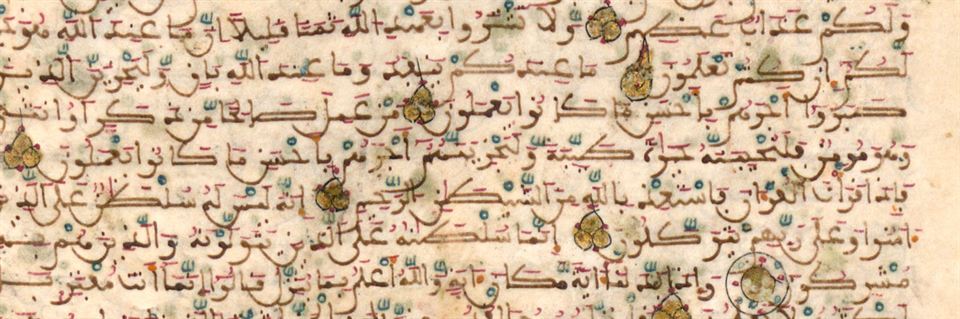
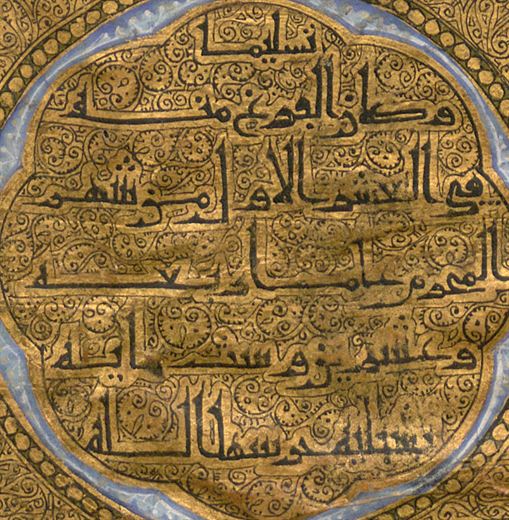
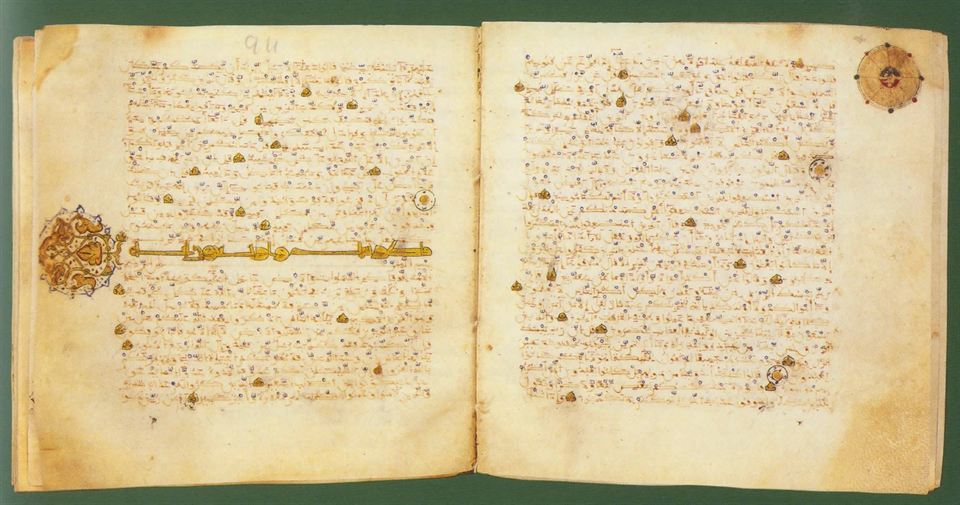
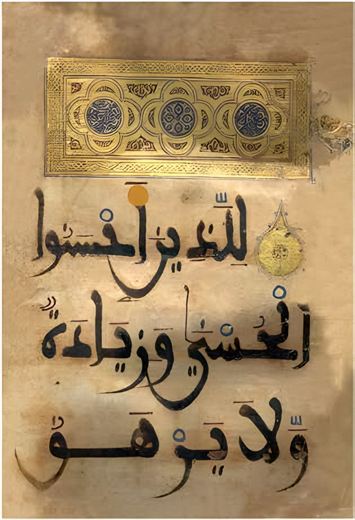
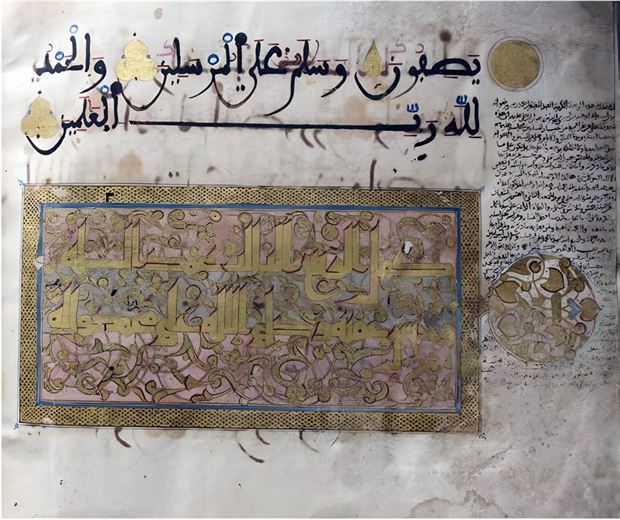
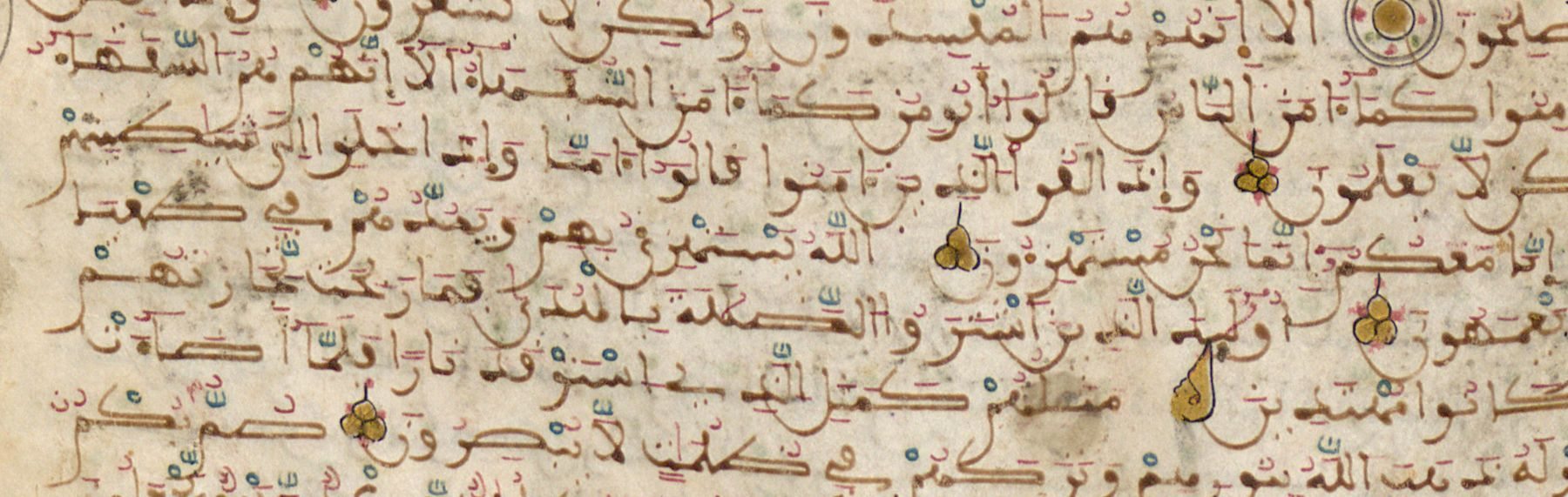
One of the few surviving dated Andalusi Qur’ans, copied in Seville, the Almohad capital in al-Andalus, shortly before the Almohads lost it. It is complete in one volume, and its colophon is written in Kufic within a gilded roundel (shamsa).
The date and the place are explicit, but the colophon names neither the copyist nor the person for whom it was made.
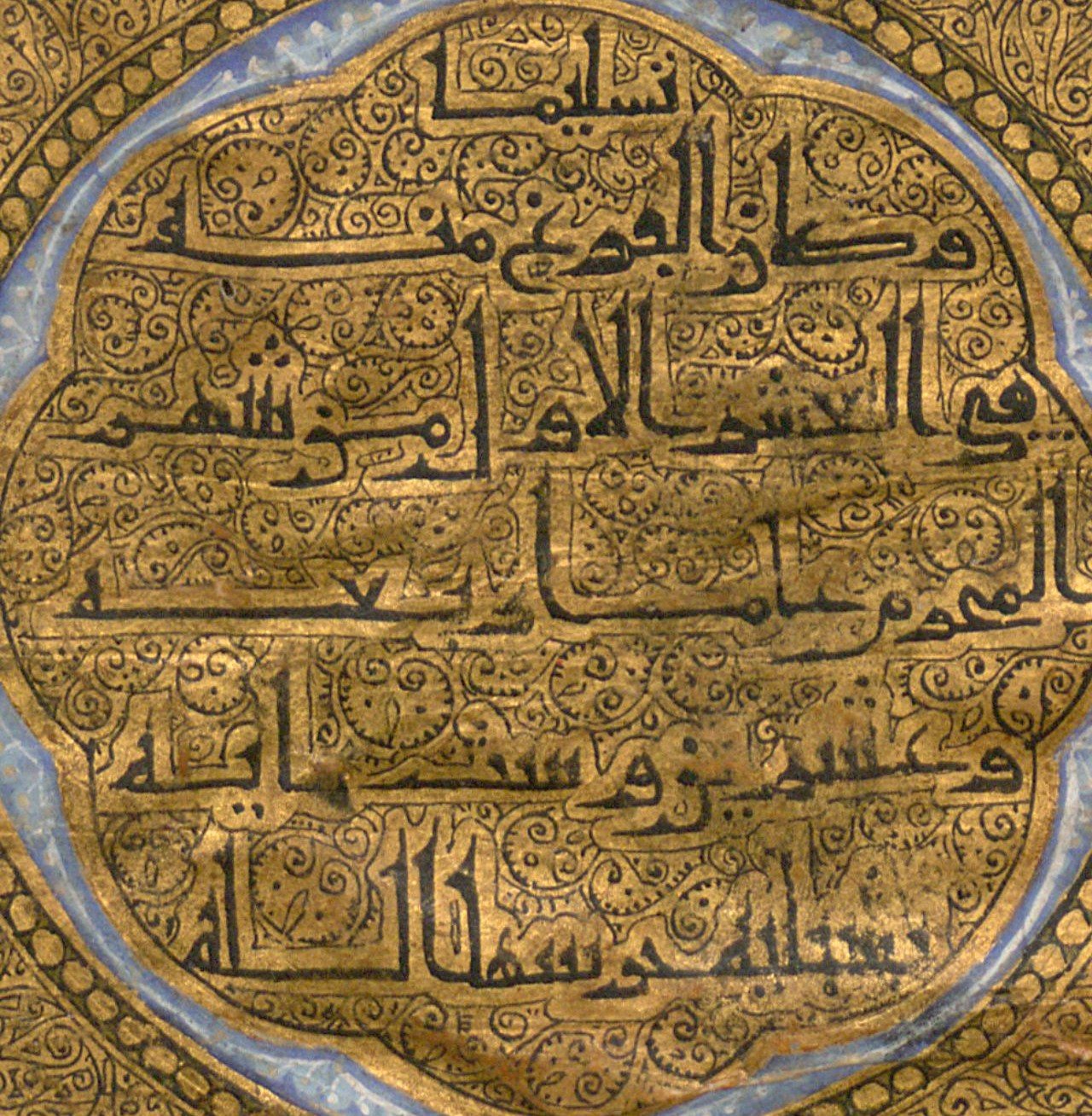
The colophon in the gilded roundel (folios 264–265 of the digitised copy)
كمل المصحف المبارك بعون الله وحسن عونه، وصلى الله على سيدنا محمد وعلى آله وسلّم تسليماً، وكان الفراغ منه في العشر الأول من شهر المحرم عام أربعة وعشرين وستمائة بمدينة إشبيلية حرسها الله.
The blessed Qur’an was completed with the help of God and His good aid; may God bless our lord Muhammad and his family and grant them peace. It was finished in the first ten days of the month of Muharram of the year six hundred and twenty-four in the city of Seville, may God protect it.
Our reading from the images of the two folios: the text begins in the gilded band after the end of Surat al-Nas and ends in the roundel. The first ten days of Muharram 624 AH correspond to about 22–31 December 1226 CE.
From Seville to Munich