- Owner and copyist
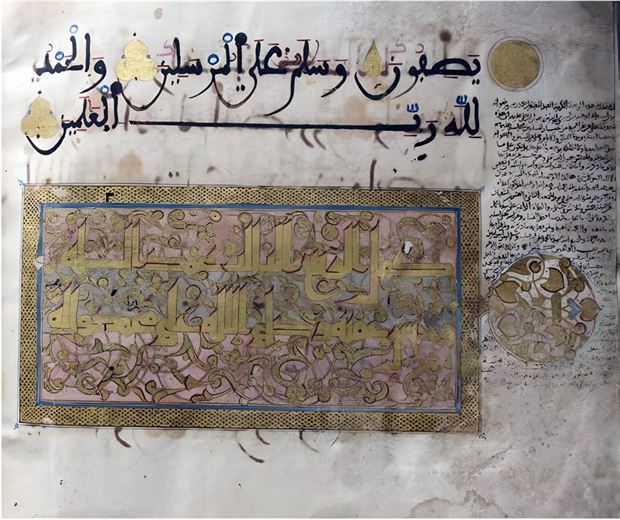
- The Almohad Caliph Abu Hafs ʿUmar al-Murtada (r. 646–665 AH / 1248–1266 CE). The colophon of volume 2 reads «وكتبه بخط يده الفانية», “written by his own mortal hand”.
- Place
- Marrakesh, according to the colophon
- Endowment
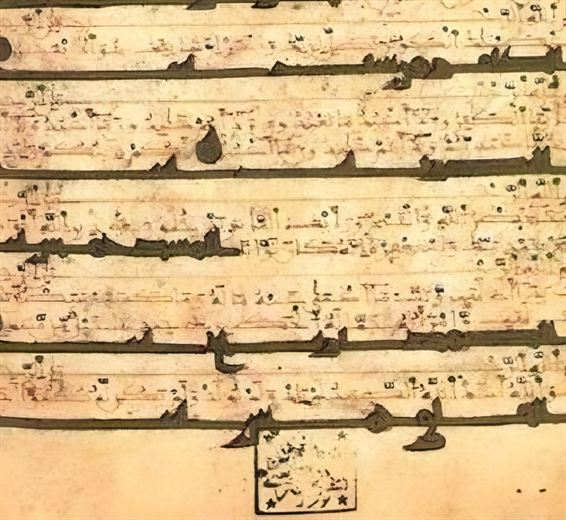
- To the Saqaya mosque, i.e. the mosque of ʿAli b. Yusuf in Marrakesh, in Rajab 656 AH / July 1258 CE, “for all Muslims, night and day”. The notarial endowment deed is in volumes 1 and 4, in zimām script, and below it the endowment is confirmed in al-Murtada’s own hand.
- Today
- Marrakesh, Ibn Yusuf Library ms. 432: four volumes according to Bongianino, five according to Khabta, among them volume 1 (432/1) and volume 4 (432/4); Rabat, National Library J 658 (volume 2) and J 1278; Oudaya Museum, Rabat (one or two volumes once exhibited there); London, British Library Or. 13192 (a fragment of volume 7 in its original binding, bought at Sotheby’s in 1969).
- Format
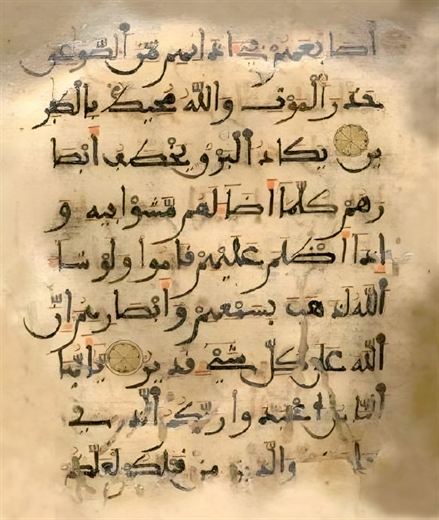
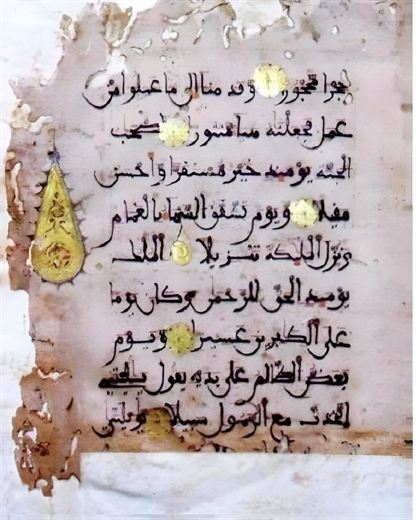
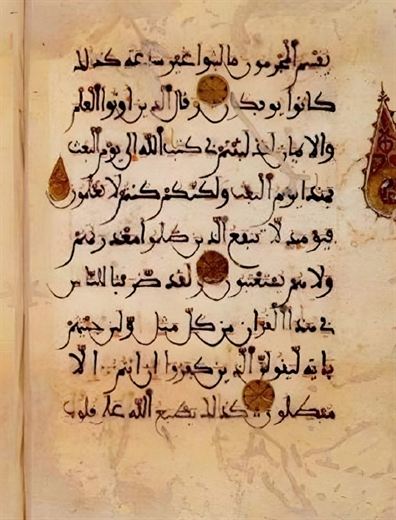
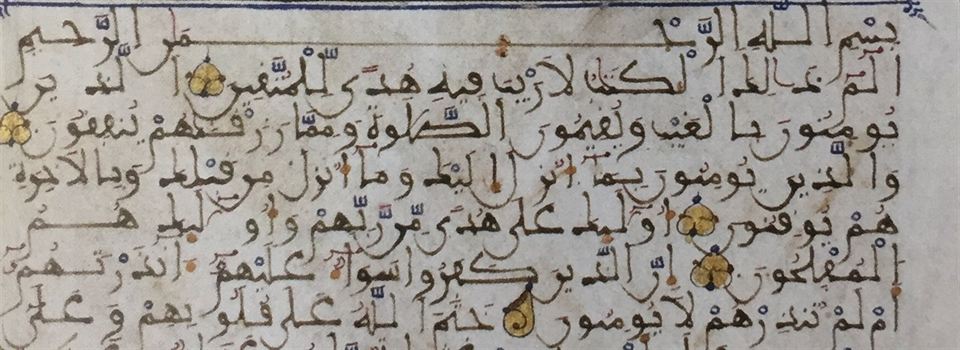
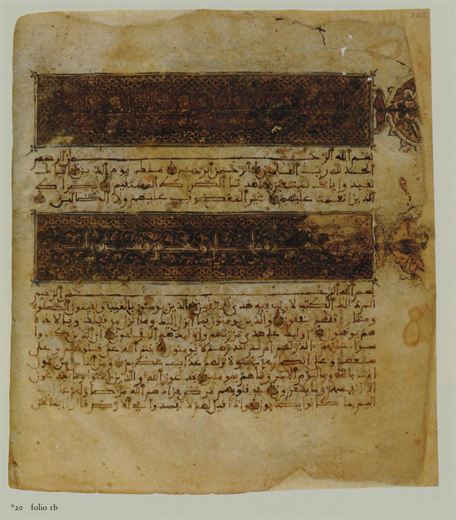
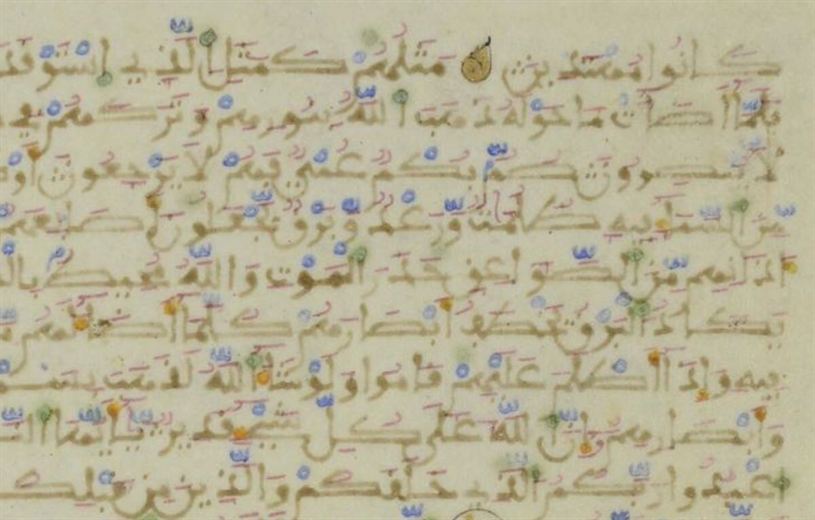
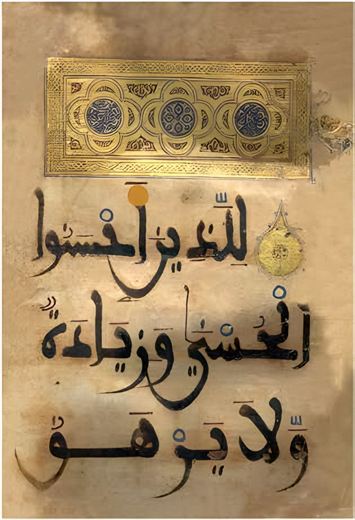
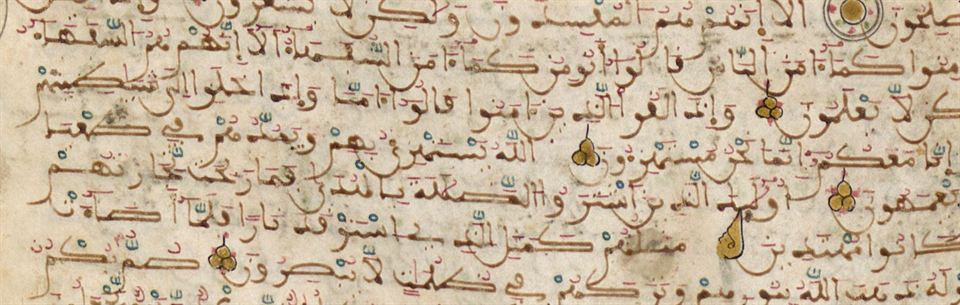
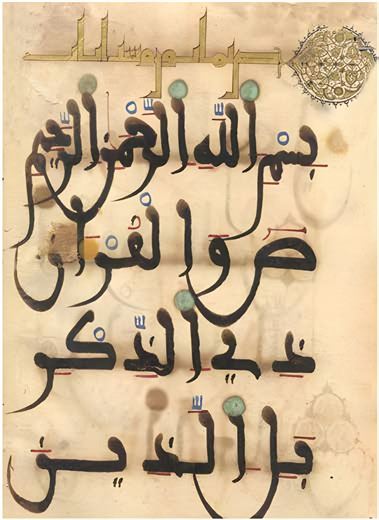
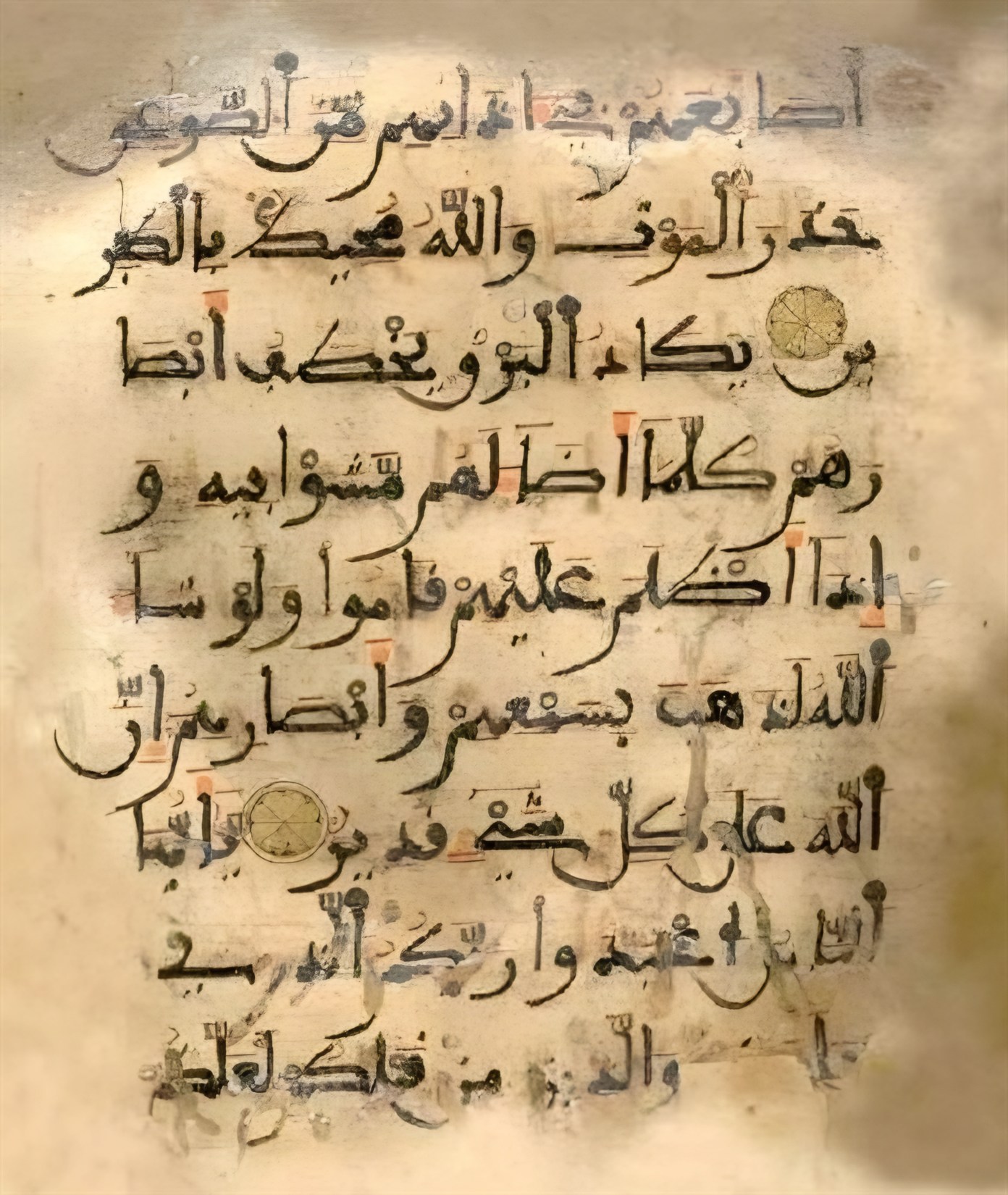
- Parchment; 72 folios in volume 2; nine lines to the page; 290 × 225 mm; a bold mabsūṭ in black ink, some of whose letter forms lean towards the Andalusi script.
- Vocalisation
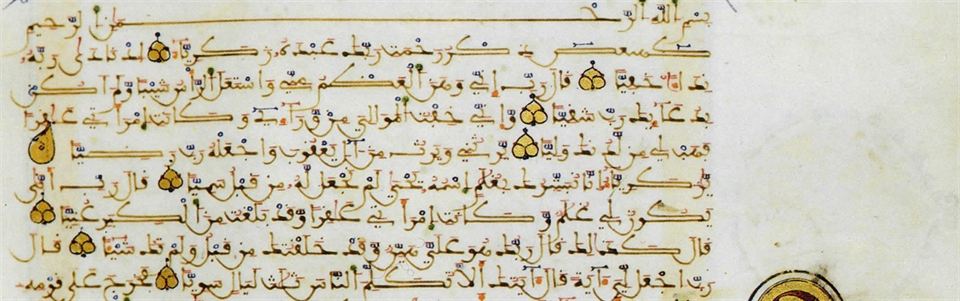
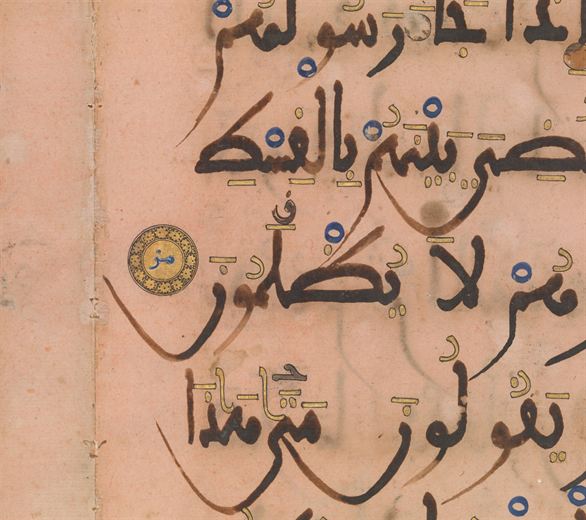
- Vowels and madda in red, sukūn and waṣla in dark green, hamza in orange-yellow.
- What survives
- Volumes of a set of ten, each of six ḥizbs.
The oldest surviving Qur’an of the Islamic West written by a ruler in his own hand. Volume 1 is dated 20 Jumada II 654 AH and volume 3 6 Rajab of the same year: sixteen days separate the completion of the first from that of the third.
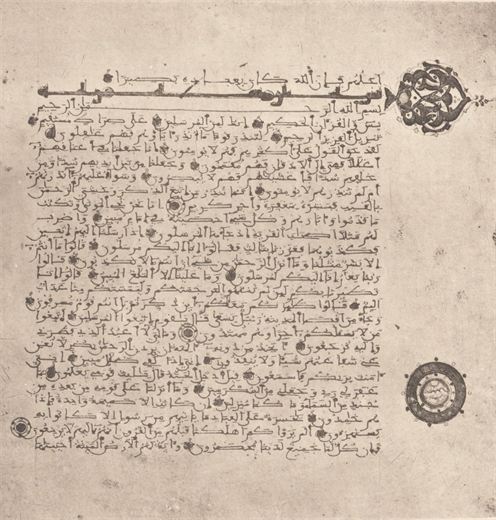
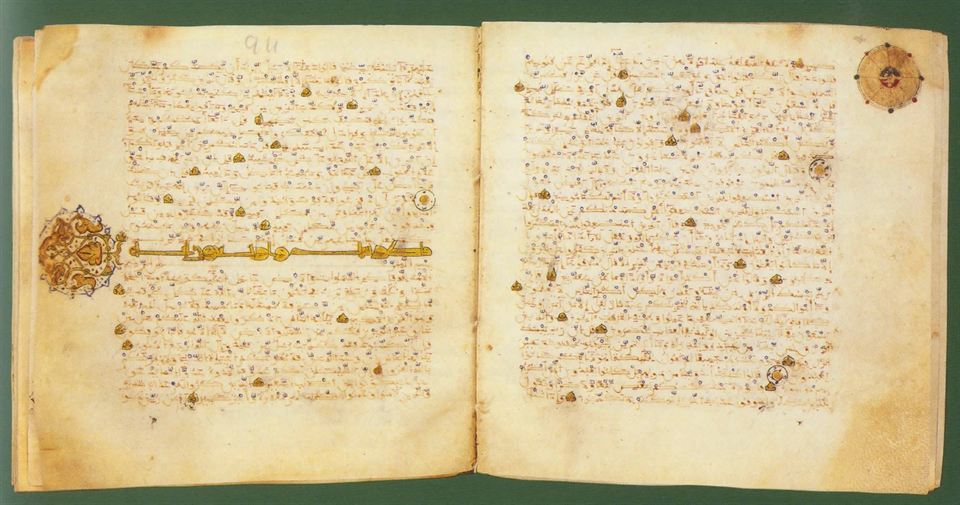
The verse separators are gilded roundels divided into triangles by fine black lines. The markers of every fifth and tenth verse are gilded roundels, some topped by a pyramid-like form. The sura headings are in coloured Kufic within rectangular frames decorated with gold inlaid with red and blue, joined to ornaments in the margin. In the basmala the kashīda of «الرحمن» stretches between the ḥāʾ and the mīm in the Andalusi manner. Al-Murtada sometimes splits a word between the end of one line and the start of the next, as in «أبصـ/ـارهم» (al-Baqara 20), following the habit of early Qur’ans that al-Qalqashandi criticised.
The colophon of volume 1 is in Maghribi thuluth, its letters gilded and outlined in black, with a touch of eastern thuluth. Ibn ʿIdhari reports that al-Murtada wrote three scripts, and that after his deposition in 665 AH he settled on Jabal Saksawa near Marrakesh and “lived by copying”.
The Qur’an remained complete in the Ibn Yusuf Library in Marrakesh until 1149 AH (1736–1737 CE), when the city’s muḥtasib borrowed it; its volumes were then dispersed. Volume 2 in Rabat was only identified when Mohammed al-Manuni described it and assigned it to the set, comparing its script with that of the other volumes and noting that its date agrees with theirs.
No volume has been digitised for the public. Two pages were published in the exhibition Le Maroc médiéval at the Louvre in 2014.