SurvivesCompleteness unknownNot digitised
- Owner
- Written for the Alaouite Prince ʿAli, grandson of Sultan Mawlay Ismaʿil, according to al-Manuni; Khabta says it was written for the library of Sultan ʿAbd Allah b. Ismaʿil
- Copyist
- Not named in the sources available to us
- Today
- Cairo, Egyptian National Library (Dar al-Kutub), Masahif 25
- Format
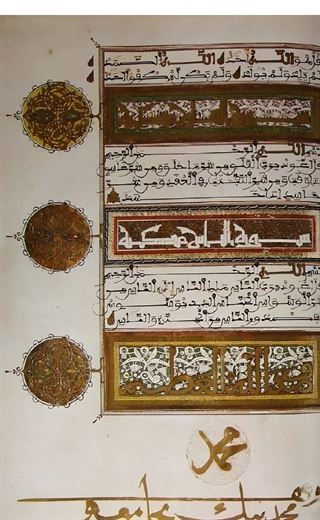
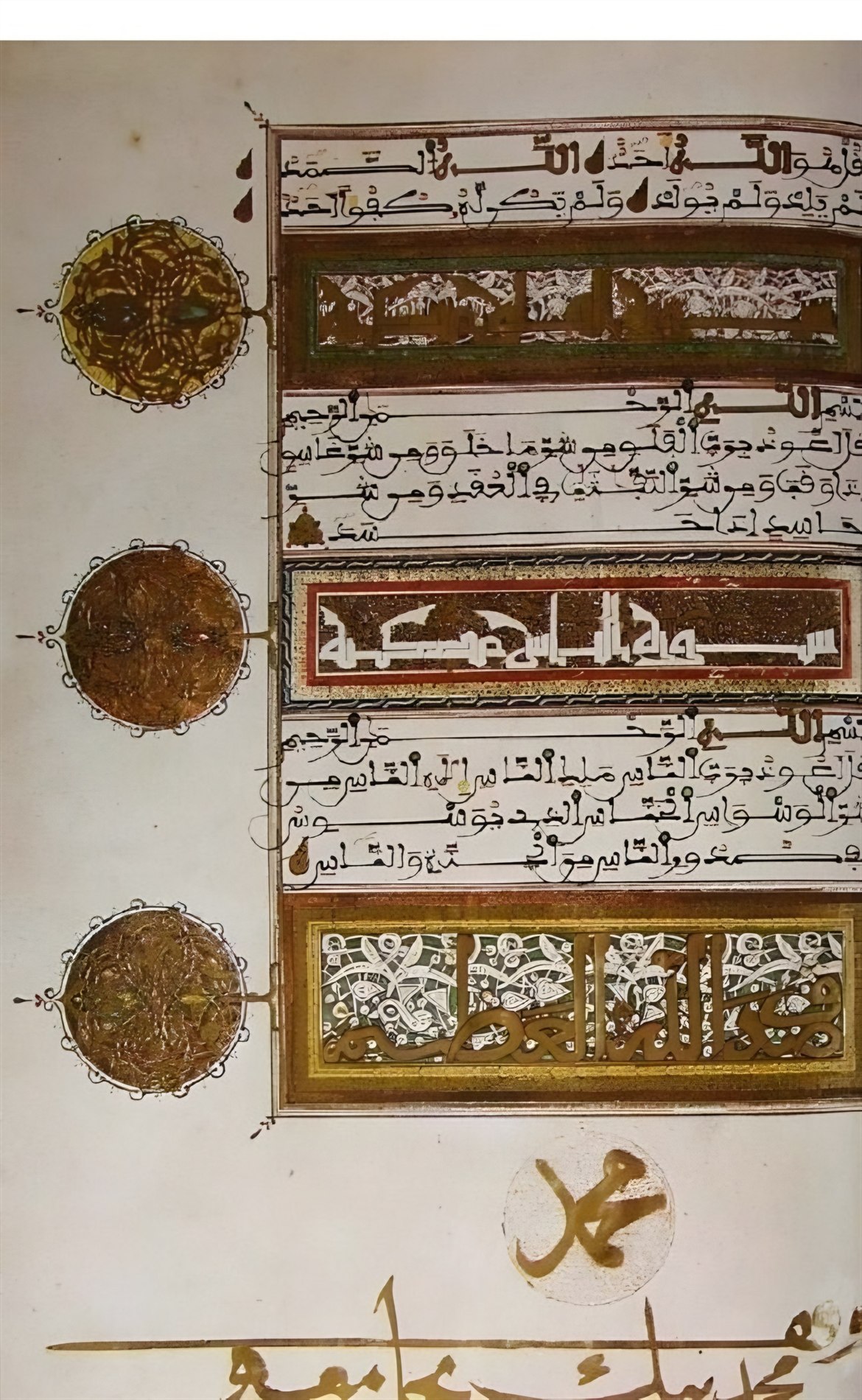
- Maghribi script with Andalusi features, adorned and decorated in gold and colours; the last sura headings in gilded panels, and coloured rosettes in the margin
- Later endowment
- At the end, in naskh, a note that it was endowed by «محمد بيك بجامعه», “Muhammad Bey to his mosque”, perhaps the emir Muhammad Bey Abu al-Dhahab, founder of the mosque that bears his name in Cairo (1188 AH)
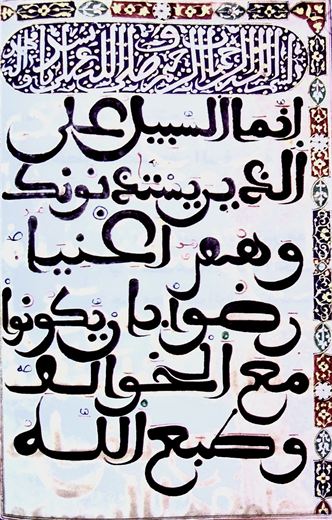
It counts among the treasures of the Egyptian National Library and is described in its catalogue (vol. 1, p. 2). It is the oldest dated Alaouite Qur’an with a known owner that we found in published sources. Mohamed Abdelhafid Khabta published an image of its last two pages and three of its illuminated openings. In 1142 AH ʿAbd Allah b. Ismaʿil was sultan, so the Qur’an may have been for his library, as Khabta says, or for a prince of his family, as al-Manuni says; we have not seen the text of its colophon to decide between them.
Not digitised for the public, as far as we know.
Close-ups of the script (1)Click to enlarge →