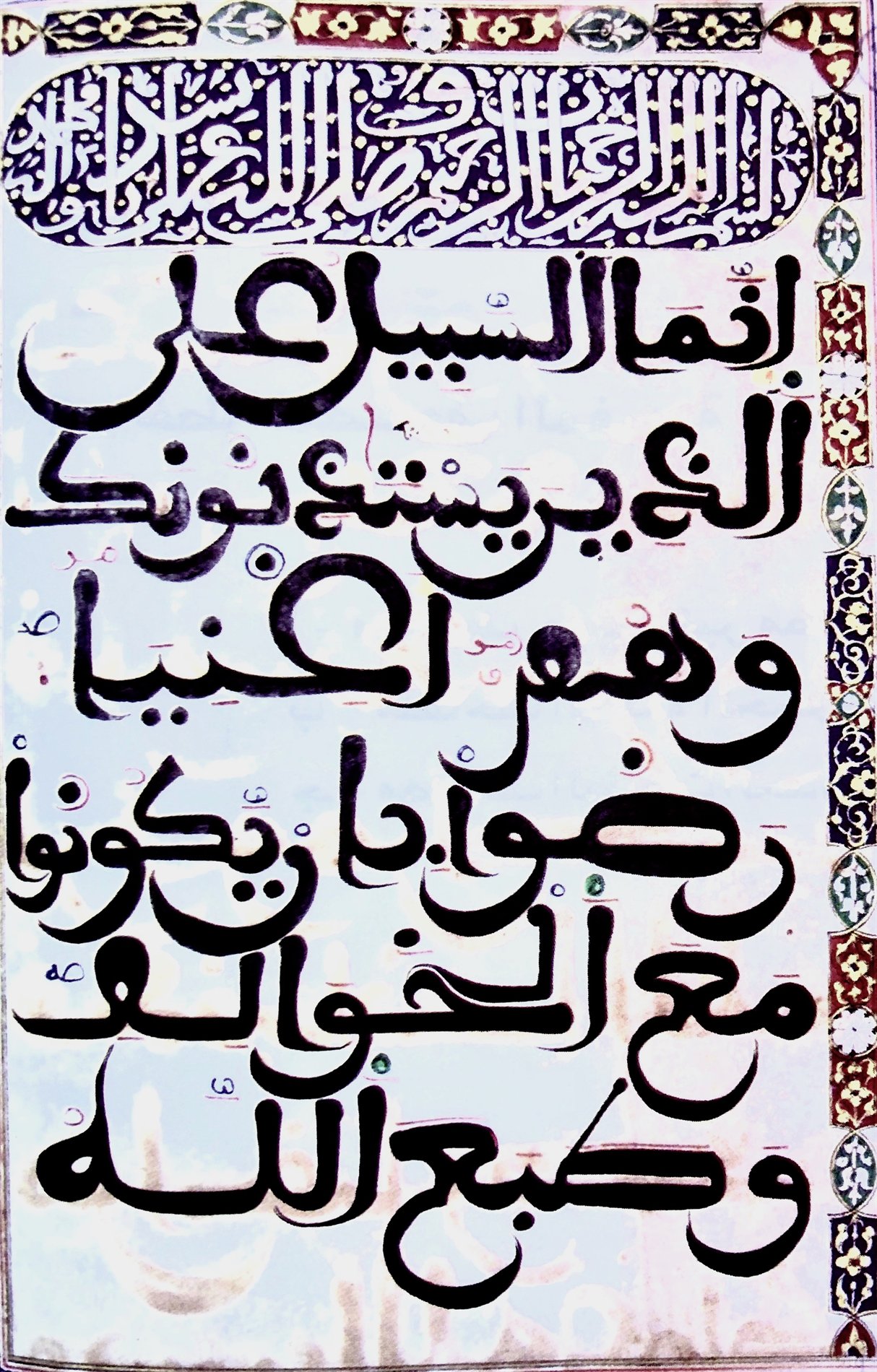
- Copyist
- Muhammad b. Abi al-Qasim al-Qandusi of Fez (d. 1278 AH / 1861 CE)
- Made for
- al-Hajj Idris b. al-Wazir Muhammad b. Idris al-ʿAmrawi of Fez
- Today
- Meknes, al-Khizana al-Zaydaniyya, no. 3595 in the new catalogue
- Format
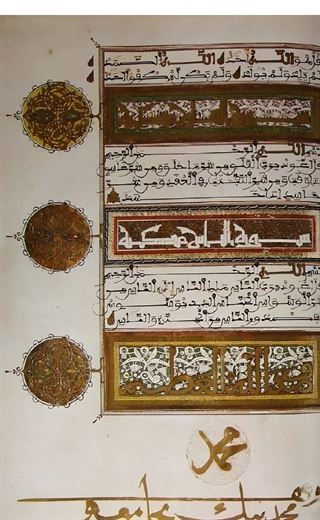
- A large rabʿa in 12 volumes of five ḥizbs each, in a magnificent hand
Al-Qandusi was one of the most famous calligraphers of nineteenth-century Fez, with a style of Maghribi script that bears his name. The author of Salwat al-anfas writes in his biography: “He had a fine, excellent hand, in which he wrote a number of copies of the Dalaʾil, and I was told that he wrote a Qur’an in twelve volumes whose like is rarely found in the world.”
He wrote it for al-Hajj Idris al-ʿAmrawi, who led Morocco’s embassy to France in 1860 CE and wrote its account; it later passed to the Zaydaniyya library in Meknes.
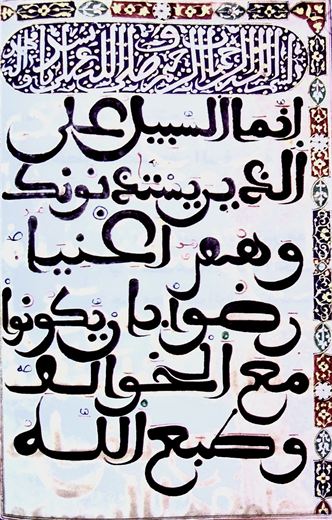
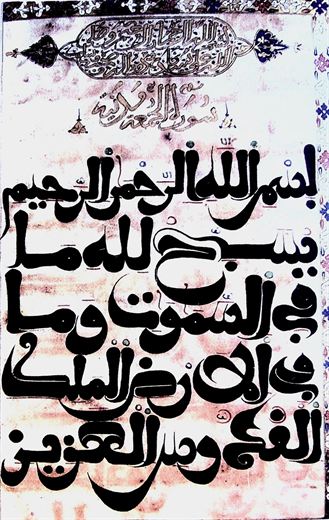
Omar Afa and Mohamed al-Maghrawi published in their book al-Khatt al-maghribi: tarikh wa-waqiʿ wa-afaq two pages of a Qur’an in al-Qandusi’s hand: the start of ḥizb 21 (al-Tawba 93) and the start of ḥizb 56 (the opening of Surat al-Jumuʿa), each topped by a gilded band with the basmala and the blessing on the Prophet, as volumes open. These two ḥizbs open volumes 5 and 12 of a rabʿa with five ḥizbs to the volume, which matches al-ʿAmrawi’s rabʿa, so they most likely come from it.
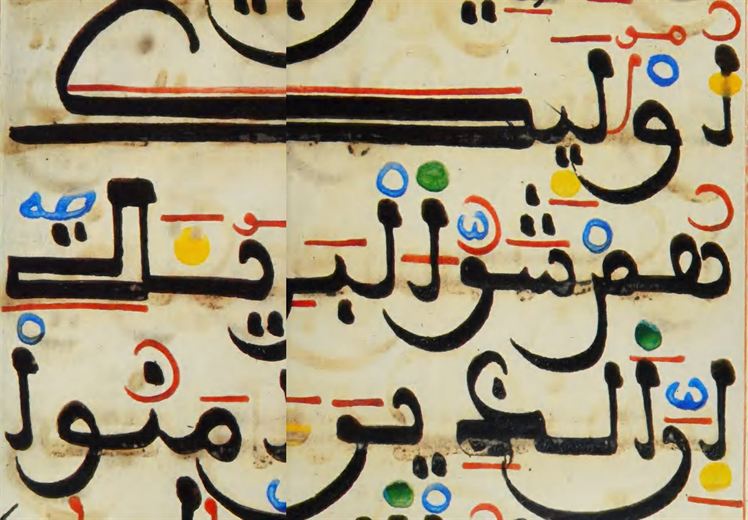
Mohamed Sijelmassi published in his book on the manuscripts of the Royal Library (1987) a detail of a “noble Qur’an” in al-Qandusi’s hand kept there as no. 12613 (al-Bayyina 6–7). We found nothing to show that the Royal Library manuscript is this same rabʿa, passed there from the Zaydaniyya.
Not digitised for the public, as far as we know.