SurvivesIncompletePartial images
- Copyist
- Ahmad b. ʿAli b. Abi Ibrahim
- Written in the name of
- Abu Muhammad Sidi ʿAbd Allah al-Ghazwani, the Jazuli saint buried in Marrakesh (d. 935 AH / 1529 CE), so it was most likely endowed to his zawiya
- Place
- Marrakesh
- Today
- Doha, Museum of Islamic Art, MS.11.1999: the thirtieth and last volume of a rabʿa in thirty volumes
- Format
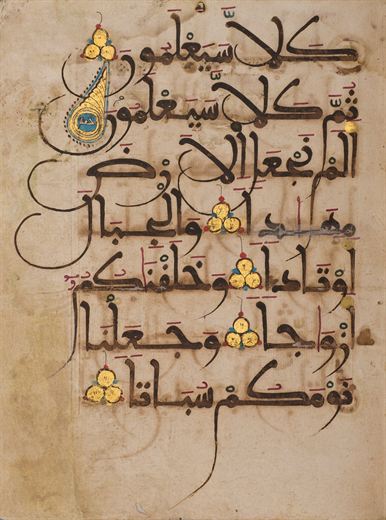
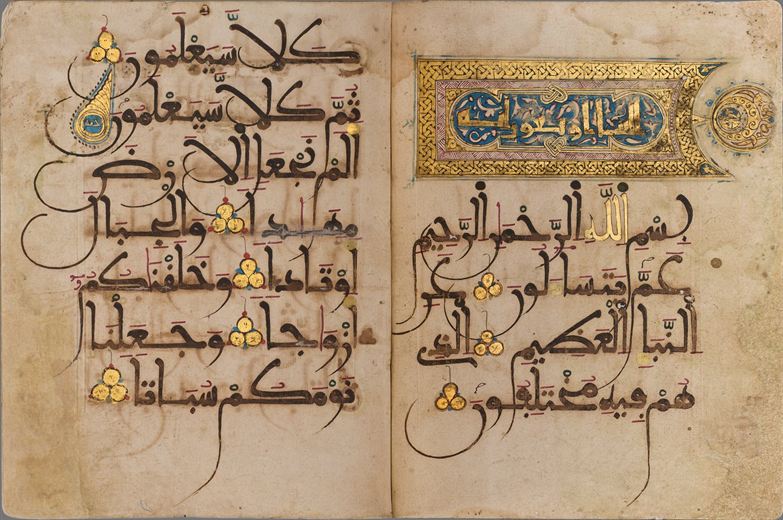
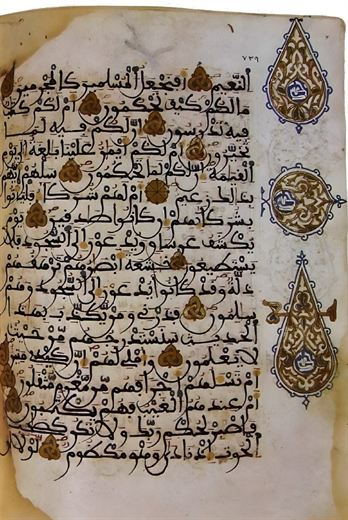
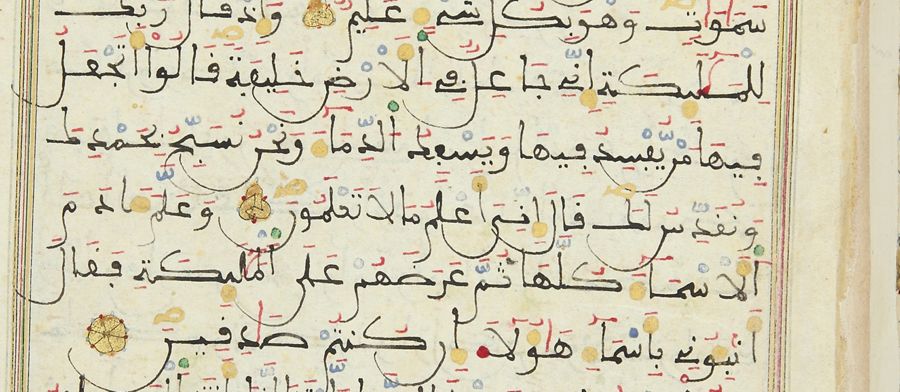
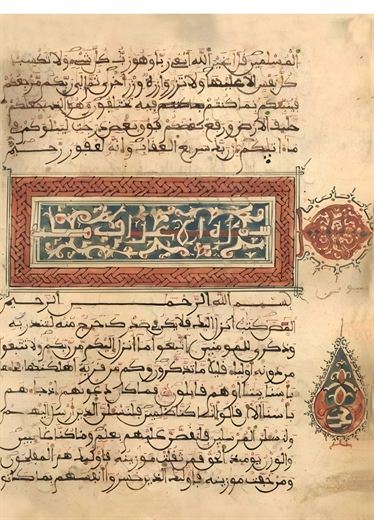
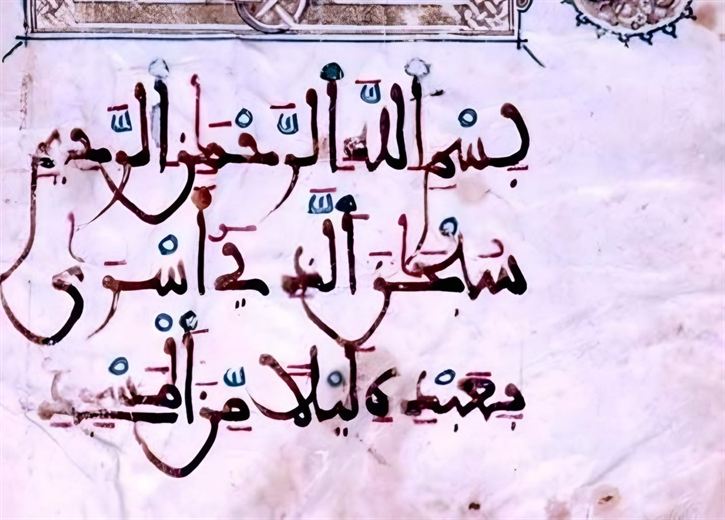
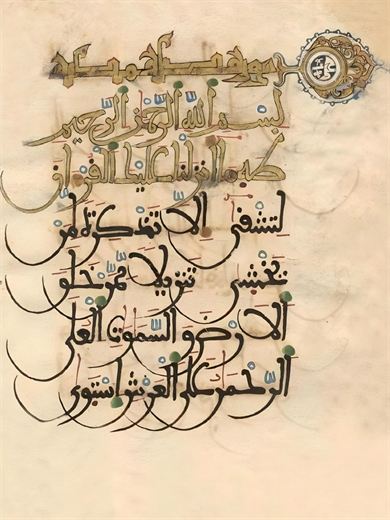
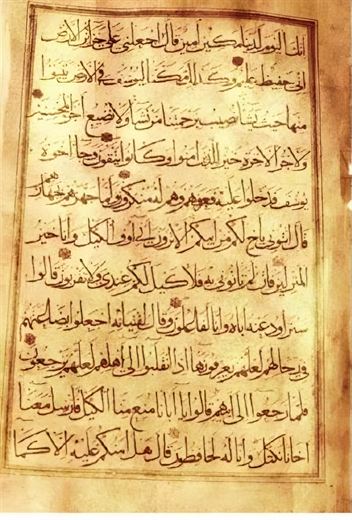
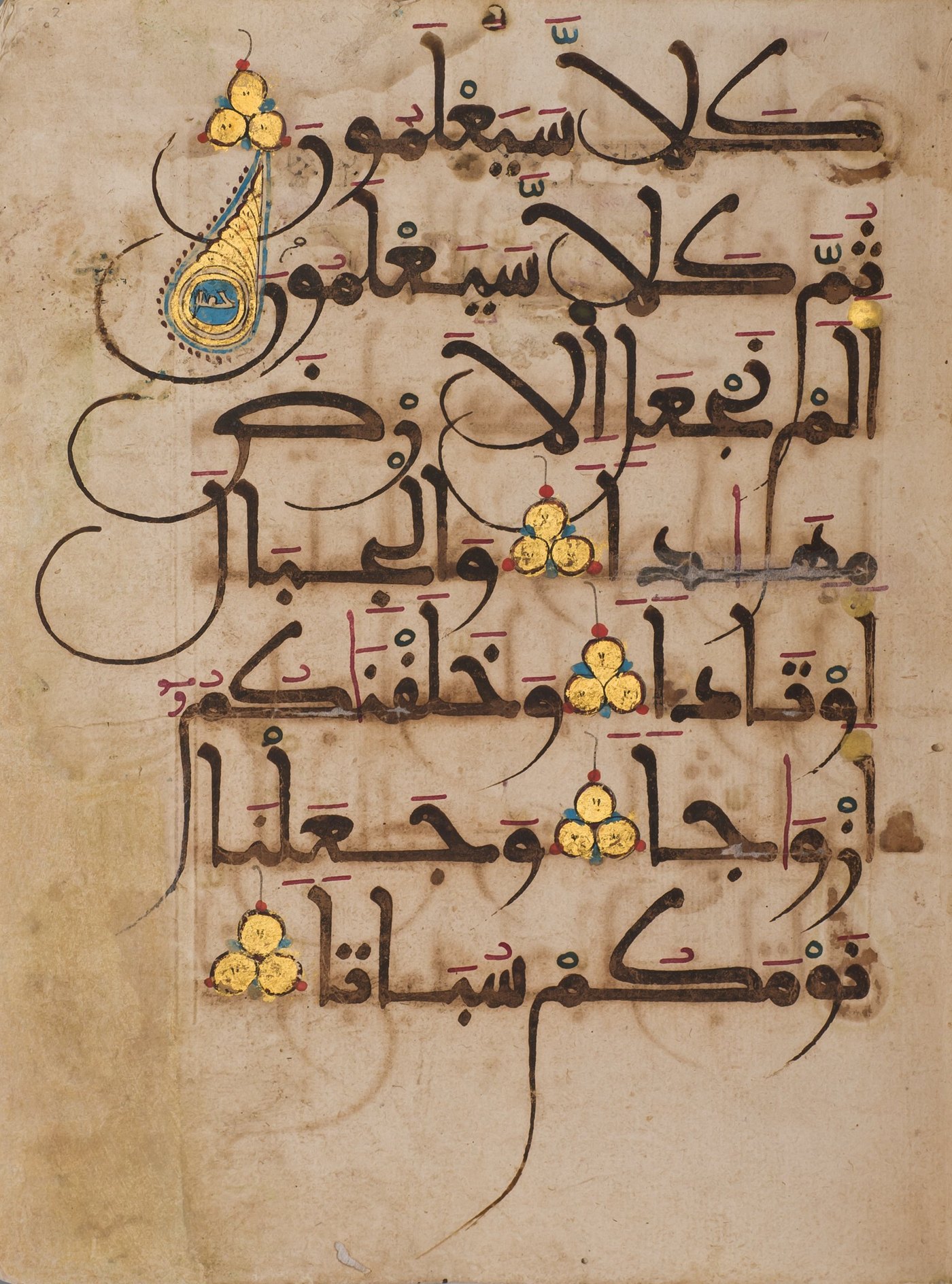
- Paper; 25.8 × 20.5 cm; seven lines to the page in large mabsūṭ, the word Allah in gold, and sura headings in gold Kufic on a blue ground
A rabʿa written in Marrakesh at the end of the Saadian period in the name of ʿAbd Allah al-Ghazwani, one of the Seven Saints of Marrakesh and the head of the Jazuli order in his time. Rabʿas like this were endowed to zawiyas and madrasas so that their volumes could be read. Its colophon is in thuluth, and its date is written in ghubār numerals. The museum classes it as Alaouite, but its date comes about ten years before the Alaouites entered Marrakesh.
One volume out of thirty; the museum publishes an image of two of its pages.
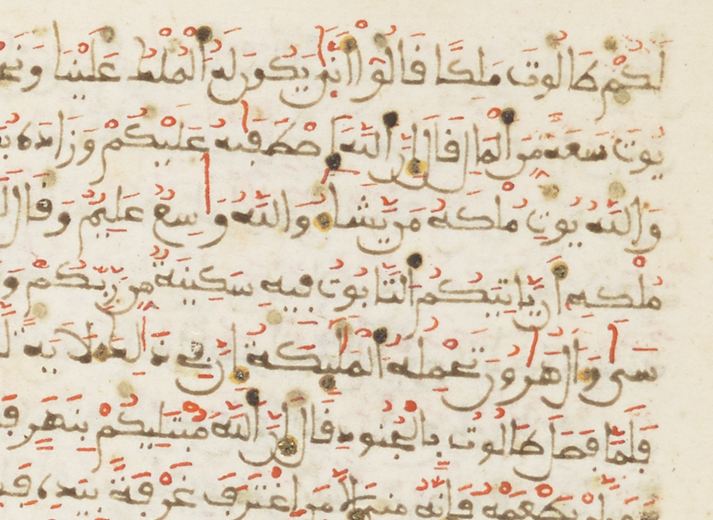
Close-ups of the script (2)Click to enlarge →