- Owner
- Prince Muhammad b. ʿAbd al-Qadir, grandson of Sultan Muhammad al-Shaykh, vizier of his uncle ʿAbd Allah al-Ghalib and his governor in Meknes, whom his uncle had killed in 975 AH
- Copyist
- Not named
- Today
- Rabat, National Library, J 606
- Format
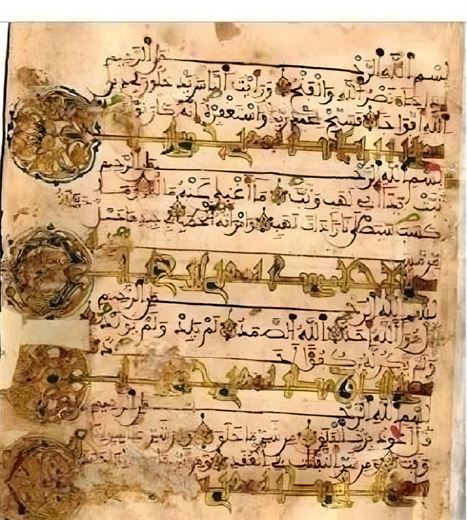
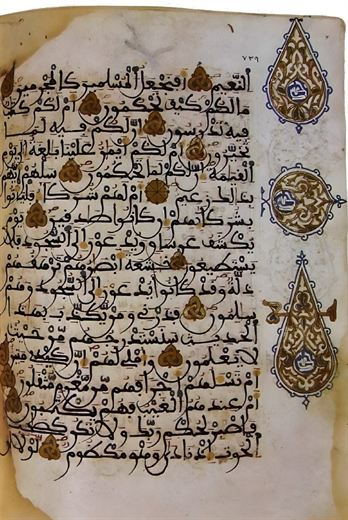
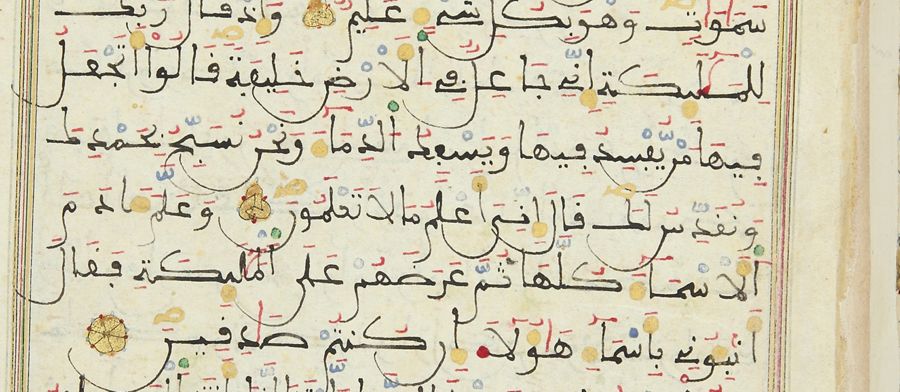
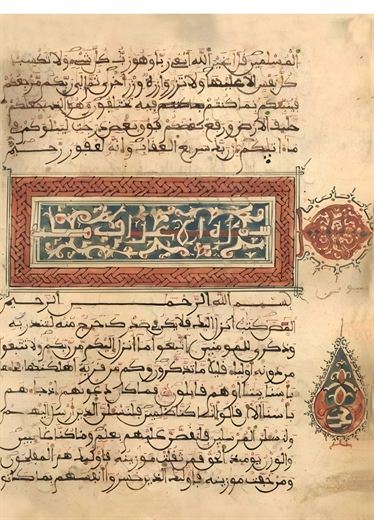
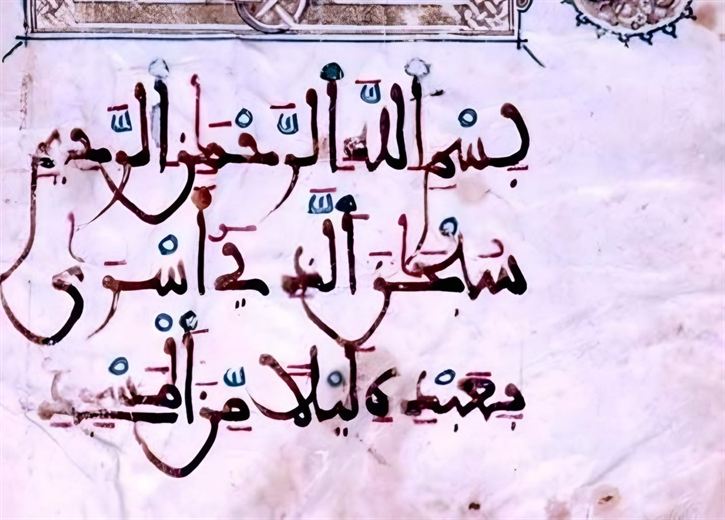
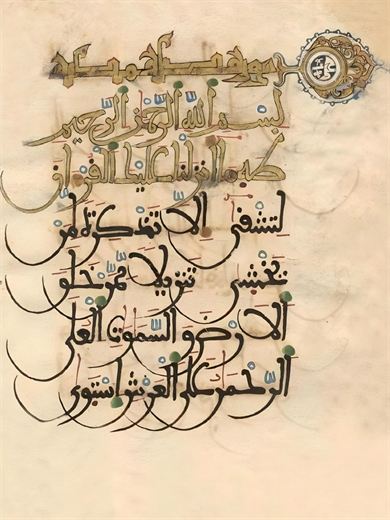
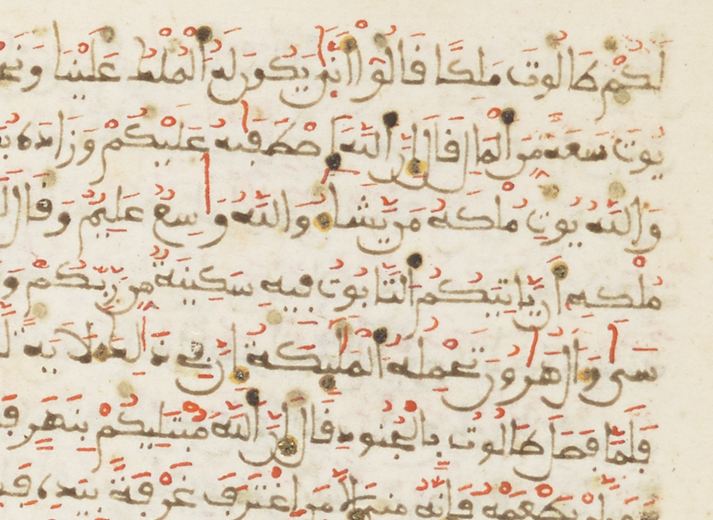
- Brown paper; vowels in red, shadda and sukūn in blue, hamza in yellow, waṣla in green, and al-Habti’s pausal marks in red
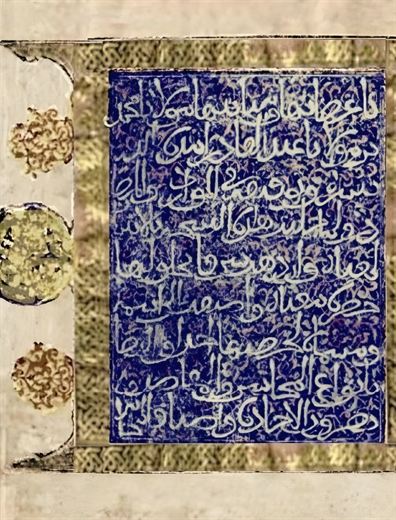
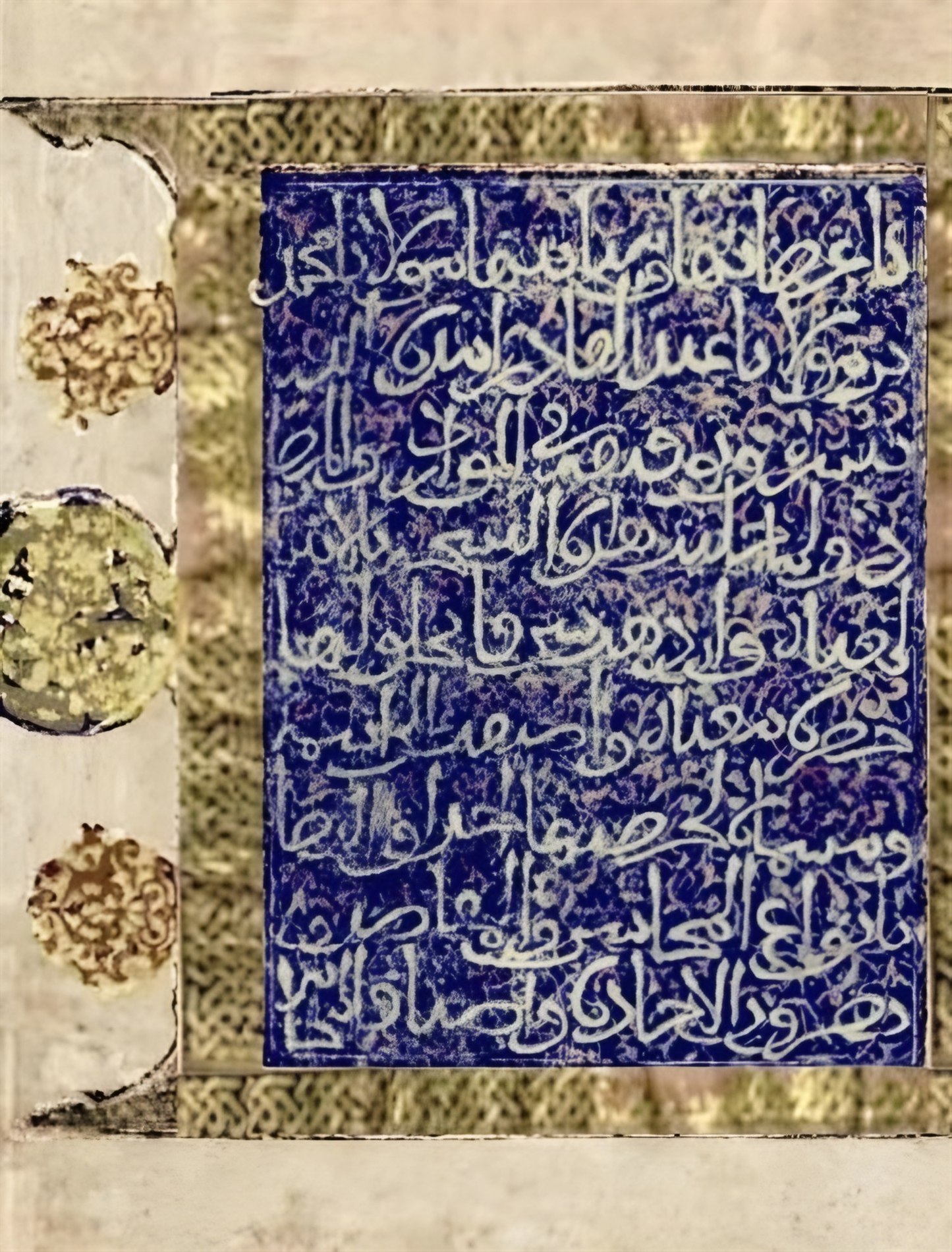
Its colophon is one of the longest in Maghribi Qur’ans: five pages of Maghribi thuluth on a decorated blue ground within gilded frames. It is a rhymed text in praise of the prince, ending with two verses spoken by the Qur’an itself: «أيا ناظراً رقمي وحسن صنائعي، ومستنشقاً عرفي وأذكى بدائعي، لك الله فادعُ للمعلّم إنه إمامٌ له دانت جميع الصنائعِ», “O you who look upon my script and my fine craftsmanship, and breathe my fragrance and my finest wonders: God be with you; pray for the master, for he is an imam to whom all the crafts have bowed.” Then: «وكان الفراغ منها أوائل رمضان... وتسعمائة», “it was finished in early Ramadan... and nine hundred”.
The colophon, as far as it has been published, does not give the place of copying, and the Qur’an is not digitised. Mohammed al-Manuni published the colophon in 1969, and Khabta later reconstructed it in colour from a black-and-white image.