- Copyist
- Ahmad b. Ghalinduh, as Bongianino reads the name (Aḥmad b. Ghalinduh)
- Place
- Almería, held by the Almoravids from 484 AH / 1091 CE until the Castilians took it in 542 AH / 1147 CE
- Today
- Madrid, Biblioteca Nacional de España, RES/272
- Format
- Thin paper; 82 × 71 mm; 17 lines; one volume
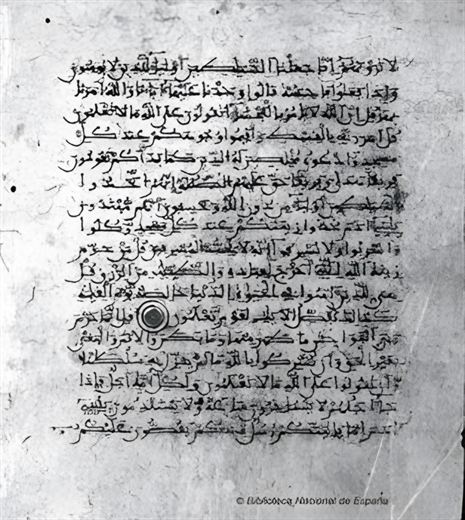
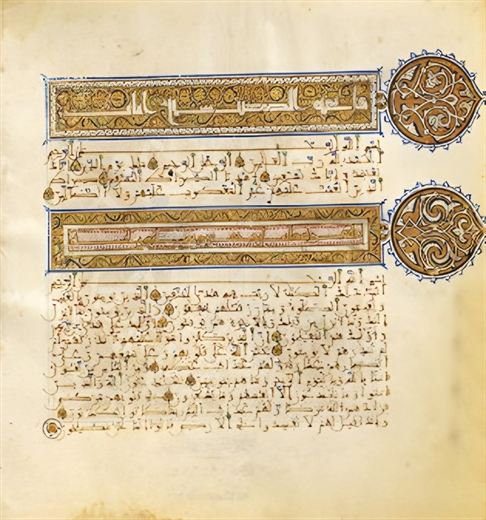
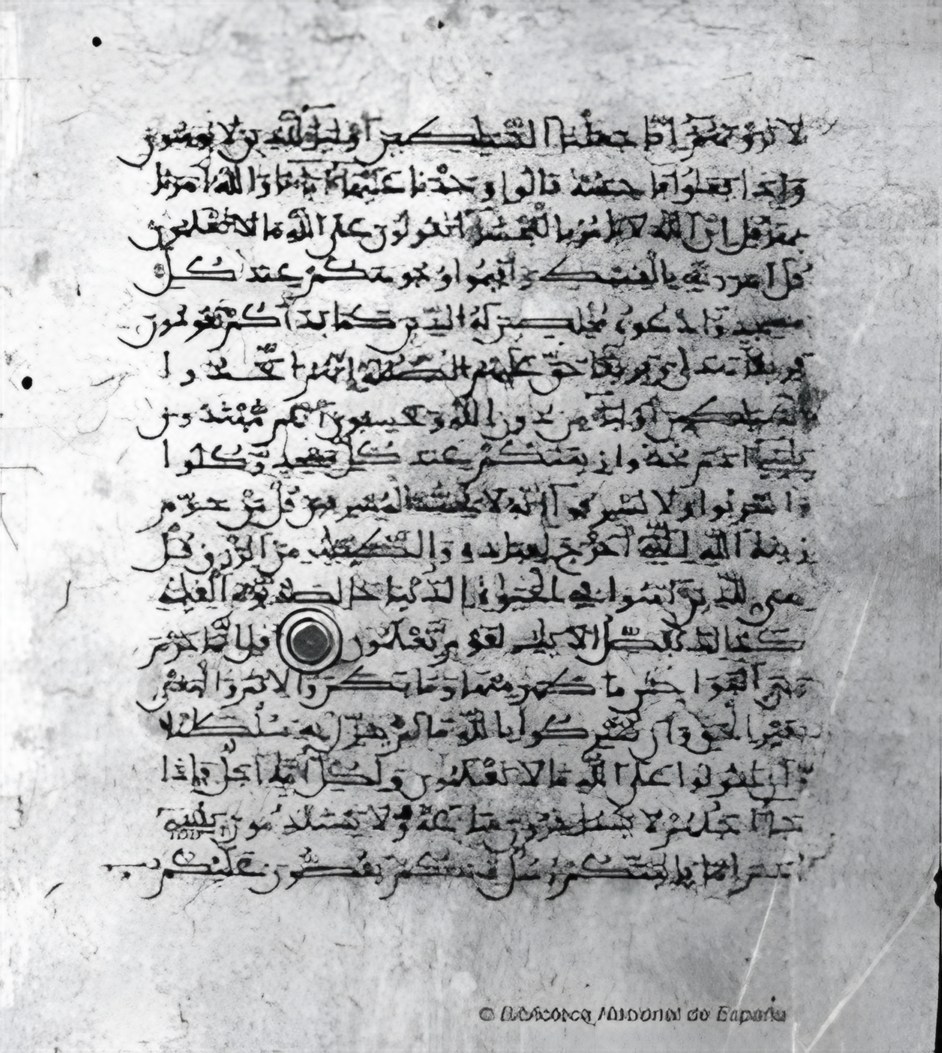
A tiny Qur’an no bigger than the palm of a hand, with sura headings in gilded Kufic. According to Umberto Bongianino it is the oldest known Qur’an written on paper in the Islamic West, at a time when Qur’ans were written on parchment.
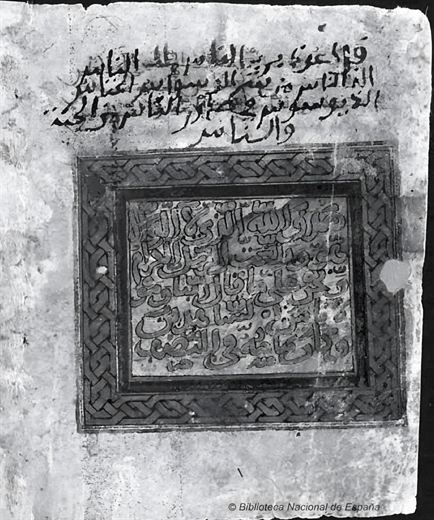
Its colophon is in gold, in Maghribi thuluth, and has been moved to the front of the volume (folio 1r). Its text, as Bongianino published it in transliteration: “God Almighty has spoken the truth, there is no god but He; the noble messengers have delivered the message, and we bear witness to what our Lord and Master has said. It was completed in the middle of Jumada I of the year five hundred and thirty-four at the hands of Ahmad b. Ghalinduh in Almería; may God have mercy on its writer and on whoever had a part in it, and on all Muslims. Amen, amen, Lord of the worlds, and may God bless Muhammad and his family.”
The journey of the manuscript